وضع العلامات بالليزر: ليزر الألياف مقابل ليزر ثاني أكسيد الكربون: أيهما مناسب لمادتك؟
بالنسبة إلى وضع العلامات المباشر على معظم أجزاء المعادن العارية، عادةً ما يكون ليزر الألياف نقطة البداية الأفضل. أما بالنسبة إلى الخشب والورق والكرتون والعديد من أسطح الجلود، فإن ليزر ثاني أكسيد الكربون هو الخيار الأنسب عمومًا. يصبح القرار أقل وضوحًا مع البلاستيكات الهندسية والمعادن المطلية والزجاج ومواد التغليف، حيث يمكن أن تكون تركيبة السطح والعلامة المطلوبة بنفس أهمية اسم المادة.
السؤال المفيد ليس مجرد أي ليزر يمكنه ترك علامة مرئية. بل أي عملية يمكنها إنتاج التباين المطلوب، وقابلية القراءة، وحالة السطح، والاتساق على الجزء الفعلي، ضمن دورة إنتاج مقبولة. وينبغي أن يوجّه هذا التمييز المقارنة قبل أن تدخل تقييمات القدرة أو أسعار الآلات في النقاش.
ليزر الألياف أم ثاني أكسيد الكربون: أيهما يجب تقييمه أولاً؟
ابدأ بالسطح الذي سيتلامس معه الليزر فعليًا. إذا احتاج مكوّن من الفولاذ المقاوم للصدأ غير المطلي إلى رقم تسلسلي أو رمز Data Matrix، فإن الوسم بليزر الألياف هو تجربة أولى منطقية لأنه يمكنه تعديل المعدن أو إزالته مباشرة. وإذا كانت المهمة تتعلق بترميز التاريخ على علب من الورق المقوى، فإن ليزر ثاني أكسيد الكربون (CO2) هو المسار الأنسب عادةً لأن المادة تستجيب بسهولة لطوله الموجي تحت الأحمر.
يكون الخيار أقل وضوحًا في حالة لوحة اسم من الألومنيوم المؤكسد الملون أو حاوية بلاستيكية مصبوبة. في هذه الحالات، قد يحدد الطلاء أو الصبغة أو الإضافات أو تشطيب السطح أي ليزر ينتج نتيجة مقبولة.
تؤدي هذه الفروق إلى قاعدة عملية: اختر الليزر الأول الذي ستختبره بناءً على السطح المكشوف للمادة وتأثير الوسم المطلوب، وليس بناءً على تصنيف عام يقسم المواد إلى معادن مقابل غير معادن. يقلل الخيار الأول المناسب من التجارب غير الضرورية؛ لكنه لا يغني عن التحقق على أجزاء ممثلة للإنتاج.
لماذا يقوم ليزر الألياف وليزر ثاني أكسيد الكربون (CO2) بوسم المواد بشكل مختلف؟
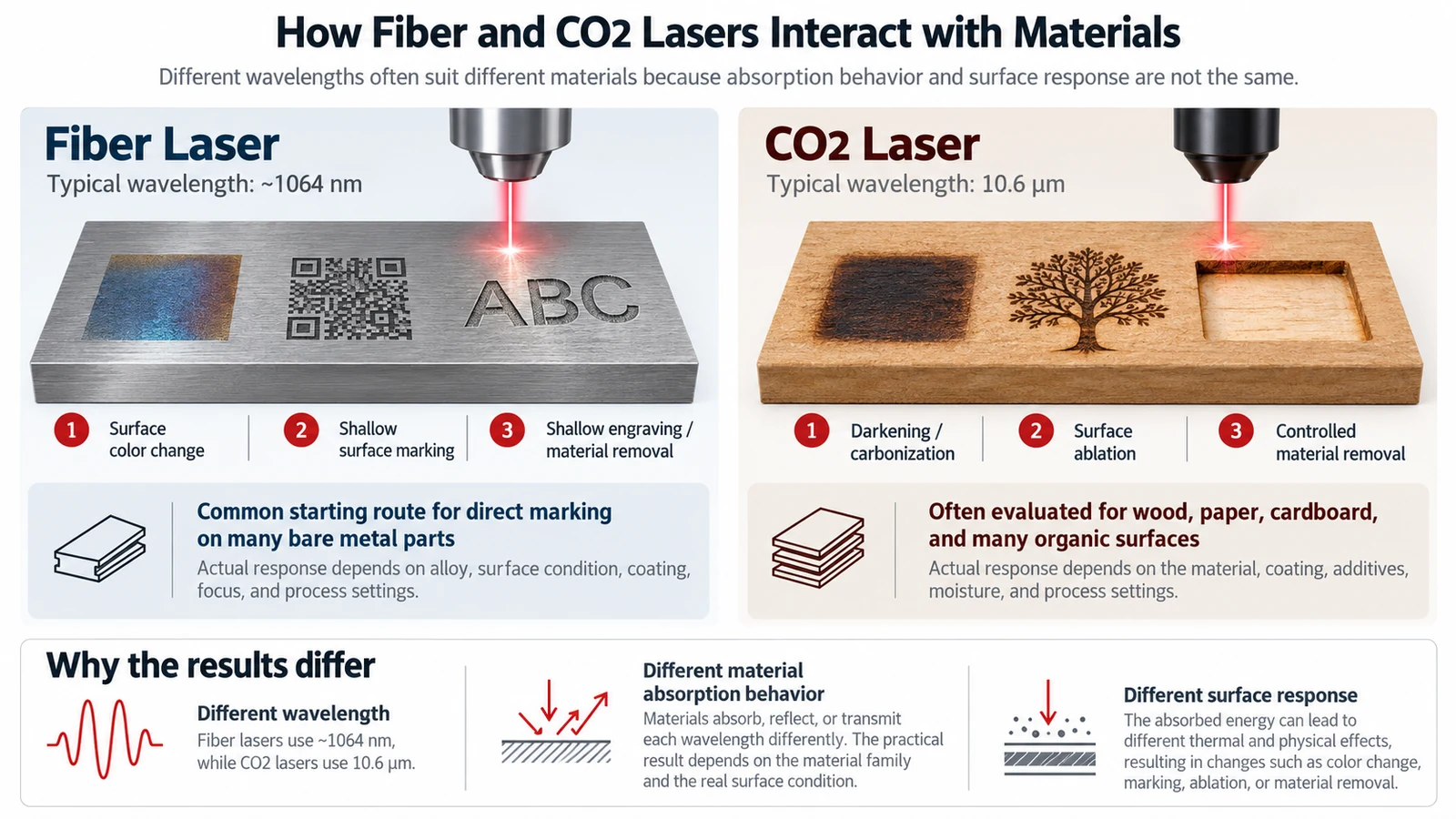
تقليدي واسمات ليزر الألياف تعمل عادةً بالقرب من 1,064 نانومتر، في نطاق الأشعة تحت الحمراء القريبة. تعمل العديد من واسمات ثاني أكسيد الكربون الصناعية عند 10.6 ميكرومتر، وهو طول موجي أطول بكثير في الأشعة تحت الحمراء، بينما تستخدم بعض الأنظمة بدائل مثل 9.3 ميكرومتر لركائز معينة. تتفاعل هذه الأطوال الموجية بشكل مختلف مع المعادن والبوليمرات والطلاءات والمواد العضوية.
يمكن لطاقة الليزر الممتصة أن تُحدث عدة أنواع من التغيّر: قد تُطوّر المعادن تباينًا لونيًا قائمًا على الأكسيد أو تفقد كمية صغيرة من المادة السطحية؛ وقد يغيّر البوليمر لونه أو يُكوّن رغوة أو ينصهر أو تُزال منه طبقة؛ وقد يُغمّق سطح عضوي عبر تحلل حراري موضعي. تعتمد النتيجة على استجابة المادة والطاقة المُسلّمة معًا. يساعد الطول الموجي في تحديد ما هو ممكن، لكنه لا يثبت بحد ذاته نتيجة مقبولة.
توصيل الحزمة، والتركيز، وسلوك النبضة، وإعدادات المسح، وزمن التعريض مهمة أيضًا. وحتى عندما يكون الطول الموجي مناسبًا، تحدد هذه الظروف ما إذا كانت المادة تستجيب بطريقة مُتحكَّم بها وما إذا كانت العلامة تلبي معايير القبول الخاصة بها.
ما المواد ونتائج الوسم التي تلائم كل ليزر بشكل أفضل؟
يُفهم توافق المواد على نحو أفضل على أنه مزيج من الركيزة، وحالة السطح، والنتيجة المطلوبة. قد يُنشئ الليزر الذي يخلق تباينًا قويًا على تشطيب معين علامة ضعيفة أو تغيّرًا مفرطًا في السطح على تشطيب آخر.
المعادن العارية: العلامات المباشرة والتباين والنقش
تُعد ليزرات الألياف عادةً الخيار الأول للوسم المباشر للفولاذ المقاوم للصدأ غير المطلي، والفولاذ الكربوني، والألومنيوم، والتيتانيوم، والعديد من الأجزاء المعدنية الصناعية الأخرى. واعتمادًا على السبيكة وإعدادات العملية، يمكنها إحداث تغيرات لونية مرئية، أو علامات سطحية ضحلة، أو نقوش غائرة دون تطبيق مركب وسم منفصل.
هذه النتائج ليست قابلة للتبادل. قد تكون العلامة السطحية الداكنة مناسبة لرمز التتبع عندما يجب أن يبقى الجزء أملس نسبيًا. وقد تكون العلامة الغائرة مطلوبة عندما يكون عمق النقش المحدد أو مقاومة أكبر للتآكل الميكانيكي جزءًا من معايير القبول. ويتطلب تحقيق العمق عادةً إزالة مزيد من المواد وقد يزيد وقت المعالجة أو يغير السطح. وعلى الألومنيوم العاري، لا ينبغي افتراض إمكانية تحقيق درجة معينة من الأسود مع كل مصدر ألياف وتشطيب؛ يجب التحقق من التباين على السبيكة الفعلية وحالة السطح.
ليس واسم CO2 التقليدي عادةً الخيار العملي للنقش المباشر على المعدن العاري. قد ينتج علامة على المعدن باستخدام معجون وسم أو بخاخ أو شريط لاصق مناسب، لكن ذلك يضيف خطوات تحضير وتنظيف وهو عملية مختلفة عن تعديل الركيزة مباشرةً.
الخشب والورق والكرتون والجلد: استجابة السطح مهمة
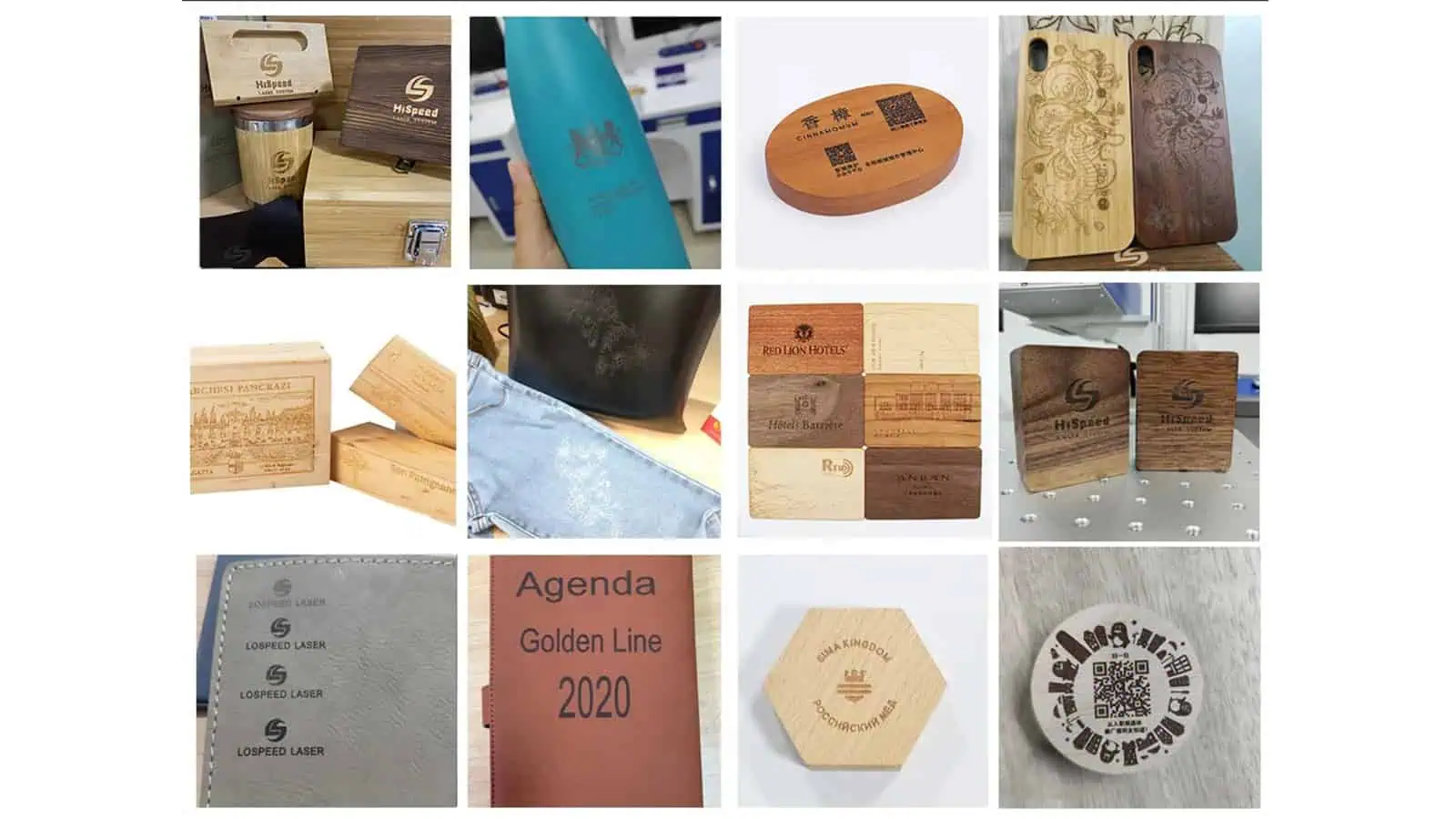
ليزرات CO2 تتناسب عمومًا بشكل جيد مع الخشب والورق والكرتون والعديد من أسطح الجلد. يمكن إنشاء علامة مرئية من خلال التغميق الموضعي، أو الكربنة، أو الإزالة المتحكم بها للمواد، اعتمادًا على الركيزة. وهذا يجعل CO2 مرشحًا شائعًا لرموز التعبئة والتغليف، وتعريف المنتج، والعلامات الزخرفية أو الوظيفية على المواد العضوية.
التحدي هو التحكم في تلك الاستجابة. فليس من الضروري أن تكون زيادة ظهور الحرق علامة أفضل. يمكن أن تؤدي الطاقة المفرطة إلى إنتاج فحم أو سخام أو حواف حروف خشنة أو تشوه أو تغير غير مقبول على سطح منتهي. ويمكن أن تؤثر عروق الخشب وطلاءات الورق وتشطيبات الجلد واللون والرطوبة جميعها في النتيجة.

| المادة أو السطح | ليزر الألياف | ليزر CO2 | ما يجب التحقق منه |
|---|---|---|---|
| الفولاذ المقاوم للصدأ غير المطلي، والفولاذ، والألمنيوم، والمعادن المشابهة | عادةً ما يكون الخيار الأول للوسم المباشر أو النقش | غير مفضل عمومًا للوسم المباشر على المعدن العاري | التباين والعمق والسبيكة والتشطيب والتغيّر المسموح به على السطح |
| الخشب والورق والكرتون والعديد من الأسطح الجلدية | عادةً ليس الخيار الأول | عادةً هو الخيار الأول | الاسمرار وجودة الحواف والتفحم وتلف المادة |
| البلاستيكات الهندسية | ممكن مع تركيبات وظروف وسم ملائمة | ممكن مع تركيبات وظروف وسم ملائمة | درجة الراتنج، والأصباغ، والإضافات، واللون، والتشوه |
| المعادن المؤكسدة أنوديًا، أو المطلية بالدهان، أو المكسوة بطرق أخرى | قد يُحدث علامات على الطبقة السطحية أو يعدّلها | قد يُحدث علامات على طبقات سطحية معينة أو يزيلها | نوع الطلاء، وإزالة الطبقات، والمادة الأساسية، ومتطلبات الحماية |
| الحاويات الزجاجية وحاويات PET | ليس عادةً المسار الأول المعتاد للأسطح الشفافة القياسية | مرشح لتطبيقات محددة لوضع العلامات على الزجاج وPET | الطول الموجي، وسماكة الجدار، والمظهر، والسلامة الهيكلية |
يضيّق الجدول الخيارات، لكنه لا يستطيع حل الحالات الصعبة بمفرده. وعلى وجه الخصوص، تتطلب المنتجات البلاستيكية والمطلية نظرة أدق إلى أي طبقة تمتص الشعاع وما يُسمح لعملية الوسم بتغييره.
متى تُغيّر المواد البلاستيكية والطلاءات والمواد الشفافة الإجابة؟
بالنسبة لهذه المواد، قد يتصرف السطح المكشوف بشكل مختلف للغاية عن المادة الأساسية المذكورة في الرسم. توضح الحالات التالية لماذا تحتاج التوصية الأولية أحيانًا إلى تقييم أدق.
قبل اختبار بلاستيك غير مألوف، أو جلد صناعي، أو مادة مطلية، تأكد من تركيبها وسلامة معالجتها بالليزر. كلوريد البوليفينيل (PVC) وبعض المواد الأخرى المحتوية على الهالوجين يمكن أن تُطلق أبخرة خطرة أو أكالة عند التعرض لليزر، وقد تكون غير مناسبة للمعالجة بالليزر. لا تُجرِ وسمًا تجريبيًا لتركيبة غير محددة لمجرد معرفة ما إذا كان يمكن إنتاج رمز مرئي؛ حدد أولًا مدى ملاءمة المادة وضوابط الأبخرة اللازمة.

Plastics: Resin Grade, Color, and Additives Matter
“ABS,” “PC,” or “PP” is not enough information to predict a reliable laser mark. The actual formulation may include pigments, fillers, flame retardants, or laser-sensitive additives that change how strongly the part absorbs a given wavelength. Some formulations respond well to near-infrared fiber lasers; others may be more suitable for CO2 processing or require a different wavelength altogether.
The desired marking mechanism matters just as much. A laser might create a dark color change with little visible relief, produce a lighter foamed mark on a darker plastic, or remove a thin surface coating to expose a contrasting layer. Those results have different implications for appearance, texture, and functional surfaces. If the plastic melts, warps, becomes brittle, or loses code definition, a visible mark alone is not evidence of a suitable process.
For a molded housing or connector, a meaningful trial therefore needs the actual resin grade, color, additive package where available, and final surface finish. Testing a generic plastic sample does not establish that another formulation will behave the same way.
Coated Metals: Are You Marking the Coating or the Metal?
Consider a dark الألومنيوم المؤكسد tag. A laser can create a light mark by modifying or removing part of the colored surface layer. Both fiber and CO2 systems can be candidates for certain anodized finishes. But the fact that the part is made from aluminum does not mean the laser has deeply engraved bare aluminum underneath.
Painted or powder-coated parts present a related decision. If the goal is to reveal the base material or a contrasting layer, selective coating removal may provide the right appearance. If the coating serves a corrosion, electrical, or other protective purpose, removing it may be unacceptable even when the code is highly legible. The required outcome must be defined before choosing the process.
Glass, PET, and Thin Packaging: Visible Does Not Always Mean Acceptable
Transparency to visible light does not tell you how a material will respond to a CO2 laser. CO2 markers can produce frosted-looking marks on some glass and PET products, but the mechanism and acceptable process window are different. On glass, localized thermal effects can produce microfractures or surface changes; appearance must be evaluated alongside the risk of chipping or weakening the product.
On PET bottles, even the choice between CO2 wavelengths can matter. Systems operating near 9.3 micrometers may produce a shallower, foamed-looking effect on certain thin-walled PET containers, whereas a 10.6-micrometer process may remove more material. The appropriate choice depends on bottle construction and the required code. A readable date mark is not sufficient if it creates a weak point, pinhole, or other unacceptable change to the packaging.
Thin films and multilayer packaging deserve the same caution. The marking process must preserve any necessary barrier, sealing, and mechanical properties. Where neither fiber nor CO2 can meet the quality requirement without excessive surface change, another marking technology may need evaluation rather than forcing one of these two systems to work.
Which Is Faster or More Cost-Effective in Production?
There is no reliable answer to “Is fiber faster than CO2?” without specifying the material, mark, machine configuration, and production arrangement. A fiber laser may be a natural choice for high-volume metal traceability, while a CO2 coder may be well suited to moving cartons or bottles. Those strengths do not establish a universal speed ranking.
قارن accepted parts per hour, not a headline scan-speed figure alone. The actual cycle can include part presentation, positioning, focus adjustment, laser exposure, indexing, and any code verification. Mark size, fill pattern, contrast target, required depth, and the number of processing passes also affect the time needed for an acceptable result. A faster-looking trial is not better if the mark fails readability or durability checks.
Ownership cost also depends on the complete installation. The laser source design, optics, cooling requirements, extraction, guarding, fixtures, consumables, and maintenance environment all matter. In particular, a CO2 metal-marking process that relies on spray or paste adds handling steps that a direct fiber-metal process may avoid. Conversely, selecting fiber for a substrate that does not absorb its wavelength effectively can waste money regardless of the machine’s purchase price.
Only compare purchase and running costs after establishing which process can repeatedly meet the specification. Otherwise, the lower-priced machine may simply be the wrong machine.
How Do You Make the Final Choice and Validate the Mark?
The final choice should be based on a trial using production-representative parts and defined acceptance criteria. If both technologies are candidates, evaluate their marks against the same requirements before comparing their production fit.
Follow a Practical Selection Sequence
- Identify the exposed surface. Record the substrate, grade, color, finish, and whether the beam will contact bare material, a coating, or a multilayer structure.
- Define the required result. Specify the code or graphic, its size, target contrast or readability, depth if relevant, and any limits on visible or functional surface change.
- Choose the first trial route. Prioritize fiber for typical bare-metal marking and CO2 for many organic surfaces. Treat plastics, coatings, glass, and packaging as application-specific decisions.
- Test the actual part. Compare acceptable marking quality, edge definition, surface effects, and performance after any required cleaning, handling, or downstream process.
- Compare production fit. Once the marks pass, evaluate cycle time, handling, integration, extraction, guarding, and total operating requirements before settling on a machine configuration.
What Should a Sample Marking Test Confirm?
| تحقق | سؤال يجب حلّه |
|---|---|
| Actual material | Is the sample the specified grade, color, coating, and surface finish? |
| مواصفات الوسم | Does the result meet the required text, code size, contrast, and depth where specified? |
| قابلية القراءة | Can the intended reader or scanner consistently read the mark under realistic conditions? |
| سلامة السطح | Are melting, cracking, excessive roughness, coating removal, or other changes within permitted limits? |
| المتانة | Does the mark remain acceptable after relevant cleaning, abrasion, handling, or downstream processing? |
| تكرارية الإنتاج | Can the process hold the required quality and cycle time with realistic positioning and part variation? |
If the same operation needs direct marks on bare-metal parts and codes on uncoated paperboard, do not assume that one conventional fiber or CO2 source is the best fit for both. Depending on the workflow, compare separate marking stations with a properly configured dual-source system; part handling, production volume, and the required results determine whether either arrangement makes sense.
If both technologies pass, select between them using the actual production trade-offs. If neither passes, reconsider the wavelength, marking mechanism, or material specification instead of compensating with more power alone. For a useful machine-selection review, provide the actual material and finish, a drawing or photograph of the marking area, the code artwork, the acceptance criteria, and the expected production rate.