Лазерная маркировка волоконным лазером и CO2-лазером: что выбрать для вашего материала?
Для прямой маркировки большинства деталей из необработанного металла волоконный лазер обычно является лучшей отправной точкой. Для дерева, бумаги, картона и многих поверхностей из кожи CO2-лазер, как правило, более подходящий выбор. Решение становится менее очевидным для инженерных пластиков, металлов с покрытием, стекла и упаковочных материалов, где состав поверхности и требуемая маркировка могут иметь не меньшее значение, чем название материала.
Полезный вопрос не сводится к тому, какой лазер может оставить видимую маркировку. Он в том, какой процесс способен обеспечить требуемый контраст, читаемость, состояние поверхности и стабильность на реальной детали в рамках приемлемого производственного цикла. Именно это различие должно определять сравнение до того, как в обсуждение войдут значения мощности или цены оборудования.
Волоконный лазер или CO2: что следует оценить в первую очередь?
Начните с поверхности, с которой лазер будет фактически контактировать. Если на детали из нержавеющей стали без покрытия требуется серийный номер или код Data Matrix, волоконная маркировка — логичная первая проба, поскольку она может напрямую изменять или удалять металл. Если задача — нанесение даты на картонные коробки, CO2 обычно является более подходящим вариантом, поскольку материал хорошо реагирует на его инфракрасную длину волны.
Выбор менее очевиден для цветной анодированной алюминиевой таблички или литого пластикового корпуса. В этих случаях покрытие, пигмент, добавки или отделка поверхности могут определять, какой лазер даст приемлемый результат.
Эти различия приводят к практическому правилу: выбирайте первый лазер для испытания исходя из открытой поверхности материала и требуемого эффекта маркировки, а не из широкого ярлыка «металл или неметалл». Подходящий первый выбор сокращает ненужные испытания; он не заменяет валидацию на деталях, репрезентативных для производства.
Почему волоконные и CO2-лазеры по-разному маркируют материалы?
Обычные волоконные лазерные маркеры обычно работают вблизи 1 064 нанометров, в ближней инфракрасной области. Многие промышленные маркеры CO2 работают на длине волны 10,6 микрометра, гораздо более длинной инфракрасной волне, тогда как некоторые системы используют альтернативы, например 9,3 микрометра для определенных подложек. Эти длины волн по-разному взаимодействуют с металлами, полимерами, покрытиями и органическими материалами.
Поглощенная лазерная энергия может вызывать несколько видов изменений: у металла может появиться оксидный цветовой контраст или он может потерять небольшое количество поверхностного материала; полимер может изменить цвет, вспениться, расплавиться или с него может быть удален слой; органическая поверхность может потемнеть в результате локализованного термического разложения. Результат зависит как от реакции материала, так и от переданной энергии. Длина волны помогает определить, что возможно, но сама по себе не обеспечивает приемлемый результат.
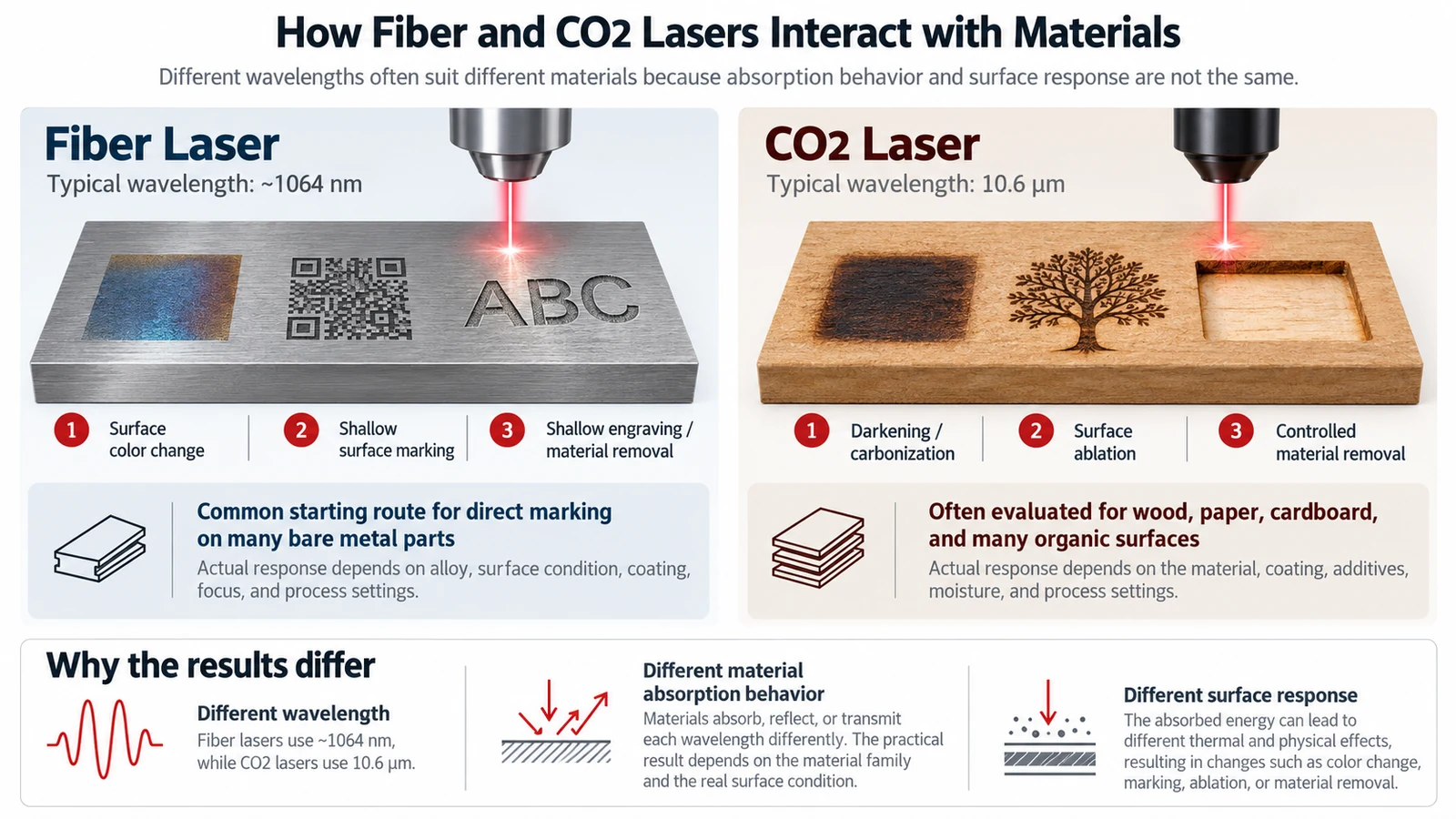
Доставка пучка, фокусировка, поведение импульса, настройки сканирования и время экспозиции также имеют значение. Даже когда длина волны подходит, эти условия определяют, реагирует ли материал контролируемым образом и соответствует ли маркировка ее критериям приемки.
Какие материалы и результаты маркировки благоприятствуют каждому лазеру?
Совместимость материалов лучше всего понимать как сочетание подложки, состояния поверхности и требуемого результата. Лазер, создающий сильный контраст на одной отделке, может создать слабую маркировку или чрезмерное изменение поверхности на другой.
Неокрашенные металлы: прямые маркировки, контраст и гравировка
Волоконные лазеры обычно являются первым выбором для прямой маркировки неокрашенной нержавеющей стали, углеродистой стали, алюминия, титана и многих других промышленных металлических деталей. В зависимости от сплава и настроек процесса они могут создавать видимые изменения цвета, неглубокие поверхностные отметки или углубленную гравировку без нанесения отдельного маркировочного состава.
Эти результаты не являются взаимозаменяемыми. Темная поверхностная отметка может хорошо подходить для кода прослеживаемости, когда деталь должна оставаться относительно гладкой. Углубленная отметка может потребоваться там, где заданная глубина гравировки или повышенная стойкость к механическому износу входит в критерии приемки. Достижение глубины обычно требует большего удаления материала и может увеличить время обработки или изменить поверхность. Для неокрашенного алюминия не следует предполагать, что определенный оттенок черного достижим с любым волоконным источником и отделкой; контраст необходимо проверять на фактическом сплаве и состоянии поверхности.
Обычный маркер на CO2 обычно не является практичным вариантом для прямой гравировки неокрашенного металла. Он может создавать отметку на металле с помощью подходящей маркировочной пасты, спрея или ленты, но это добавляет этапы подготовки и очистки и представляет собой иной процесс, отличный от прямого изменения подложки.
Дерево, бумага, картон и кожа: важна реакция поверхности
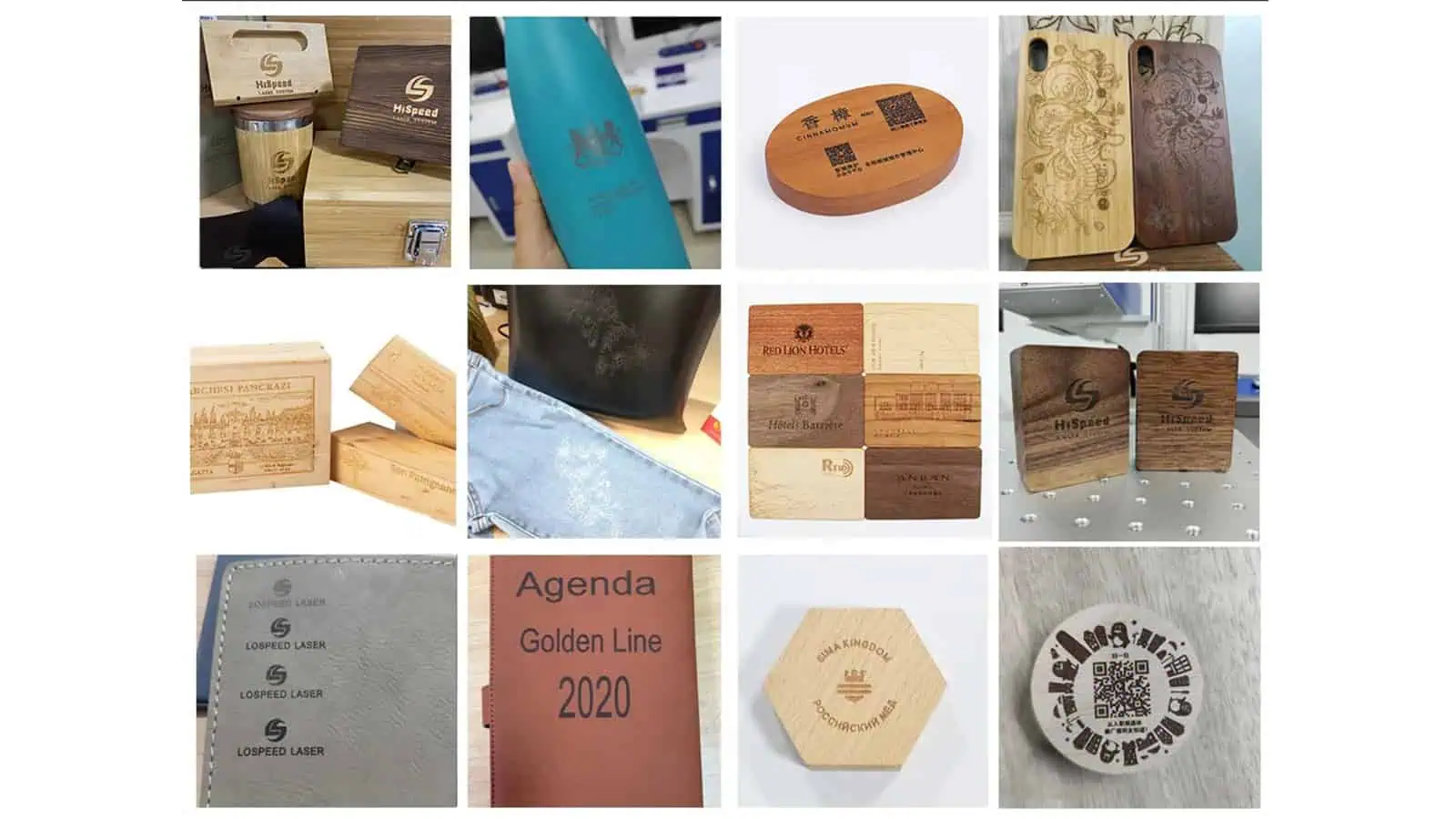
CO2-лазеры обычно хорошо подходят для дерева, бумаги, картона и многих кожаных поверхностей. Видимая отметка может создаваться за счет локального затемнения, карбонизации или контролируемого удаления материала в зависимости от подложки. Это делает CO2 распространенным кандидатом для кодов упаковки, идентификации продукции и декоративных или функциональных отметок на органических материалах.
Задача состоит в управлении этой реакцией. Более заметное выжигание не обязательно означает лучшую отметку. Избыточная энергия может приводить к обугливанию, саже, неровным краям символов, деформации или неприемлемому изменению отделанной поверхности. Текстура древесины, покрытия бумаги, отделка кожи, цвет и влажность — все это может влиять на результат.

| Материал или поверхность | Волоконный лазер | CO2-лазер | What needs checking |
|---|---|---|---|
| Bare stainless steel, steel, aluminum, and similar metals | Usually the first choice for direct marking or engraving | Generally not preferred for direct bare-metal marking | Contrast, depth, alloy, finish, and permitted surface change |
| Wood, paper, cardboard, and many leather surfaces | Usually not the first choice | Usually the first choice | Darkening, edge quality, charring, and material damage |
| Engineered plastics | Possible with suitable formulations and marking conditions | Possible with suitable formulations and marking conditions | Resin grade, pigments, additives, color, and deformation |
| Anodized, painted, or otherwise coated metals | May mark or modify the surface layer | May mark or remove certain surface layers | Coating type, layer removal, underlying material, and protection requirements |
| Glass and PET containers | Generally not the usual first route for standard transparent surfaces | A candidate for selected glass and PET marking applications | Wavelength, wall thickness, appearance, and structural integrity |
The table narrows the options, but it cannot resolve the difficult cases by itself. In particular, plastics and coated products require a closer look at which layer absorbs the beam and what the marking process is permitted to change.
When Do Plastics, Coatings, and Transparent Materials Change the Answer?
For these materials, the exposed surface may behave very differently from the base material named on a drawing. The following situations show why an initial recommendation sometimes needs closer evaluation.
Before testing an unfamiliar plastic, synthetic leather, or coated material, confirm its composition and laser-processing safety. PVC and some other halogen-containing materials can release hazardous or corrosive fumes under laser exposure and may be unsuitable for laser processing. Do not trial-mark an unidentified formulation simply to see whether a visible code can be produced; establish material suitability and the necessary fume controls first.

Plastics: Resin Grade, Color, and Additives Matter
“ABS,” “PC,” or “PP” is not enough information to predict a reliable laser mark. The actual formulation may include pigments, fillers, flame retardants, or laser-sensitive additives that change how strongly the part absorbs a given wavelength. Some formulations respond well to near-infrared fiber lasers; others may be more suitable for CO2 processing or require a different wavelength altogether.
The desired marking mechanism matters just as much. A laser might create a dark color change with little visible relief, produce a lighter foamed mark on a darker plastic, or remove a thin surface coating to expose a contrasting layer. Those results have different implications for appearance, texture, and functional surfaces. If the plastic melts, warps, becomes brittle, or loses code definition, a visible mark alone is not evidence of a suitable process.
For a molded housing or connector, a meaningful trial therefore needs the actual resin grade, color, additive package where available, and final surface finish. Testing a generic plastic sample does not establish that another formulation will behave the same way.
Coated Metals: Are You Marking the Coating or the Metal?
Consider a dark анодированный алюминий tag. A laser can create a light mark by modifying or removing part of the colored surface layer. Both fiber and CO2 systems can be candidates for certain anodized finishes. But the fact that the part is made from aluminum does not mean the laser has deeply engraved bare aluminum underneath.
Painted or powder-coated parts present a related decision. If the goal is to reveal the base material or a contrasting layer, selective coating removal may provide the right appearance. If the coating serves a corrosion, electrical, or other protective purpose, removing it may be unacceptable even when the code is highly legible. The required outcome must be defined before choosing the process.
Glass, PET, and Thin Packaging: Visible Does Not Always Mean Acceptable
Transparency to visible light does not tell you how a material will respond to a CO2 laser. CO2 markers can produce frosted-looking marks on some glass and PET products, but the mechanism and acceptable process window are different. On glass, localized thermal effects can produce microfractures or surface changes; appearance must be evaluated alongside the risk of chipping or weakening the product.
On PET bottles, even the choice between CO2 wavelengths can matter. Systems operating near 9.3 micrometers may produce a shallower, foamed-looking effect on certain thin-walled PET containers, whereas a 10.6-micrometer process may remove more material. The appropriate choice depends on bottle construction and the required code. A readable date mark is not sufficient if it creates a weak point, pinhole, or other unacceptable change to the packaging.
Thin films and multilayer packaging deserve the same caution. The marking process must preserve any necessary barrier, sealing, and mechanical properties. Where neither fiber nor CO2 can meet the quality requirement without excessive surface change, another marking technology may need evaluation rather than forcing one of these two systems to work.
Which Is Faster or More Cost-Effective in Production?
There is no reliable answer to “Is fiber faster than CO2?” without specifying the material, mark, machine configuration, and production arrangement. A fiber laser may be a natural choice for high-volume metal traceability, while a CO2 coder may be well suited to moving cartons or bottles. Those strengths do not establish a universal speed ranking.
Сравнить accepted parts per hour, not a headline scan-speed figure alone. The actual cycle can include part presentation, positioning, focus adjustment, laser exposure, indexing, and any code verification. Mark size, fill pattern, contrast target, required depth, and the number of processing passes also affect the time needed for an acceptable result. A faster-looking trial is not better if the mark fails readability or durability checks.
Ownership cost also depends on the complete installation. The laser source design, optics, cooling requirements, extraction, guarding, fixtures, consumables, and maintenance environment all matter. In particular, a CO2 metal-marking process that relies on spray or paste adds handling steps that a direct fiber-metal process may avoid. Conversely, selecting fiber for a substrate that does not absorb its wavelength effectively can waste money regardless of the machine’s purchase price.
Only compare purchase and running costs after establishing which process can repeatedly meet the specification. Otherwise, the lower-priced machine may simply be the wrong machine.
How Do You Make the Final Choice and Validate the Mark?
The final choice should be based on a trial using production-representative parts and defined acceptance criteria. If both technologies are candidates, evaluate their marks against the same requirements before comparing their production fit.
Follow a Practical Selection Sequence
- Identify the exposed surface. Record the substrate, grade, color, finish, and whether the beam will contact bare material, a coating, or a multilayer structure.
- Define the required result. Specify the code or graphic, its size, target contrast or readability, depth if relevant, and any limits on visible or functional surface change.
- Choose the first trial route. Prioritize fiber for typical bare-metal marking and CO2 for many organic surfaces. Treat plastics, coatings, glass, and packaging as application-specific decisions.
- Test the actual part. Compare acceptable marking quality, edge definition, surface effects, and performance after any required cleaning, handling, or downstream process.
- Compare production fit. Once the marks pass, evaluate cycle time, handling, integration, extraction, guarding, and total operating requirements before settling on a machine configuration.
What Should a Sample Marking Test Confirm?
| Проверьте | Вопрос, требующий решения |
|---|---|
| Actual material | Is the sample the specified grade, color, coating, and surface finish? |
| Спецификация маркировки | Does the result meet the required text, code size, contrast, and depth where specified? |
| Читаемость | Can the intended reader or scanner consistently read the mark under realistic conditions? |
| Целостность поверхности | Are melting, cracking, excessive roughness, coating removal, or other changes within permitted limits? |
| Долговечность | Does the mark remain acceptable after relevant cleaning, abrasion, handling, or downstream processing? |
| Повторяемость в производстве | Can the process hold the required quality and cycle time with realistic positioning and part variation? |
If the same operation needs direct marks on bare-metal parts and codes on uncoated paperboard, do not assume that one conventional fiber or CO2 source is the best fit for both. Depending on the workflow, compare separate marking stations with a properly configured dual-source system; part handling, production volume, and the required results determine whether either arrangement makes sense.
If both technologies pass, select between them using the actual production trade-offs. If neither passes, reconsider the wavelength, marking mechanism, or material specification instead of compensating with more power alone. For a useful machine-selection review, provide the actual material and finish, a drawing or photograph of the marking area, the code artwork, the acceptance criteria, and the expected production rate.