Escolher entre uma máquina de marcação a laser UV de 3 W, 5 W e 10 W não é simplesmente uma questão de comprar mais potência de laser. A escolha certa é a máquina que produz uma marca aceitável no seu material, atende ao tempo de ciclo da sua produção e fornece margem de processo suficiente sem custo desnecessário de equipamento.
Para marcas pequenas e detalhadas com requisitos de produção modestos, um laser UV de 3 W pode ser suficiente. Uma máquina de 5 W passa a valer a pena ser avaliada quando potência adicional puder reduzir o tempo de processamento ou melhorar a janela de processo utilizável. Um sistema de 10 W merece consideração quando a carga de marcação é maior e os testes demonstram que a potência adicional proporciona um benefício de produção significativo.
Estes são pontos de partida, não limites fixos de aplicação. Um laser de 10 W não produz automaticamente uma marca mais nítida nem opera três vezes mais rápido que um laser de 3 W. A fonte de laser, as características do pulso, a óptica, o material, o padrão de marcação e as condições de produção influenciam todos o resultado.
| Potência do laser UV | Quando considerá-la primeiro | O que verificar |
|---|---|---|
| 3W | Marcas pequenas, detalhes finos e volumes moderados de marcação | Contraste, detalhe, repetibilidade e tempo de ciclo exigidos |
| 5W | Aplicações que necessitam de maior margem de processamento ou, potencialmente, de menor tempo de marcação | Melhoria mensurável em relação a um processo 3W aceitável |
| 10W | Volumes de marcação mais altos, padrões preenchidos maiores ou ciclos de produção exigentes | Ganho real de produtividade sem danos inaceitáveis ao material |
O método de seleção mais confiável é definir seus requisitos de marcação, comparar configurações de máquina adequadas e validar os candidatos em amostras representativas.
O que você deve verificar antes de escolher a potência do laser UV?
Antes de comparar a potência em watts, identifique o que a máquina precisa realizar. Pode ser que ambos os fabricantes precisem marcar componentes plásticos, mas um pode exigir um pequeno número de série a cada poucos minutos, enquanto o outro precisa produzir códigos legíveis em uma linha de produção em movimento. Esses são problemas diferentes de seleção de equipamento.
Material, condição da superfície e limites de dano
A marcação a laser UV geralmente usa um comprimento de onda de 355 nm. Sua interação com muitos plásticos, revestimentos e superfícies sensíveis a torna útil para aplicações em que a marcação a laser infravermelho convencional pode causar efeitos térmicos excessivos. No entanto, a marcação UV não é automaticamente isenta de calor ou danos ao material. A resposta depende da peça de trabalho real.
Para componentes plásticos, o grau do polímero, pigmentos, cargas, aditivos, textura superficial e condições de moldagem podem afetar o contraste da marcação e o comportamento de processamento. Duas peças descritas simplesmente como “ABS” ou “policarbonato” podem exigir configurações diferentes.
O vidro introduz outras preocupações. Pode ser possível obter uma marca visível, mas modificação excessiva da superfície, microfissuras, lascamento ou perda de integridade mecânica podem ser inaceitáveis.
Antes de selecionar a potência, confirme:
- O material ou a formulação exatos, quando disponíveis.
- Cor da superfície, revestimento, acabamento e espessura.
- Se a marca deve ser escura, clara, fosca ou de outra forma visualmente distinta.
- Se fusão, descoloração, rachaduras ou deformação da superfície são permitidas.
- Qualquer limpeza, abrasão, exposição química ou processo subsequente ao qual a marca deva resistir.
A descrição do material por si só não permite estabelecer se 3 W, 5 W ou 10 W serão suficientes. Para uma explicação mais ampla do processo, consulte nosso Guia de tecnologia de marcação a laser UV.
Tamanho da marca, detalhe e qualidade exigida
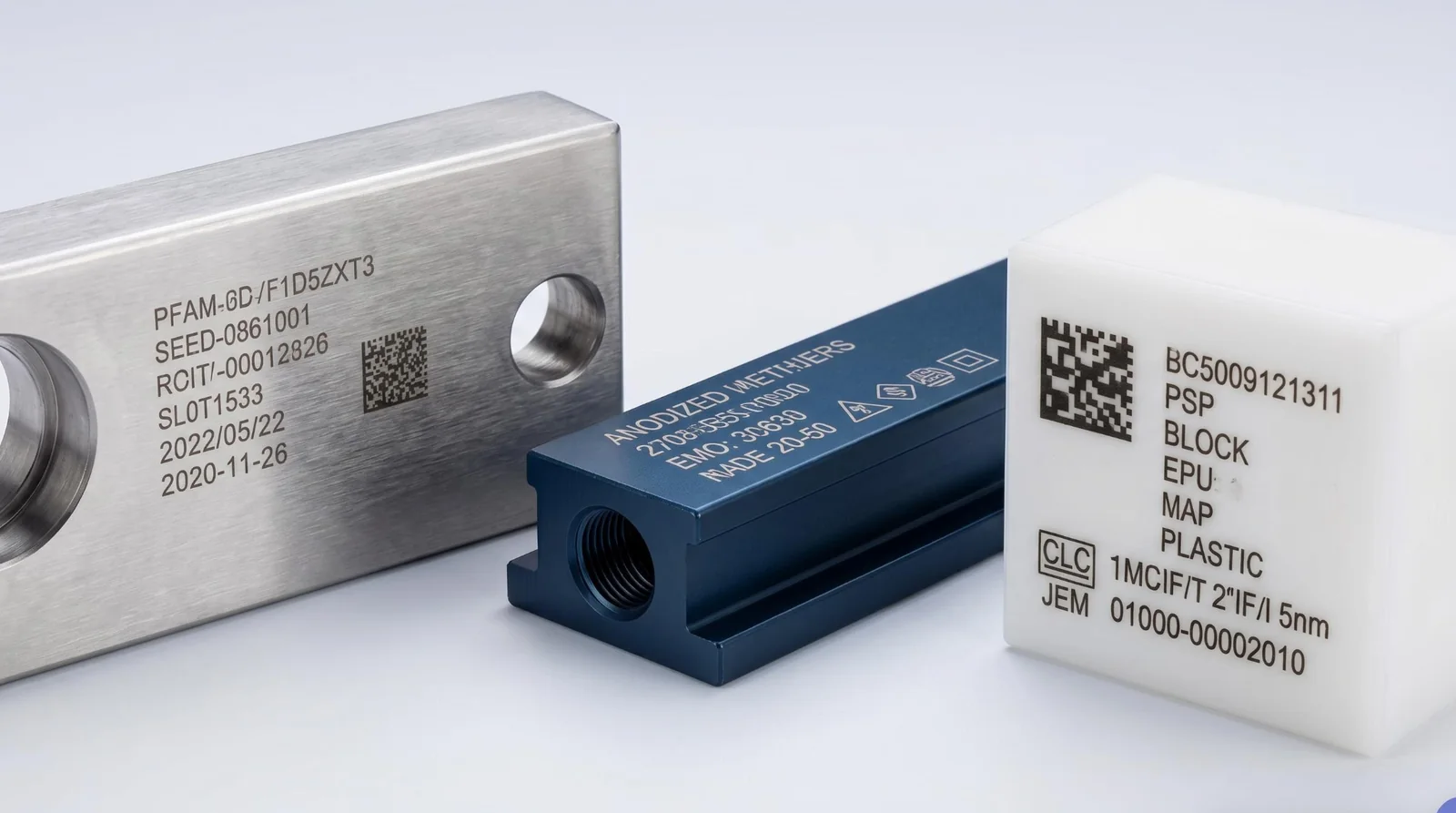
Um número de série pequeno e um logotipo grande preenchido podem gerar cargas de trabalho de laser muito diferentes, mesmo quando aparecem no mesmo material. Um contorno pequeno pode exigir processamento limitado, enquanto um design preenchido envolve muitas linhas de varredura próximas. Aumentar a área preenchida, o contraste exigido ou o número de passagens pode aumentar o tempo de marcação.
Os critérios de aceitação devem ser definidos antes do teste. Para textos e gráficos, verificações úteis incluem legibilidade dos caracteres, definição das bordas, uniformidade do preenchimento e alterações superficiais indesejadas.
Para códigos QR ou símbolos Data Matrix, a aparência visual por si só não é suficiente. O código deve atender às condições de leitura exigidas, incluindo seu tamanho real, contraste, superfície circundante e leitor pretendido. Se a peça tiver um revestimento delicado, a alteração superficial aceitável pode ser mais importante do que o quão escura a marca parece.
Um laser de maior potência não fornece, por si só, detalhes mais finos. O ponto focalizado, a qualidade do feixe, a lente de campo, a precisão de varredura e a resposta do material também determinam o que a máquina pode produzir.
Volume de Produção e Tempo de Ciclo Disponível
A demanda de produção costuma ser o motivo pelo qual os compradores consideram uma potência de laser UV mais alta. No entanto, a produção diária e o tempo de marcação a laser não são a mesma medida.
O ciclo completo de produção pode incluir posicionamento, carregamento, focalização ou ajuste de altura, marcação, verificação de código e descarregamento. Quando essas operações dominam o ciclo, reduzir o tempo com o laser ligado pode proporcionar pouca melhoria na produção real.
Uma estação de trabalho que produz pequenas marcas de identificação em lotes pode ter tempo suficiente para concluir cada marca com um sistema de 3W. Uma estação de produção com uma janela curta de marcação pode exigir uma capacidade de processamento diferente, mesmo quando a marca em si é relativamente pequena.
A pergunta relevante não é simplesmente com que rapidez o scanner pode se mover. É se o sistema completo consegue produzir peças aceitáveis de forma consistente dentro do tempo de ciclo disponível.
Prepare um briefing básico de marcação contendo o material, a arte, o tamanho da marca, os critérios de aceitação, o volume de produção esperado e o tempo de ciclo desejado. Esses detalhes tornam a comparação de potência significativa.
O que realmente muda entre lasers UV de 3W, 5W e 10W?
A potência em watts na especificação de um laser UV geralmente se refere a potência média de saída óptica nominal sob condições de operação definidas. Ela não representa a potência elétrica consumida pela máquina completa, nem descreve completamente a energia entregue por pulsos individuais.
Potência Média, Energia de Pulso e Diferenças entre Fontes Laser
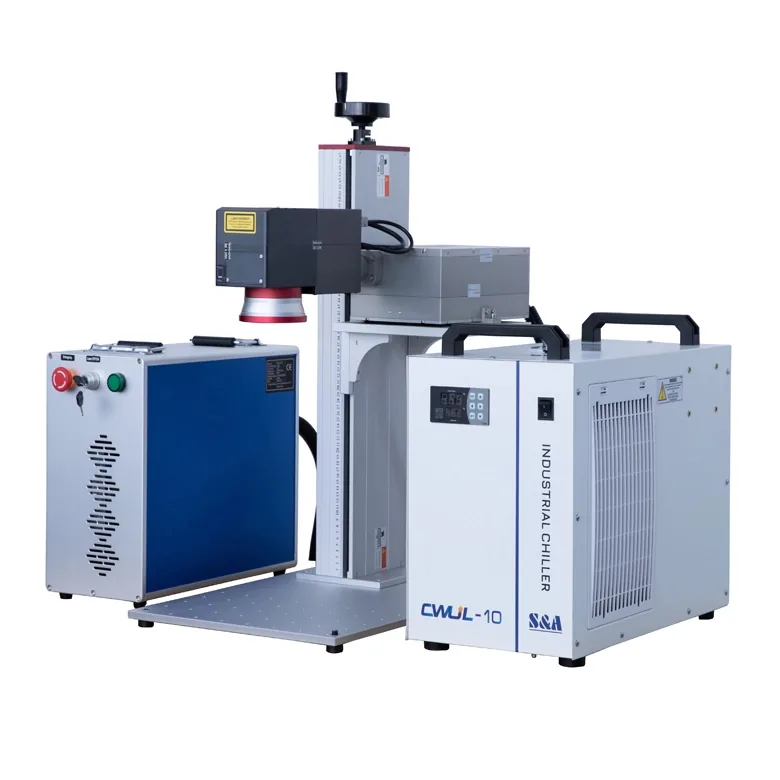
Muitos sistemas industriais de marcação UV usam fontes laser de estado sólido bombeadas por diodo e pulsadas. Seu desempenho depende de mais do que a potência de saída nominal.
A taxa de repetição de pulsos indica com que frequência os pulsos são emitidos. Sob as condições operacionais pulsadas aplicáveis, a energia média por pulso é aproximadamente a potência óptica média dividida pela frequência de repetição. A largura de pulso, a qualidade do feixe e o comportamento de potência versus frequência do laser também afetam o processamento. A fonte pode não manter sua potência de saída nominal em toda a faixa de frequência.
Dados do fabricante ilustram por que o modelo exato importa. A seguir, estão selecionadas especificações da fonte laser UV JPT, não valores de desempenho medidos para máquinas de marcação completas ou para as configurações padrão fornecidas pela Zhuorui Laser.
| Modelo da fonte laser | Condição de saída publicada | Faixa de frequência de repetição listada | Resfriamento da fonte |
|---|---|---|---|
| SEAL-355-3E | >3 W a 30 kHz | 20–200 kHz | Resfriado a água |
| SEAL-355-5E | >5 W a 40 kHz | 20–200 kHz | Resfriado a água |
| SEAL-355-10S | >10 W a 60 kHz | 40–300 kHz | Resfriado a água |
Sources: JPT’s SEAL 355-3/5 specifications e SEAL 355-10/15/20/30 specifications. The figures describe the listed laser sources at specified conditions; they do not establish proportional marking-speed differences.
Cooling also varies by source family. For example, JPT’s LARK 355-3/5 series includes air-cooled 3W and 5W models, while the SEAL models in the table use water cooling. The complete machine must be configured for its installed laser source.
Marking Speed and Available Processing Margin
Additional laser power can be useful when the current process is limited by the energy available for an acceptable mark.
Consider a filled pattern that requires multiple passes to reach the specified contrast. Under suitable material and laser conditions, a higher-power system may support a different combination of scan speed, repetition frequency, and passes that reduces total marking time.
That improvement is not guaranteed. The material may not tolerate additional energy deposition; the source may deliver its rated power at a different pulse frequency; or the scanner, focusing conditions, and production handling may already be limiting the cycle. Doubling average laser power therefore does not mean doubling accepted production output.
Processing margin also matters. A machine that produces a good result only within a very narrow parameter range may be less suitable for production than one that maintains the required result across realistic variations in material and operation.
A useful power upgrade should improve at least one relevant outcome: accepted marking speed, usable process margin, or the ability to meet an otherwise difficult marking requirement.
Why Higher Power Does Not Automatically Mean Better Quality
The best-looking mark is not necessarily produced at the highest available power.
On a heat-sensitive polymer, excessive energy concentration may cause discoloration, melting, raised edges, or other unwanted changes. On glass, the process may need careful control to limit cracking and surface damage. Conversely, a higher-rated laser operated within a suitable process window is not automatically less precise than a lower-power model.
The relevant factors include the focused spot and optical system; pulse characteristics and energy distribution; scan speed, pulse overlap, and hatch spacing; material absorption and thermal response; and focus variation across the marking field.
When precision is the dominant requirement, compare the actual marks under the intended inspection conditions rather than treating wattage as a substitute for quality. For a broader explanation, see why laser power is not the only factor.
Which UV Laser Power Should You Test for Your Application?
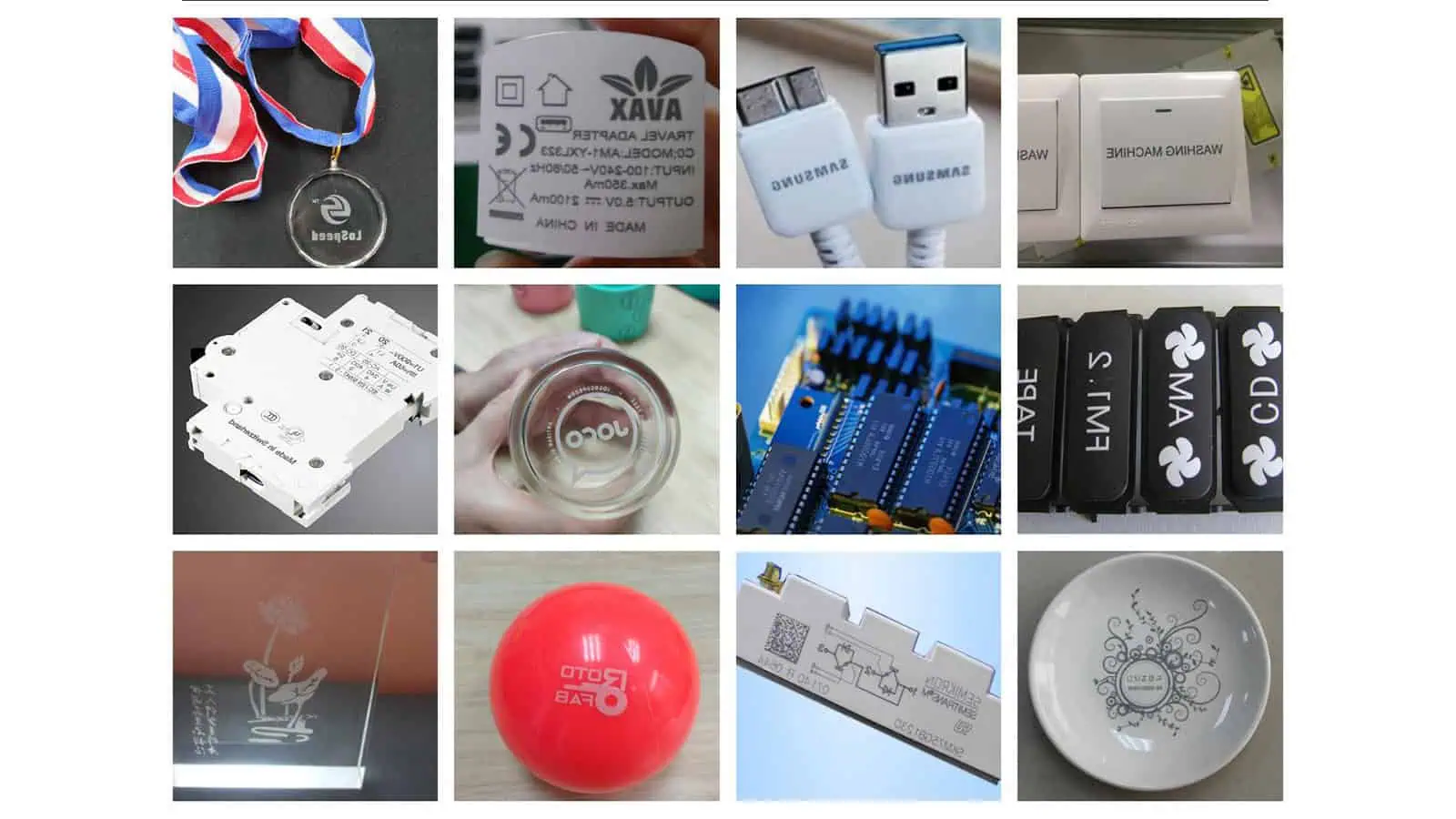
The most useful way to shortlist UV power is to consider the marking task rather than assign a fixed wattage to every material. The following matrix suggests initial testing directions, not material-compatibility guarantees.
| Tarefa de marcação | Candidate comparison | Main acceptance question |
|---|---|---|
| Small characters or compact identification marks | Begin with 3W; compare 5W if needed | Does the mark meet quality and cycle-time requirements? |
| Routine plastic-part coding | Compare 3W and 5W | Does additional power improve accepted output? |
| Larger filled logos or demanding marking workloads | Compare 5W and 10W; retain a 3W baseline when useful | Is time reduced without unacceptable surface changes? |
| Glass or other damage-sensitive surfaces | Select candidates after reviewing the material and mark | Can the required effect be achieved without unacceptable defects? |
| Short marking windows or moving-part coding | Test power together with motion and control configuration | Can the complete system maintain quality at production speed? |
Three illustrative engineering scenarios show how these decisions differ. They are examples of selection logic, not recorded customer tests or measured Zhuorui Laser results.
Scenario 1: Fine identification marks on an electronic plastic housing. Suppose a molded housing requires a compact serial number or Data Matrix symbol without damaging the surrounding plastic. Begin by checking whether a 3W UV system can produce an acceptable mark within the available cycle time. If it can do so repeatedly with sufficient process margin, more power may offer little benefit. If quality is acceptable but the processing time is too long, comparing a suitable 5W configuration becomes reasonable. Judge both the code readability and surface condition, not simply which sample looks darker.
Scenario 2: A larger filled logo on a coated polymer component. A filled design may require substantially more scan coverage than a few small characters. Depending on the coating and target appearance, a 5W system may complete the accepted pattern faster than a 3W machine. If the required cycle time remains out of reach, a suitable 10W candidate can be tested. Check coating integrity, edge quality, uniformity, and whether the supposed speed improvement remains when only acceptable results are counted.
Scenario 3: Variable-data coding at a production station. A manufacturer may need changing codes within a short available marking window. If laser-on time is the verified bottleneck, comparing higher power could be justified. If the constraint comes from part positioning, trigger timing, data handling, or motion, increasing laser power will not correct the underlying cause. A machine-side review should cover marking time, positioning, control signals, data content, and verification. Flying or online marking needs configuration-specific confirmation.
Similar-looking applications may therefore justify different power choices. The actual acceptance requirement—not the material name or wattage alone—controls the shortlist.
When Is a 5W or 10W UV Laser Worth the Extra Cost?
A higher-power UV laser marking machine may cost more, but the difference between quotations is not determined by laser power alone. The more useful question is whether the proposed configuration delivers enough additional value for the actual application.
Compare Complete Machine Configurations, Not Wattage Alone
Two machines with similar cabinets and the same advertised power may contain different laser sources, optics, cooling systems, controllers, and accessories. Before comparing prices, request quotations that clearly identify:
- Fonte laser: Brand, exact model, rated operating conditions, and supported parameters.
- Marking optics: Galvo scanner, field lens, marking area, and working-distance requirements.
- Cooling: Air- or water-cooled configuration and any supporting equipment required.
- Controles: Software, controller, variable-data functions, and required interfaces.
- Workpiece handling: Fixtures, positioning aids, and any installed rotary or vision functions.
- Segurança e extração: Actual enclosure, interlocks, and fume-control provisions.
- Delivery scope: Computer, accessories, commissioning, documentation, spare parts, and support terms.
A 5W quotation with a better-matched optical system and more suitable machine configuration may be more valuable than a nominally higher-powered system with the wrong marking field or missing production requirements. A cooling system or optional module should be evaluated as part of the actual equipment package, not assumed to be included because of wattage.
Compare Upgrade Cost Against Accepted Production Output
Power upgrades become easier to justify when they solve a measurable production problem. If a 3W machine produces acceptable marks at the required output rate, a 5W option may not generate enough additional value to justify its cost.
When an acceptable 3W process cannot meet the production target, test whether a 5W configuration improves the completed process sufficiently. A 10W system becomes attractive when the additional output is usable, the material remains within acceptable limits, and the gain matters to production.
Compare accepted parts produced over the required operating period, changes in complete cycle time, rejected marks and rework, recurring operating costs, and any justified need for future capacity. Higher power only adds useful capacity if the process can actually benefit from it.
There is no reliable universal price premium or payback period for moving from 3W to 5W or 10W. Those figures require specific equipment quotations and validated operating data.
How to Compare 3W, 5W, and 10W UV Lasers in a Sample Test
A sample test should answer a purchasing question, not merely demonstrate that a laser can leave a visible mark. The purpose is to determine which proposed configuration meets the same production requirements at an acceptable cost.
Use Representative Workpieces and the Same Acceptance Criteria
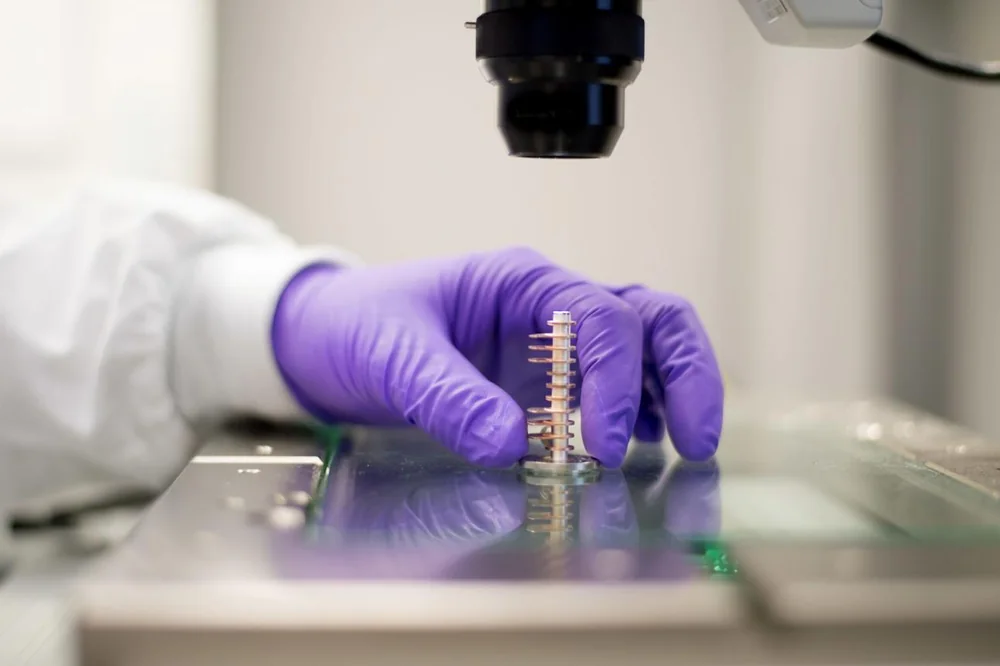
Use production-representative samples wherever possible. If the material has multiple grades, finishes, colors, or coatings, include the variations that could change marking behavior.
Each candidate should be evaluated against the same required task: identical marking content and intended dimensions; the same quality and readability criteria; applicable surface-damage limits; production cycle-time requirements; and comparable inspection methods.
For a Data Matrix code, compare whether each candidate produces an acceptable, readable symbol under the intended reader and inspection conditions. A visually darker symbol should not automatically be considered better if its geometry or surrounding material is damaged.
Optimize Each Laser Within Its Supported Process Window
A fair comparison does not necessarily mean forcing every laser to use identical operating settings. Different models may have different rated frequency ranges, pulse characteristics, and output behavior. Applying the same nominal frequency, software power percentage, and scan speed across all machines could unfairly disadvantage one system.
Instead, optimize each candidate within its supported range to meet the same acceptance criteria. Record the installed source model, optics, marking field, focus conditions, pulse frequency, scan speed, hatch spacing, and number of passes where relevant.
If the objective is to isolate laser-source power, control other influential conditions as closely as practical. If the objective is to choose between complete machines, compare their best validated production-ready configurations and document significant hardware differences. A complete-machine comparison can establish which configuration suits the task, but not necessarily that wattage alone caused the result.
Compare Quality, Repeatability, and Complete Cycle Time
Do not base a purchase decision on a single successful mark. Use repeated samples under representative working conditions. Depending on the application, inspect text readability, code verification, contrast, uniformity, surface damage, and any required durability after handling.
| Item a registrar | What to document |
|---|---|
| Peça de trabalho | Material grade, batch, color, coating, thickness, and relevant geometry |
| Requisito de marcação | Artwork or code, size, location, and acceptance criteria |
| Configuração da máquina | Source model, optical system, field size, cooling, and relevant installed functions |
| Process settings | Frequency, scan speed, passes, focus, and other relevant parameters |
| Qualidade da marcação | Pass/fail outcome, readability, visual defects, and required durability checks |
| Processing time | Laser-only marking time and complete production cycle time |
| Repetibilidade | Results across repeated samples and relevant production variation |
| Decisão final | Whether the configuration meets quality, throughput, and cost requirements |
Compare candidates using accepted output, not the maximum speed at which they can produce any visible mark. If a higher-powered system improves production performance, the gain must still justify the complete-machine configuration and cost.
For further preparation, see the checklist de teste de marcação de amostra.
How to Make the Final 3W, 5W, or 10W Selection
The final decision should follow validated marking requirements rather than a fixed rule that every buyer must progress from 3W to 5W and then to 10W.
- Choose a suitable 3W configuration when it meets the specified quality, cycle time, repeatability, and production-margin requirements. There is no automatic need to upgrade.
- Choose a suitable 5W configuration when testing shows a meaningful improvement in accepted processing efficiency or operating margin that justifies its additional cost.
- Consider a 10W configuration when a verified power-related throughput or processing limitation makes the additional output useful and the marking quality remains acceptable.
- Reconsider the process instead of increasing power when results are limited by material response, focus, optics, positioning, or excessive surface damage.
Some projects justify testing 10W alongside a lower-power candidate from the beginning. The sequence is not mandatory; the acceptance criteria are.
For a useful machine recommendation, prepare representative workpieces or material specifications, marking artwork, marking area, target result, production quantity, and available cycle time. A supplier can then review appropriate source and machine configurations and validate samples before purchase.
Explore the available Máquinas de marcação a laser UV ou request an application-based quotation with your marking requirements.
Frequently Asked Questions About 3W, 5W, and 10W UV Lasers
Is a 10W UV Laser Marking Machine Always Water-Cooled?
Do not assume the cooling configuration from wattage alone. Many industrial 10W UV laser sources, including the published JPT SEAL models referenced above, use water cooling, but the required method must be confirmed for the exact source and complete machine. Lower-power UV sources can also be water-cooled, while some 3W and 5W models are air-cooled.
Is UV Laser Output Power the Same as Machine Power Consumption?
No. A 3W, 5W, or 10W rating generally refers to the laser’s optical output power under specified conditions, not complete-machine electricity consumption. Total consumption also depends on the source electronics, power supply, controller, computer, cooling system, and installed equipment. Request the complete machine’s electrical specifications when assessing operating costs or installation requirements.
Can a 3W UV Laser Marking Machine Be Upgraded to 5W or 10W Later?
An upgrade may be possible, but it is not necessarily a simple source replacement. A new laser source must be compatible with the power supply, controller, optical arrangement, cooling, mounting structure, and safety provisions. Recalibration and sample validation may also be needed. If future upgrading matters, ask the supplier whether the proposed platform supports the intended configuration and whether the change would be technically and economically reasonable.