
About Zhuorui Laser
Laser Marking Machine Manufacturer and Supplier in China
Zhuorui Laser assembles, configures, tests and supplies complete laser marking machines in Dongguan, China, supporting standard equipment orders, OEM programs and project-reviewed custom configurations.
Company Profile
What Zhuorui Laser Actually Does
Zhuorui Laser focuses on the complete laser marking machine: application review, component matching, mechanical assembly, electrical wiring, system configuration, sample marking, outgoing checks and delivery preparation.
Laser sources, galvos, lenses, controllers and other components may be sourced from suitable suppliers and selected according to the confirmed configuration. Our responsibility is to integrate those parts into a complete marking system for the agreed application scope.
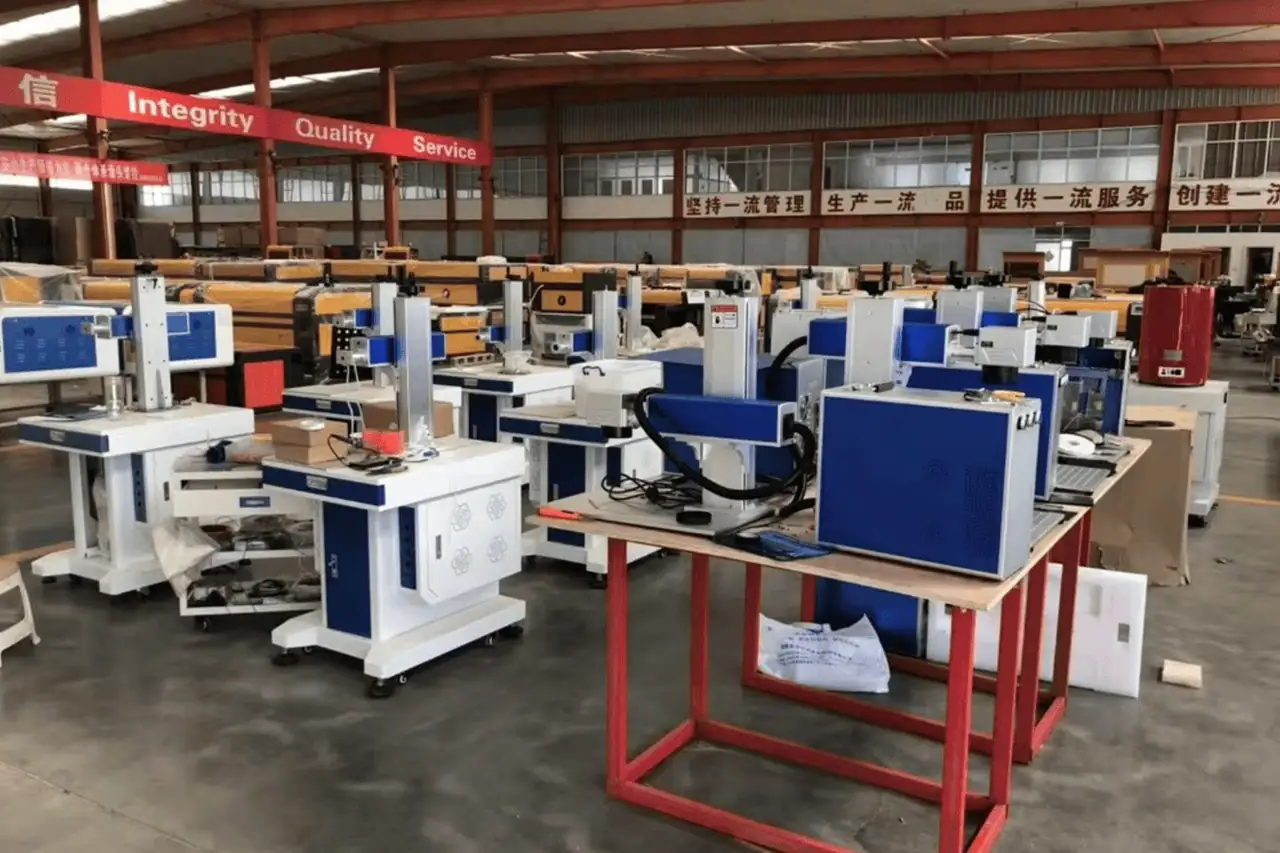
What We Supply
Complete Laser Marking Machines for Different Application Routes
This page only defines the equipment scope Zhuorui supplies. Detailed laser selection belongs to the product and application pages.
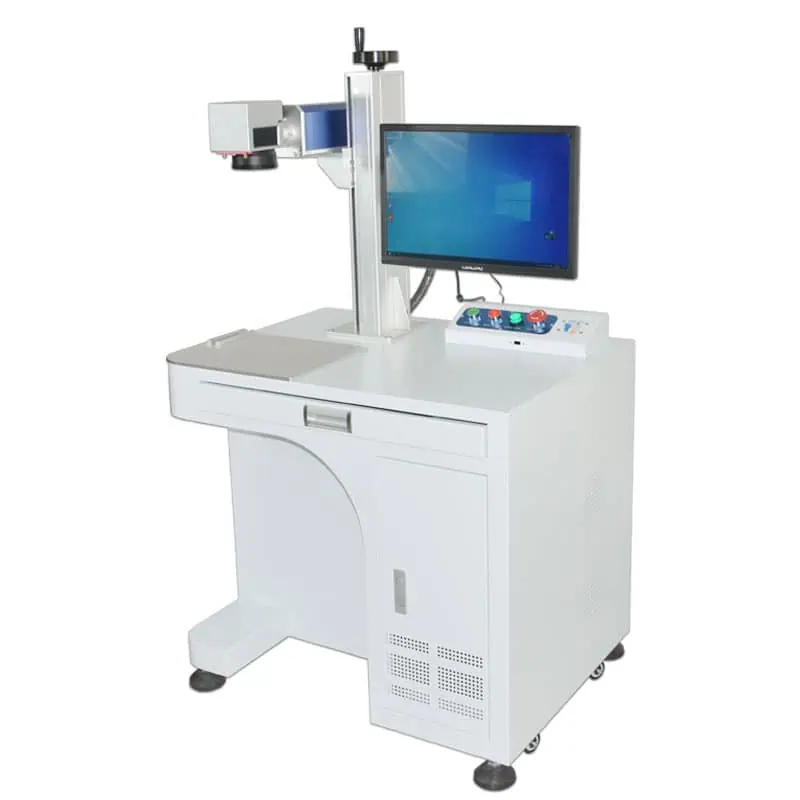
Fiber Laser Marking Machines
Standard and configured systems for common industrial metal-marking tasks and suitable applications.
MOPA Fiber Laser Systems
Fiber systems using MOPA sources when pulse-control requirements justify that configuration.
UV & CO₂ Marking Machines
Alternative wavelength routes for materials and surfaces that require a different marking process.
Configured / Custom Marking Systems
Fixtures, rotary devices, enclosures, vision, flying marking and other reviewed project options.
From Requirement to Shipment
What Zhuorui Controls in a Laser Marking Machine Order
A useful supplier process turns the real marking requirement into a confirmed configuration, then into an assembled and checked machine.
Review the Job
Part, material, surface, marking content, geometry, target result, cycle expectation and destination requirements.
Confirm the Configuration
Laser route, machine structure, marking field, controls, voltage, accessories and project boundaries.
Assemble & Wire
Mechanical assembly, electrical wiring, optical installation and integration of confirmed functional modules.
Configure & Set Up
Software, working distance, focus position, marking field, axes and required functions are prepared for testing.
Validate the Agreed Scope
Basic function checks, sample marking when applicable and review of order-specific acceptance points.
Release for Delivery
Configuration, accessories, documents and packing scope are checked before shipment preparation.
Assembly & Pre-Shipment Checks
Show the Work Behind the Finished Machine
Supplier qualification is stronger when buyers can see the actual assembly and preparation work rather than only finished product photography.
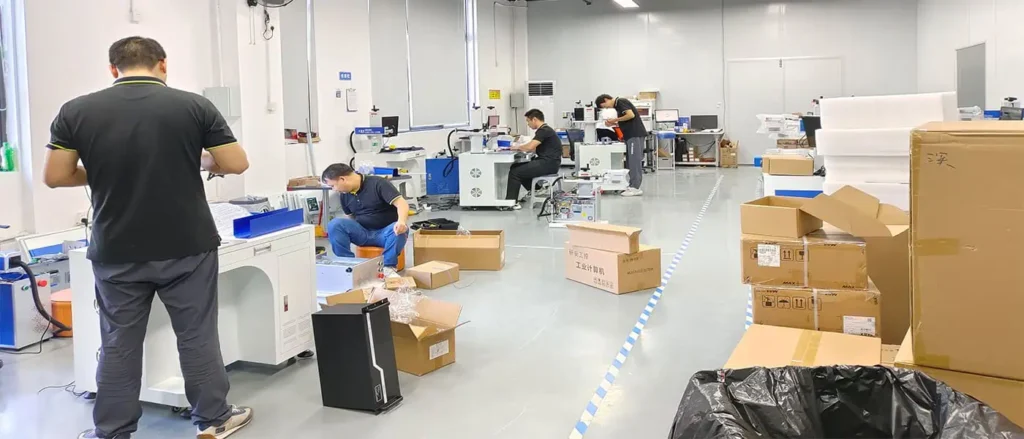
Assembly & Preparation
Machine Assembly Is More Than the Final Enclosure
The assembly stage covers the mechanical structure, lifting column, optical installation, control hardware, electrical wiring and selected accessories for the confirmed machine.
- Mechanical structure and workstation preparation
- Electrical wiring and control connection
- Optical and functional module installation
- Accessory installation for the confirmed order
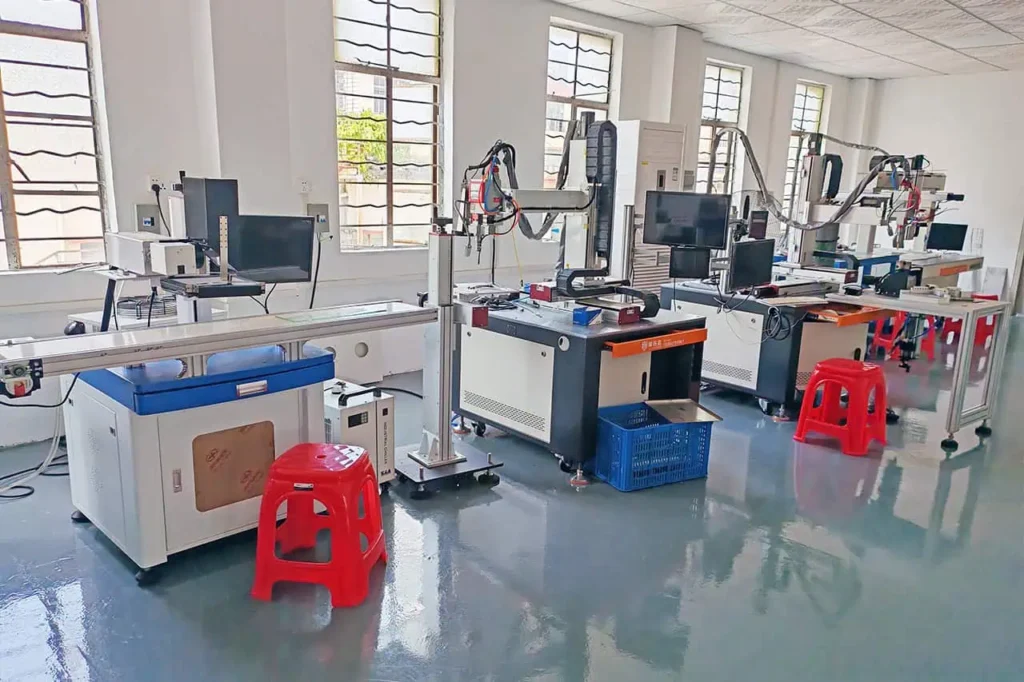
Quality & Order Check
Checks Should Match the Confirmed Order
Before packing, the machine is reviewed against the confirmed configuration and required functions. Sample-dependent results remain conditional until the actual material and acceptance method are tested.
- Configuration check: machine structure, source route, lens/field, voltage and selected options
- Functional check: software, lifting, rotary, vision or other confirmed functions where applicable
- Marking / sample check: test material or customer sample when included in the order scope
- Shipment check: accessories, cables, tools, documents and packing scope
Responsibilities from Inquiry to Delivery
How the Work Is Handled Through Your Order
These are responsibility stages, not claims that each item is a separate department. The objective is to make clear what must happen between an inquiry and a prepared machine.
Requirement Review
Clarify the material, workpiece, marking content, expected result, quantity and commercial requirements.
Application & Configuration
Review the laser route, machine structure, field size, optional functions and sample-validation needs.
Assembly & Electrical
Build the confirmed machine structure, connect controls and install the selected modules and accessories.
Setup & Sample Marking
Prepare software, focus, marking field and machine functions, then run appropriate tests for the agreed scope.
Pre-Shipment & Packing
Check the configured machine, included accessories and packing scope against the confirmed order.
After-Sales Communication
Support software operation, setup guidance, parameter adjustment and basic troubleshooting after delivery.
Application First
Machine Selection Starts with the Application — Not Wattage Alone
A requested laser power is not enough to confirm a marking system. The machine route should be judged from the real workpiece, target result and production method.
Cooperation Options
Standard Supply, OEM Programs and Reviewed Custom Projects
The purchasing route should match the actual order. A standard machine, a repeat distributor program and a custom workstation do not require the same review depth.
Standard & Batch Supply
For defined machine formats, repeat configurations and multiple-machine purchases.
- Repeat machine configurations
- Mixed equipment orders
- Accessories and spare-parts preparation
OEM / Private Label
Private-label scope can be reviewed according to order quantity and the confirmed program.
- Logo and label application
- Machine color and appearance
- Manuals and packaging
Custom Configuration
Non-standard requirements are evaluated as projects rather than promised as automatic options.
- Worktables, fixtures and rotary devices
- Protective enclosures and workstation changes
- Vision, flying marking and other reviewed functions
Start with the Right Brief
Tell Us What You Need to Mark
A useful quotation starts with the real workpiece and required result, not only a requested laser power.
Send These Inputs
- Workpiece photo or drawing
- Material and surface condition
- Marking content, size and target result
- Quantity or production requirement
- Optional functions or machine constraints
- Destination and acceptance needs