
OEM & private-label capability
OEM & Private Label Laser Marking Machines
Most OEM and private-label requests start with the machine needed for the actual marking application. Once the machine requirement is confirmed, Zhuorui Laser can add the buyer’s company logo, model identity, supported exterior appearance, documents, software language and packing details. If the same branded configuration is ordered again later, the approved order reference can also serve as the repeat baseline.
- Application and machine requirement first
- Company logo, model and supported appearance
- Repeat baseline only when future reorders matter
Private-label scope
What Can Be Private-Labeled on a Laser Marking Machine?
OEM/private-label work can apply to a single machine as well as to future repeat orders. The practical starting point is the machine required for the customer’s marking task; branding, model identity and supported appearance details are then added to that confirmed machine scope.
- Brand identityLogo placement, exterior brand presentation and agreed labels.
- Model namingBuyer model codes and consistent naming across the machine, documents and packing records.
- Supported appearance detailsColor direction and supported exterior details that do not redefine the machine structure.
- Manuals and documentsManuals and documents aligned to the approved model and language scope.
- Software language and delivery filesInterface language and delivery files where the agreed software scope supports them.
- Packaging and shipment identityAgreed labels, packing lists, accessory separation and supported OEM packaging.
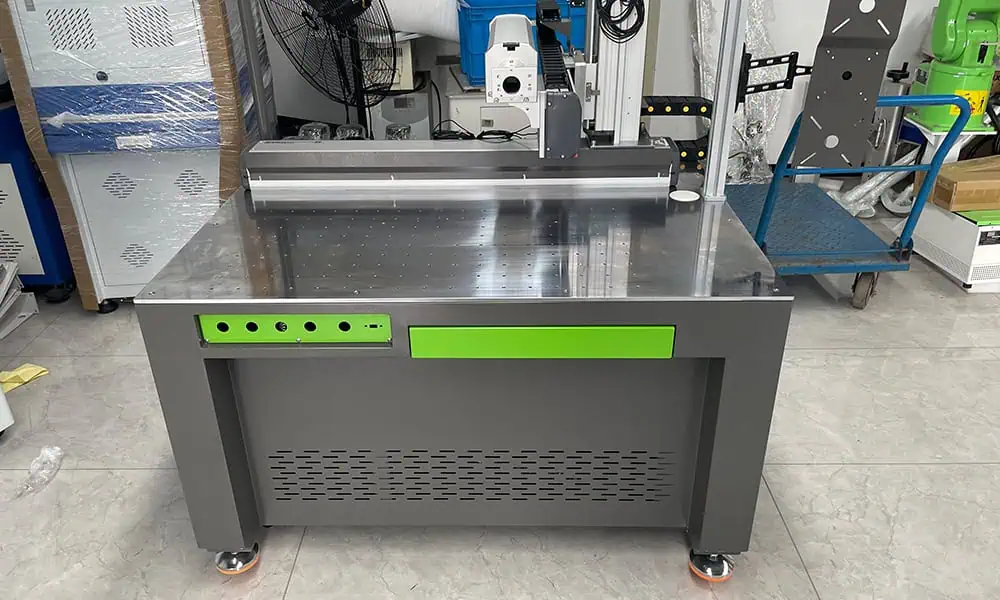
Appearance customization
Branding can be added to the machine the customer actually needs.
For many buyers, the commercial requirement is straightforward: solve the application first, then deliver the machine with the customer’s logo, preferred model identity and supported appearance details. That is different from building a distributor product family or committing to a large repeat program.
Order reference & repeat baseline
What Should Be Confirmed for an OEM / Private-Label Machine?
For a single machine, this is simply the approved order reference: the machine, logo, model identity, appearance details, documents and packing that should be delivered. If the customer later orders the same branded configuration again, the same record becomes the repeat baseline.
| Area | Buyer input | What should be frozen / confirmed | Typical approval reference |
|---|---|---|---|
| Base machine | Application, intended model, destination and options. | The machine/configuration used as the OEM reference. | Quotation, configuration sheet or order record. |
| Brand & model | Logo files, model naming and nameplate wording. | Applied logo, model naming and labels. | Artwork or visual approval. |
| Appearance | Color direction and supported exterior details. | The approved appearance items. | Drawing, reference image or sample photos. |
| Documents & software | Language and required delivery files. | Manual version, model references and software language. | Document review or checklist. |
| Packaging | Destination, labels and packing requirements. | Packing method, labels and packing list. | Packing instruction/checklist. |
| Sample / application reference | Part, material, target result and agreed acceptance reference where sample marking is part of approval. | The agreed application or sample reference used for the OEM program; this does not replace complete-machine QC. | Sample record, approved result photos or agreed acceptance note. |
| Future repeat / revisions | Only when future repeat orders are expected: revision policy and approval route. | How later substitutions or buyer-facing revisions will be approved. | Change note or updated order specification when applicable. |
Practical use: a one-off OEM machine only needs a clear approved order reference. The same record becomes a repeat-order baseline only if the customer later buys the same branded configuration again.
OEM approval process
How Does the OEM Approval Process Work?
Confirm the marking requirement and machine first, then finalize the customer logo, appearance and delivery details before the machine is completed.
Application confirmation
For most single-machine projects, the use requirement comes before the brand layer.
Where the marking result needs to be confirmed, customer sample testing can help establish the application route before logo, model identity and exterior details are finalized. This keeps branding tied to a machine that actually fits the job.
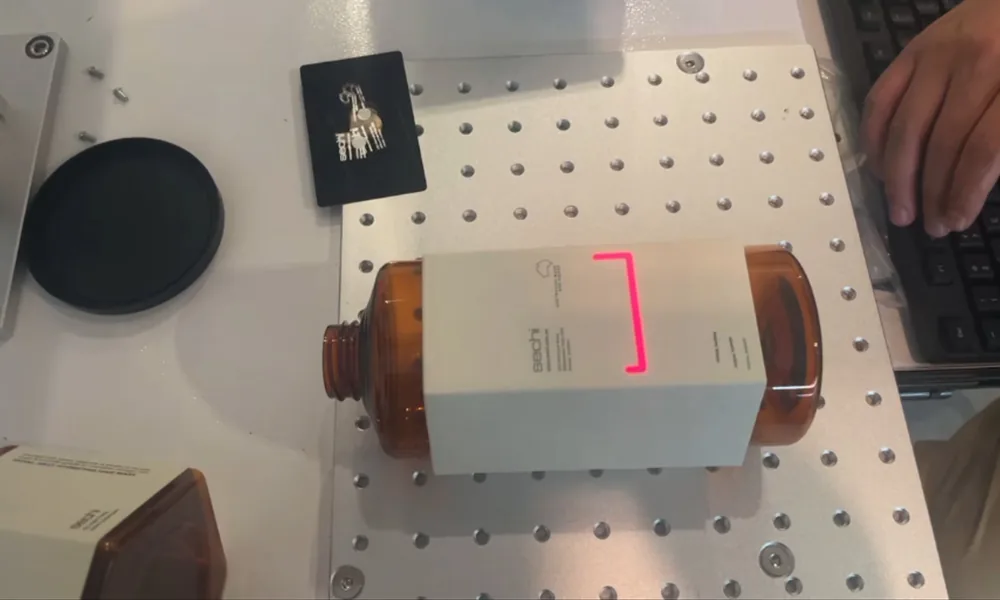
Define the application
Share the part, material, marking target, working method and any machine constraints that affect the actual use requirement.
Confirm the machine
Confirm the standard or engineered machine configuration, using sample testing where it is useful to verify the marking requirement.
Confirm branding & appearance
Align the company logo, model naming, supported exterior details, documents, language, labels and packing requirements.
Approve the order reference
Record the machine, brand presentation and delivery details for this order; reuse the same reference later only if the customer reorders the same branded configuration.
QC remains separate: each completed machine still follows the applicable commissioning and pre-shipment route. See Quality Control & Testing.
When the customer reorders
What Happens If the Same Branded Machine Is Ordered Again?
Not every OEM project is a wholesale program. When the same customer later reorders the same branded machine, the original order reference makes it easier to keep the agreed branding and identify any meaningful changes.
Keep the approved reference visible
Repeat orders should point back to the confirmed machine, branding, documents and packaging.
Review meaningful substitutions
Meaningful component substitutions should be reviewed for compatibility and practical impact before they are treated as equivalent.
Control buyer-facing revisions
Logo, labels, model names, manuals, language and packing instructions should be revised deliberately against the program reference.
Scale into batch supply only when needed
A single branded machine remains an OEM/private-label order. Batch Production & Supply becomes relevant when quantity, mixed models or replenishment becomes the main supply problem.
Capability boundary
When Is a Project No Longer Just OEM / Private Label?
A single customer order can include both a real machine-use requirement and a logo or appearance request. The branding layer belongs here; structural, motion, fixture or system-level changes are reviewed by the corresponding engineering capability before the branded machine is finalized.
Custom Machine Engineering
Use this route when the standalone machine itself must change: structure, clearance, table or Z travel, fixture, motion or electrical adaptation.
Automation Integration
Use this route when the marking station must coordinate with conveyors, robots, PLC/I/O, vision, loading or production-line sequence logic.
Batch Production & Supply
Use this route when the main challenge is quantity, mixed models, distributor replenishment or consolidated repeat supply rather than the branded product definition.
Where ODM fits: ODM-style requests can be reviewed, but the label does not override the capability boundary above. Branding-led work stays here; machine-level redesign moves to Custom Engineering, and multi-device or production-line integration moves to Automation.
Start with the base machine and brand brief
Start an OEM & Private Label Review
Send the part or application, target marking result, intended machine if already known, plus your company logo, model naming and appearance requirements. For a single machine, no wholesale or repeat program is required. If future repeat orders are expected, the same order reference can be extended into a repeat baseline.
Useful inputs: part/application; material and marking target; intended machine if known; logo/model naming; appearance and labels; document/software language; packaging; quantity. Repeat-order requirements only need to be defined when future reorders are expected. Lead time, warranty and destination-specific compliance remain order-specific.