Project-Specific Laser Marking Solutions
Custom Laser Marking Solutions for Complex Production Requirements
Some production requirements cannot be solved cleanly by a standard or configured machine, a standalone custom machine, or machine-side automation alone. In those cases, Zhuorui can review whether the complete marking task requires a project-specific system architecture, workflow, interfaces and acceptance plan. This page also shows documented completed projects at different levels of custom engineering complexity.
Choose the Right Engineering RouteDiscuss a Project-Specific Solution
Choose the right engineering route
When Does a Requirement Become a Project-Specific Solution?
Not every non-standard request belongs in Solutions. The correct route depends on whether an established machine configuration is enough, the standalone machine itself must change, marking-side functions must coordinate, or the complete production task requires a broader project-specific system.
Standard / Configured Machine
Use this route when an existing machine platform plus supported source, power, field, rotary, CCD/vision, electric Z, autofocus, XY, fixture or other established options can solve the task.
Use Standard Machine RFQCustom Machine Engineering
Use this route when the standalone marking machine itself must change—for example the work envelope, table, cabinet, clearance, enclosure, head arrangement or other machine-level structure.
Review Custom Machine EngineeringMachine-Side Automation Integration
Use this route when XY or multi-axis positioning, rotary sequences, vision, sensors, triggers, machine-side I/O, variable data or online marking functions must work together around the marking station.
Review Automation IntegrationProject-Specific Solution
Use this route when changing one standalone machine or coordinating marking-side functions alone is not enough, and the complete production task needs a project-specific system architecture, workflow, interfaces and acceptance plan.
See Related Custom Project ExamplesImportant: broader production-line material handling is outside the standard Machine-Side Automation Integration scope. Requests beyond the marking station require separate feasibility and scope review.
Documented Completed Projects
Two Completed Projects and What Made Each One Non-Standard
These projects represent different levels of engineering complexity. They are evidence of work Zhuorui has completed, not a catalog of standard options or a promise that every similar future project is accepted without a separate technical and commercial review.
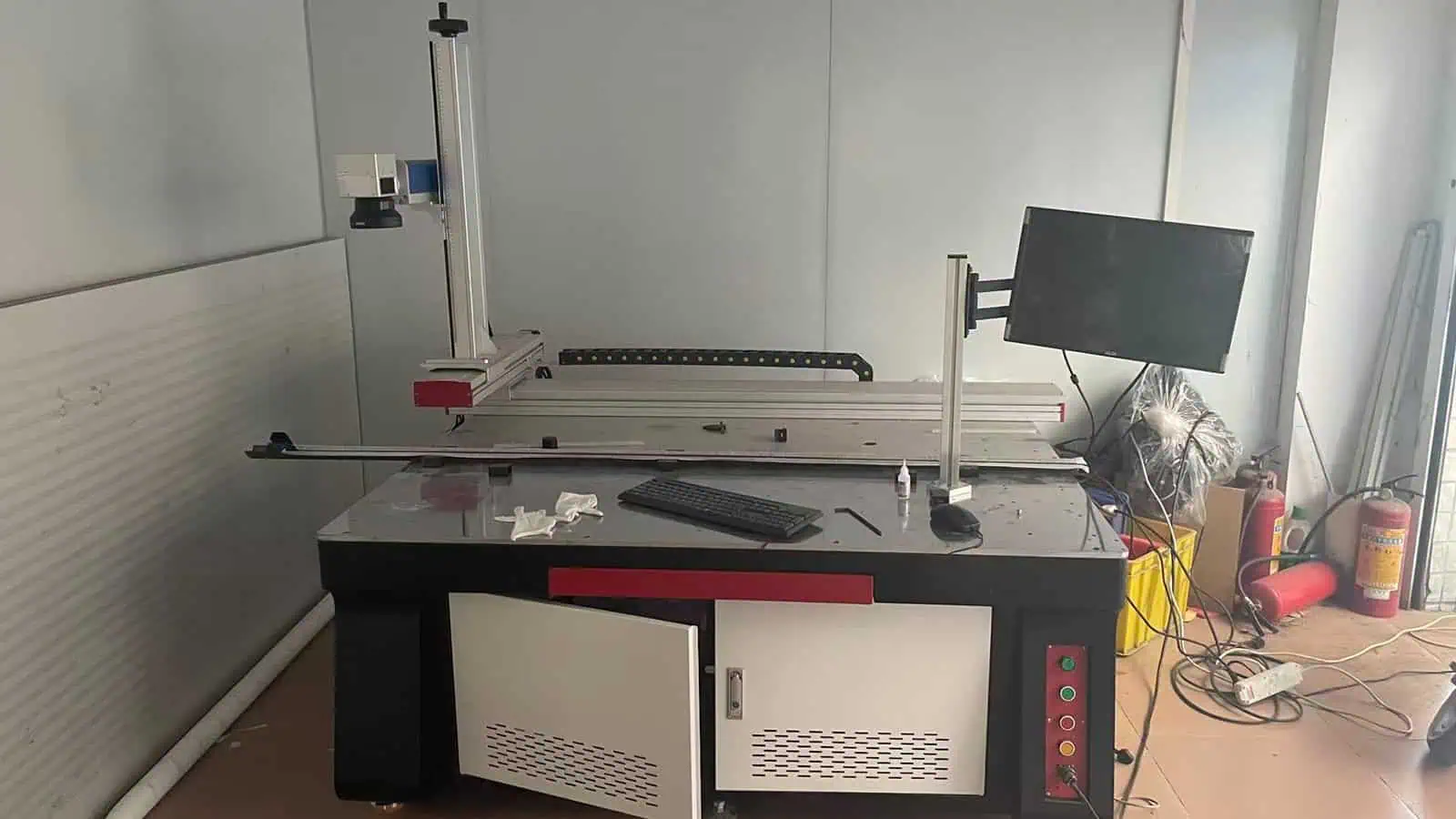
Large-workpiece custom architecture
Custom Laser Marking System for Large Workpieces
Primary engineering route: Custom Machine Engineering
Customer requirement
A large workpiece required a custom laser marking machine based on a lathe-type mechanical structure rather than a conventional marking workstation.
Why a standard platform was insufficient
The non-standard machine architecture had to establish the relationship between the workpiece support, marking system and available work area.
What Zhuorui changed
Zhuorui developed a project-specific laser marking machine using the required non-standard lathe-type architecture instead of forcing the task into a standard platform.
What this project demonstrates
- Non-standard machine structure
- Large-workpiece support and access
- Project-specific relationship between machine and marking area
Coordinated multi-axis motion
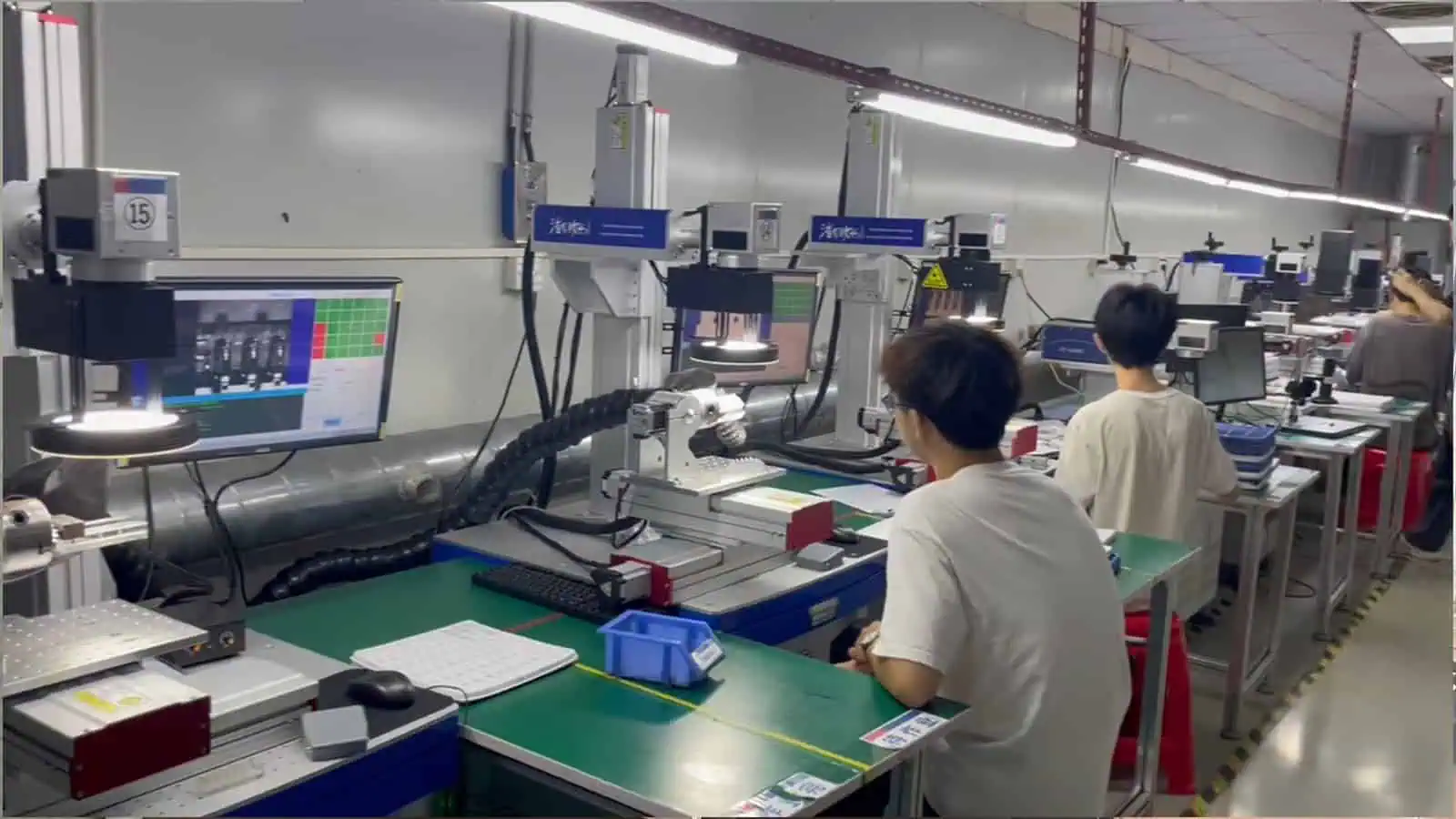
Custom Multi-Axis Laser Marking System
Primary engineering route: Custom Machine Engineering + Machine-Side Automation
Customer requirement
The marking task required an uncommon coordinated multi-axis structure rather than a conventional fixed marking station with only a simple Z axis or rotary attachment.
Why a standard platform was insufficient
The project required XY-axis table movement, a rotary axis mounted on the XY platform, electric Z-axis lifting, and an additional motion axis for the galvo marking head mounted on the Z-axis assembly. This combined structure had to be developed around the actual marking task and workpiece setup.
What Zhuorui changed
Zhuorui developed a custom multi-axis laser marking system around this coordinated machine and motion architecture instead of treating the individual axes as unrelated standard accessories.
What this project demonstrates
- XY table movement with rotary positioning on the table
- Electric Z-axis lifting plus a dedicated moving axis for the galvo marking head
- Project-specific coordination between machine structure, motion system and workpiece
These descriptions include only engineering details supported by the current project records. Workpiece dimensions, laser power, accuracy, cycle time, control hardware or measured production results are stated only when corresponding records are available.
Engineering Scope
What Makes a Project-Specific Solution More Complex?
The difficulty is rarely one component. It comes from the way the marking process, machine architecture, coordinated motion, workpiece presentation, workflow and project interfaces must work together to solve the complete requirement.
System Architecture
The complete requirement cannot be solved cleanly by an established machine platform or one standalone structural change.
Coordinated Motion
Multiple controlled motions or a project-specific positioning relationship must be defined around the real workpiece and marking sequence.
Workpiece Presentation
The part may need non-standard support, orientation, access or presentation before the required marking positions can be reached reliably.
Marking Workflow
Positioning, marking, verification and continuation may need to operate as one defined project-specific sequence.
Interfaces & Acceptance
Relevant mechanical, electrical, control or data interfaces and the final acceptance method must be defined together.
Process feasibility still comes first
The Laser Process Still Has to Work on the Real Part
A complex mechanical system cannot compensate for an unsuitable laser process. Material, surface state, required mark effect, geometry and acceptance criteria still have to be evaluated before the complete system is approved.
If the required marking result has not already been proven on the real material or surface, process or sample validation may be needed before the project architecture is finalized.
Engineering Workflow
From Production Requirement to a Validated Project-Specific System
The first step is to confirm that the requirement genuinely belongs in the Solution route. From there, the project moves through process validation where needed, system definition, scope and acceptance confirmation, build and final functional validation.
Requirement & Route Review
Clarify the workpiece, marking task, current process, production constraint and required result, then confirm whether the requirement belongs to Standard/Configured, Custom Machine, Machine-Side Automation or Project-Specific Solution.
Process / Sample Validation
When the marking result is not already proven, confirm that the real material, surface and geometry can achieve the required contrast, depth, readability or other acceptance target.
System Concept
Define the project architecture, workpiece presentation, motion approach, marking workflow and relevant interfaces required by the confirmed production task.
Scope & Acceptance Definition
Confirm the functions Zhuorui will supply, project interfaces, representative parts, required sequence and the acceptance basis before build release.
Build & Integration
Assemble the project-specific system and integrate the confirmed mechanical, motion, laser, electrical, control and data functions included in the approved project.
Functional Validation & Release
Verify the agreed functions and marking workflow on representative conditions, then complete the applicable machine commissioning and pre-shipment release process through Quality Control & Testing.
Project Fit
When Should You Move from Custom Machine or Automation to a Solution Review?
The Solution route is not the default destination for every complicated request. It is appropriate when the complete production task cannot be solved adequately by a standard/configured machine, a standalone custom machine, or machine-side automation on its own.
A Project-Specific Solution May Be Needed When
- The production requirement depends on a project-specific system architecture rather than one standalone machine change.
- Workpiece presentation, motion, marking workflow and relevant interfaces must be developed together.
- Several engineering areas must be confirmed against one project-specific acceptance plan.
- The complete production task cannot be reduced to supported options or marking-machine-side function coordination alone.
Keep the Requirement in Another Route When
- Established options can solve the task: use the Standard / Configured Machine RFQ.
- The standalone machine structure must change: use Custom Machine Engineering.
- XY/multi-axis positioning, rotary, vision, sensors, triggers, machine-side I/O, variable data or online marking must coordinate around the marking station: use Machine-Side Automation Integration.
- Private-label branding is the main requirement: add the OEM / Private Label layer to the underlying machine route.
Project Evaluation
What We Need to Evaluate a Project-Specific Solution
Start with the current process, the real production constraint and the result that must be achieved. You do not need to design the automation architecture before contacting Zhuorui.
Project-Specific Solution Review
Start with the production requirement, then choose the correct engineering route
We first determine whether the requirement belongs to a standard/configured machine, Custom Machine Engineering, Machine-Side Automation Integration, or a broader Project-Specific Solution. This avoids adding engineering complexity where a simpler route can solve the task reliably.
Need a standalone structural change? Review Custom Machine Engineering. Need coordinated motion, vision, I/O or data around the marking station? Review Machine-Side Automation Integration.