
Complete-Machine Factory Capability
Laser Marking Machine Manufacturing & Assembly
Zhuorui Laser assembles and integrates complete laser marking machines from a confirmed configuration. Specialist components such as laser sources, scan heads, field lenses and control hardware are sourced from established component manufacturers; our factory work is to match the required configuration, install and wire the systems, configure the controls and software, and integrate them into the ordered machine.
Factory Scope
What We Assemble and Integrate Into a Complete Laser Marking Machine
Our manufacturing work starts from the machine configuration confirmed for the order. We combine the required structure, sourced specialist components, electrical system, controls, software and accessories into one complete machine and prepare it for final commissioning and machine-level testing.
- Machine structureAssembly of the ordered frame, cabinet, column, worktable, enclosure or other confirmed machine structure.
- Laser & optical configurationInstallation and matching of the selected laser source, applicable beam-delivery components, scan head and field lens for the required machine layout.
- Electrical integrationPower supplies, control hardware, operator controls, electrical interfaces and cable routing for the complete machine.
- Control & software setupController communication, marking software, language, device setup and the ordered machine functions.
- Accessories & optionsIntegration of standard selectable or otherwise confirmed machine-level options such as rotary, XY motion or autofocus where they are part of the order.
- Complete-machine integrationMechanical, optical, electrical, control and software subsystems connected and prepared to operate as one marking system.
Complete-Machine Manufacturing Scope
What Complete Laser Marking Systems We Assemble and Supply
The laser technology, machine structure and machine-side functions are selected as one configuration. MOPA is a fiber-laser configuration rather than a separate wavelength family, while motion, positioning, vision and control functions are integrated only when they are part of the confirmed machine build.
- Fiber laser marking machinesComplete fiber systems configured for the required power, marking field, machine structure and ordered accessories.
- MOPA fiber configurationsComplete fiber laser marking systems configured with a MOPA laser source when that source is specified for the machine.
- UV laser marking machinesComplete UV systems with the required source, scan head, field lens, controls, cooling arrangement where applicable and machine structure.
- CO₂ laser marking machinesComplete CO₂ systems configured with the applicable source, beam-delivery arrangement, scan system, controls and machine structure.
- Machine structuresDesktop, cabinet, enclosed, split, portable or other confirmed structures according to the available machine range and order configuration.
- Machine-side automation integrationConfirmed machine-side functions can include XY motion, rotary positioning, multi-axis positioning, vision-assisted positioning, I/O and trigger control, variable-data handling and online marking. These functions are integrated around the laser marking machine itself rather than presented here as a complete production-line automation system.
Real Factory Workflow
How the Complete-Machine Factory Workflow Is Organized
The factory workflow is straightforward: prepare the ordered components and machine parts, assemble and configure the complete system, hand the integrated machine to final testing, then stage the released machine for packing and shipment.
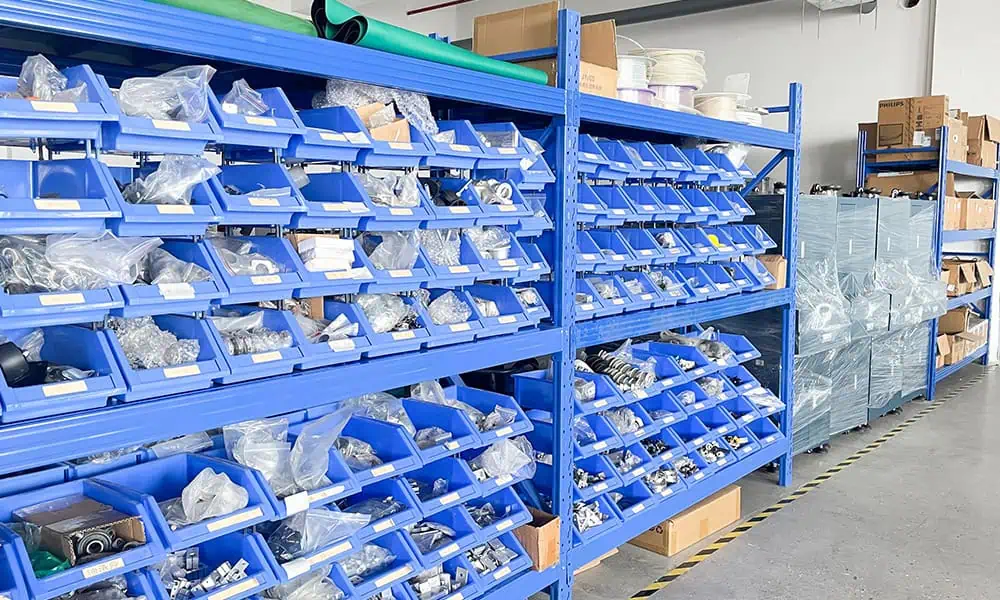
Parts & Component Storage
Machine structures, laser sources, scan heads, field lenses, controllers, power supplies, computers, accessories and other ordered parts are held or prepared for the required machine configuration.
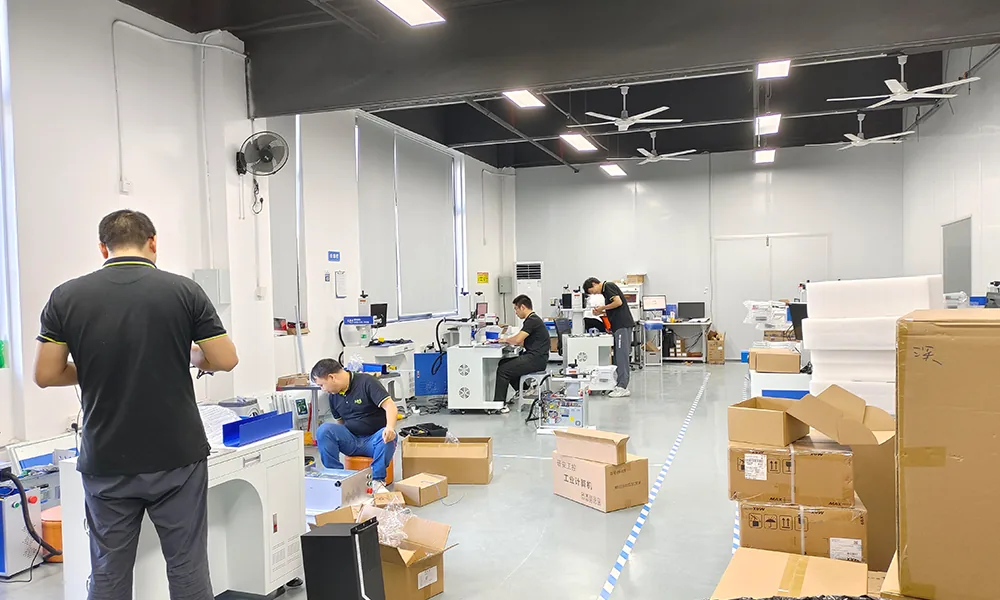
Assembly & Commissioning Area
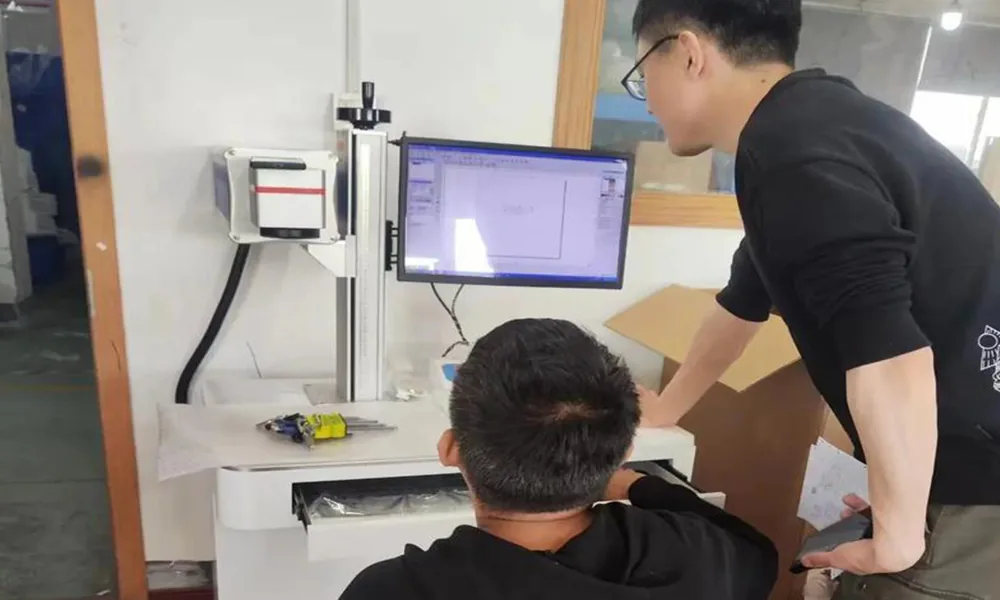
Mechanical assembly, electrical wiring, optical installation, controller communication, software setup and ordered machine functions are integrated into the complete system.
Testing Handoff
After assembly and initial integration are complete, the machine moves into the dedicated final machine-testing stage before release.
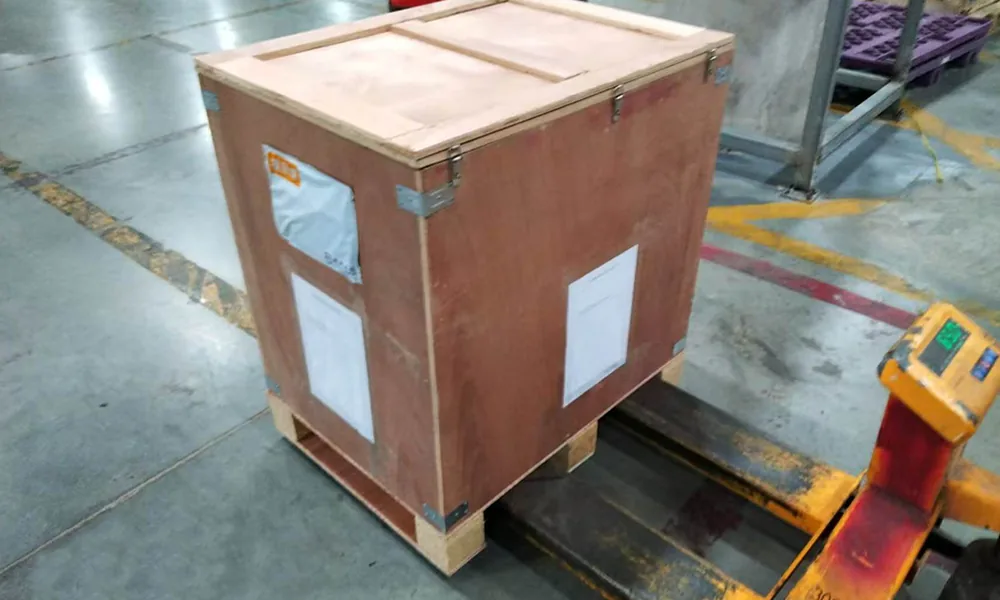
Finished Machine, Packing & Shipment
Released machines move to final configuration and accessory confirmation, cleaning and preparation, finished-machine staging, packing and shipment according to the order scope.
Assembly Release Configuration
What Must Be Confirmed Before a Machine Is Released for Assembly
Once the application and machine direction have already been selected, production needs a clear machine configuration. This is the information used to prepare parts, assemble the machine and keep the delivered system aligned with the confirmed order.
Any non-standard machine-level engineering or machine-side automation requirement should be defined before assembly release. Routine choices such as destination voltage, software language or other standard selectable options remain normal configuration items and do not by themselves make the machine a custom-engineering project.
Desktop, cabinet, enclosed, split, portable or other confirmed structure, including the required worktable, enclosure and access arrangement.
Laser technology, source brand or model when specified, power class and other confirmed source requirements.
Scan-head configuration, field lens, marking field, required focal position and any machine-clearance implications.
Controller, marking software, language, device setup and confirmed machine-option or interface requirements.
Destination voltage, plug, power supplies, machine controls and required electrical interfaces.
Rotary, XY or multi-axis positioning, vision-assisted positioning, I/O, trigger control, variable data, online marking or other confirmed machine-side functions, together with the interfaces required for installation.
From Configuration to Complete Machine
Laser Marking Machine Assembly Process
The exact route changes with the machine architecture, but the manufacturing logic remains consistent: release the confirmed configuration, prepare the required parts, build by subsystem, integrate the complete machine and hand it to final testing with the order requirements intact.
Configuration & Parts Release
The order is translated into the build configuration: machine structure, laser technology and power, marking field, scan system, controller, voltage, software, language, accessories and any confirmed project interfaces. The required parts are prepared for assembly from this configuration.
Frame & Cabinet Build
The workstation, cabinet panels, column, worktable, mounts, doors or enclosure parts are assembled and checked for fit, travel, stability and service access before sensitive components are installed.
Electrical & Control Installation
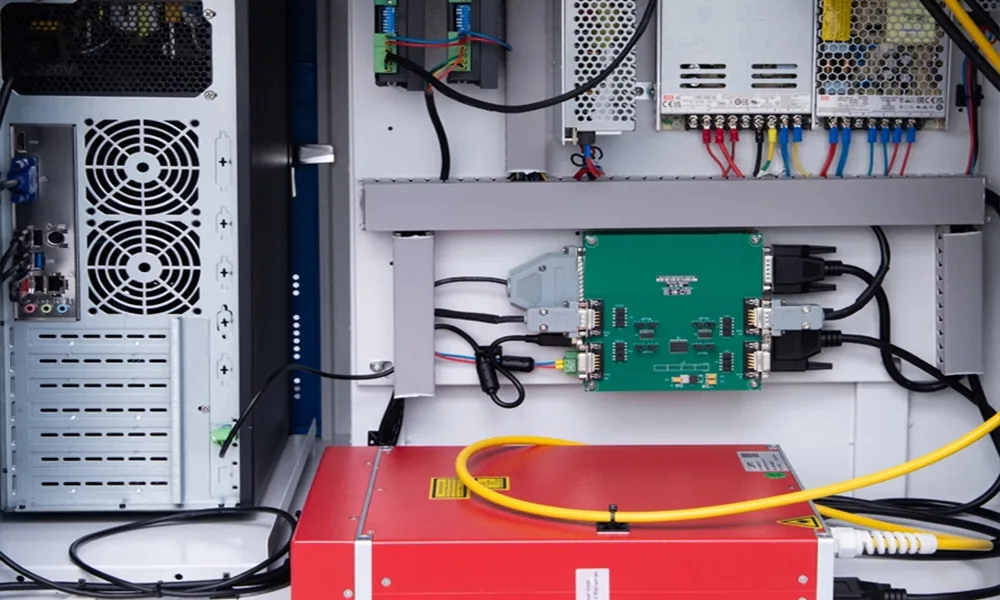
Power distribution, supplies, controller hardware, operator controls, emergency functions and ordered I/O are installed according to the machine layout and confirmed scope.
Wiring & Interface Routing
Power, signal, communication and accessory cables are routed to reduce interference, avoid moving-part conflicts and keep service access practical. Connections follow the confirmed machine configuration.
Laser & Optical Installation
The selected laser source, applicable beam-delivery components, scan head and field lens are mounted as a compatible system for the machine layout. The installed optical system is left ready for the following machine-testing stage.
Software & Basic Setup
The ordered marking software, language and control communication are configured. Device connections and machine options are prepared so the integrated system can enter commissioning and final testing.
Complete-Machine Integration & Testing Handoff
Mechanical, electrical, optical and control subsystems are connected as one machine. Assembly-stage checks confirm that the ordered configuration is complete and that the integrated system is ready to enter the dedicated final machine-testing stage.
Configuration Discipline
How We Keep the Ordered Machine Configuration Consistent
Two machines can look similar while using different laser sources, scan heads, field lenses, controllers, voltage packages or accessories. Assembly therefore follows the confirmed machine configuration, not the cabinet appearance alone.
The build reference identifies the ordered machine structure, laser source and power, scan system, marking field, controller, voltage, software, language and accessories. A change that alters the confirmed configuration should be reviewed before the machine is built. For a repeat order, an approved previous configuration can serve as the build reference for the machine being assembled.
Mounting points, required focal position, available Z adjustment, field-lens clearance, table access, enclosure geometry and accessory interfaces are checked against the actual machine structure.
Destination voltage, plug, power supplies, protective-earth connection, operator controls, external interfaces and ordered safety functions are matched to the machine and destination requirements.
Controller communication, software version, language, device setup and basic parameter files are prepared for the confirmed system. Where specified, machine-side functions such as I/O, trigger control, variable data, vision or online marking are configured as part of the machine build.
Architecture Changes the Build
How Assembly Changes by Machine Structure
The same configuration and integration disciplines apply across machine types, but access, guarding, wiring, cooling, motion and accessory interfaces change with the physical structure. Custom Machine Engineering is reserved for builds that require non-standard machine structure or machine-level functional engineering; ordinary voltage, software-language or standard option choices remain normal configuration work.
| Machine structure | Assembly focus | Configuration variables | When another capability becomes relevant |
|---|---|---|---|
| Desktop or cabinet system | Column, cabinet, worktable, laser head, controller, display and standard operator controls. | Laser source, power, marking field, controller, voltage, software and accessories. | Usually remains within ordinary complete-machine assembly when no non-standard engineering is required. |
| Enclosed machine | Complete machine plus enclosure panels, door, viewing arrangement, extraction connection and confirmed interlock functions. | Part access, door travel, fixture space, extraction, operator workflow and destination requirements. | Custom Machine Engineering becomes relevant only when the enclosure, fixture or machine-level function requires non-standard engineering beyond the available machine configuration. |
| Split or portable structure | Independent laser/control unit, marking head, column or portable mount, cabling and transportable connections. | Cable length, working position, controller package, marking field and fixture method. | Additional Custom Machine Engineering is needed only when the physical structure, mounting or standalone machine function itself must be engineered beyond the available configuration. |
| Machine-side automation options | XY motion, rotary or multi-axis positioning, vision-assisted positioning, I/O and trigger control, variable-data handling or online marking integrated around the laser marking machine. | Workpiece geometry, movement range, positioning method, controller support, software, data source, trigger conditions and mechanical clearance. | Use Automation Integration when these machine-side functions require coordinated motion, vision, signals or online marking logic. Use Custom Machine Engineering only when the machine itself needs non-standard structural or machine-level functional engineering. |
Before Final Machine Testing
What We Confirm Before the Machine Enters Final Testing
These checks confirm that assembly and system integration are complete enough for commissioning. They verify the installed machine configuration and subsystem readiness; they do not requalify the supplier performance specifications of the laser source, scan head, field lens or other specialist components.
Mechanical Readiness
Structure stability, fasteners, axis or accessory fit, door and panel operation, worktable access and cable-clearance readiness.
Electrical Readiness
Installed components and interfaces, cable routing, connector seating, operator controls, power-up readiness and confirmed emergency or interlock functions.
Optical Installation Readiness
Correct configured components, mounting, beam-path readiness where applicable, scan-head and field-lens fit, focal-position range and readiness for the next machine-testing stage.
Control & Software Readiness
Controller recognition, scan-head communication, software launch, ordered language, file handling and configured accessory response.
Configuration Match
Machine reference, laser technology and power, marking field, accessories, voltage, plug, software and customer-specific items matched to the confirmed order.
What happens next: the integrated machine moves into Quality Control & Testing for final calibration, sample marking, complete-machine functional checks, stability testing appropriate to the system complexity and shipment release.
Next Step
Send the Machine Configuration You Need Built
For a standard machine, send the application and preferred machine direction so Zhuorui can confirm the configuration and quotation. Use the custom inquiry route for OEM/private-label requirements or when the standalone machine itself needs non-standard structural or machine-level functional engineering. Standard voltage, software-language and selectable-option changes remain normal configuration choices.
Useful starting information: application / preferred laser direction if known / machine structure / marking field / required machine-side functions / voltage and destination / software language.