Factory capability / custom machine engineering
Custom Laser Marking Machines
When a standard laser marking machine cannot accommodate the workpiece, working envelope, fixture, access, enclosure, motion or another machine-level requirement, Zhuorui can review a non-standard standalone workstation around the actual task.
- Standalone machine-level customization
- Standard options stay standard
- Machine structure follows the workpiece
- Automation scope stays laser-machine centered
Project routing
Which Route Fits the Requirement: Standard, Configured, Custom or Laser-Machine Automation?
Not every non-default option requires custom engineering. The correct route depends on whether an existing machine platform can already support the workpiece and required function.
Standard Machine
Use an existing machine platform when its normal work area, loading method and structure already fit the task.
Configured Standard Machine
Standard rotary units, standard XY tables, electric Z axes, autofocus functions, supported field options, enclosures, voltage options and other established accessories can remain normal selectable configuration when they do not require a non-standard machine architecture.
Custom Machine Engineering
Use this route when the standalone machine itself must change: work envelope, table or cabinet dimensions, enclosure, fixture, head arrangement, clearance or another physical machine-level feature cannot be solved by an existing platform.
Automation Integration
Use this route when the marking station requires laser-machine-related motion, vision, positioning, I/O or triggering to coordinate the marking process beyond a purely structural machine change.
Robot cells, automatic loading/unloading, conveyor-centered material handling and complex production-line handling are not Zhuorui’s current primary capability. They are not presented here as a standard Automation Integration scope.
Zhuorui builds complete laser marking machines from mature specialist components. Laser sources, galvos, field lenses, controllers and other specialist modules are sourced from appropriate suppliers; Zhuorui’s responsibility is selection, matching, machine assembly, electrical/optical/control integration, commissioning, testing and delivery of the complete machine.
Standalone machine-level customization
What Can Be Customized in the Machine?
Custom engineering should solve a physical or machine-level constraint that a normal platform cannot solve cleanly. The objective is not to add the most functions; it is to make the machine fit the real workpiece and operating task.
If an existing platform already supports the required accessory or option without changing the machine architecture, it remains a configured standard machine rather than a custom engineering project.
Work Area & Machine Structure
Worktable dimensions, cabinet size, working height, Z travel, workpiece clearance, door/access arrangement and galvo-head position can be reviewed around unusual part geometry.
Optical Working Geometry & Access
The laser technology is selected according to the material, surface and target marking result. Custom-machine engineering becomes relevant here when the required marking field, working distance, focus position or optical access changes the physical machine layout. Selecting an existing supported source or field-lens option alone does not make the machine custom.
Fixture & Workpiece Presentation
Custom nests, clamps, supports, rotary holding, datum features and quick-change fixtures can be designed when stable positioning cannot be achieved with a standard worktable or accessory.
Travel, Mounting & Positioning Provisions
Custom engineering can change the physical travel envelope, axis mounting, rotary mounting, head position or other structural provisions when the standard machine cannot accommodate the part. When the requirement depends on coordinated motion, active positioning or vision logic during marking, that function should be reviewed under Automation Integration.
Electrical & Interface Provisions
A custom machine can include non-standard electrical layout, control-cabinet space, connector provision and mounting space required by the machine design. Active laser-machine I/O, triggering, vision or coordinated motion logic should be reviewed under Automation Integration rather than counted as structural custom engineering.
Electrical, Safety & Destination
Voltage, electrical layout, emergency functions, access control, enclosure requirements, cooling, extraction or ventilation where required, footprint and service clearance are reviewed with the destination conditions.
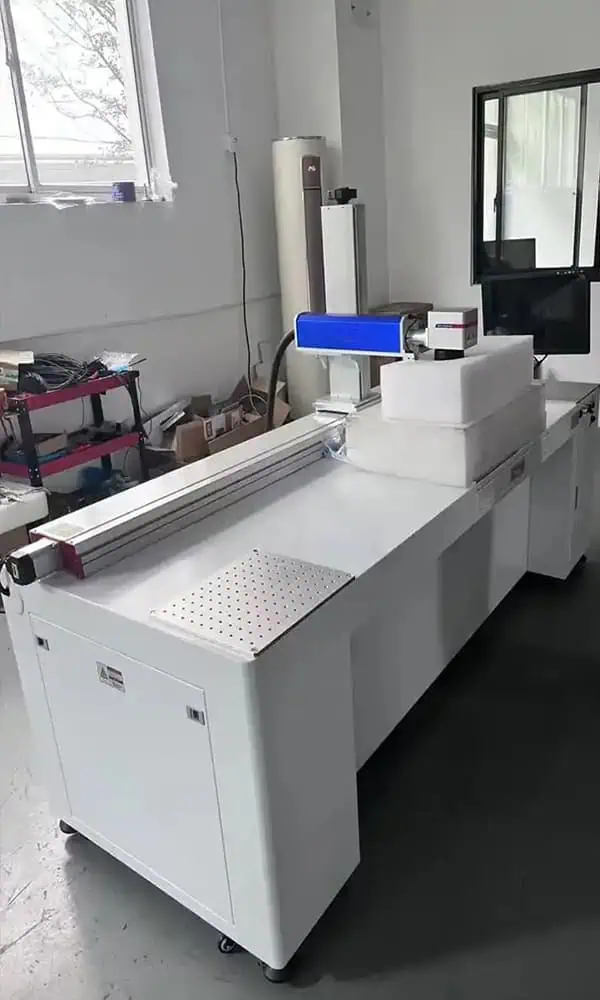
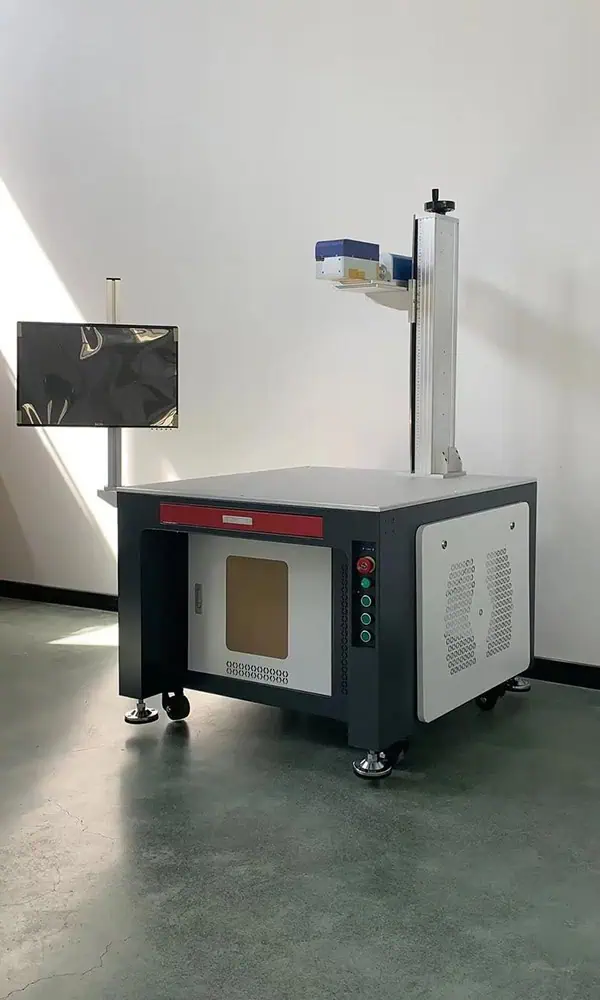
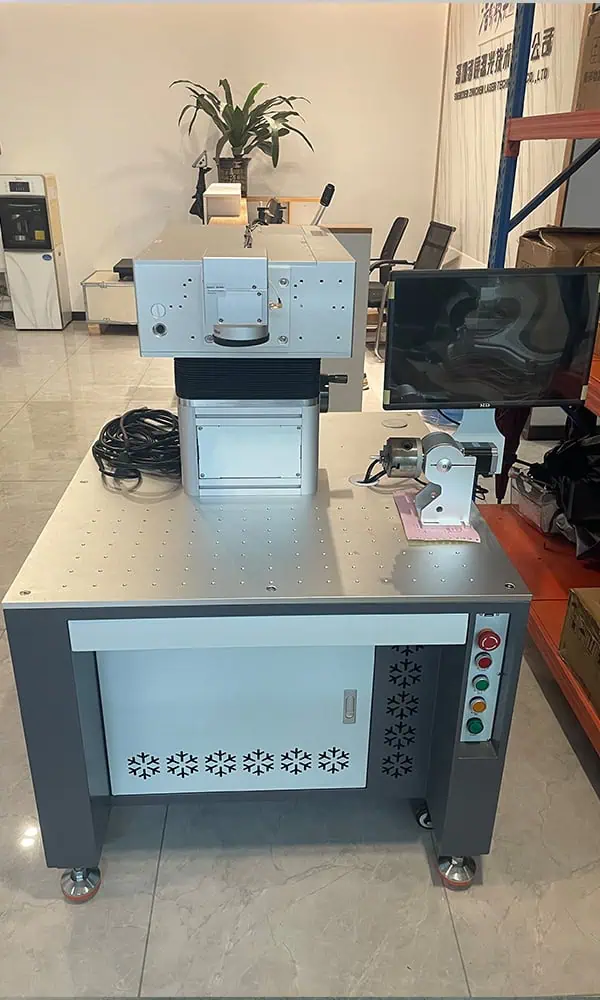
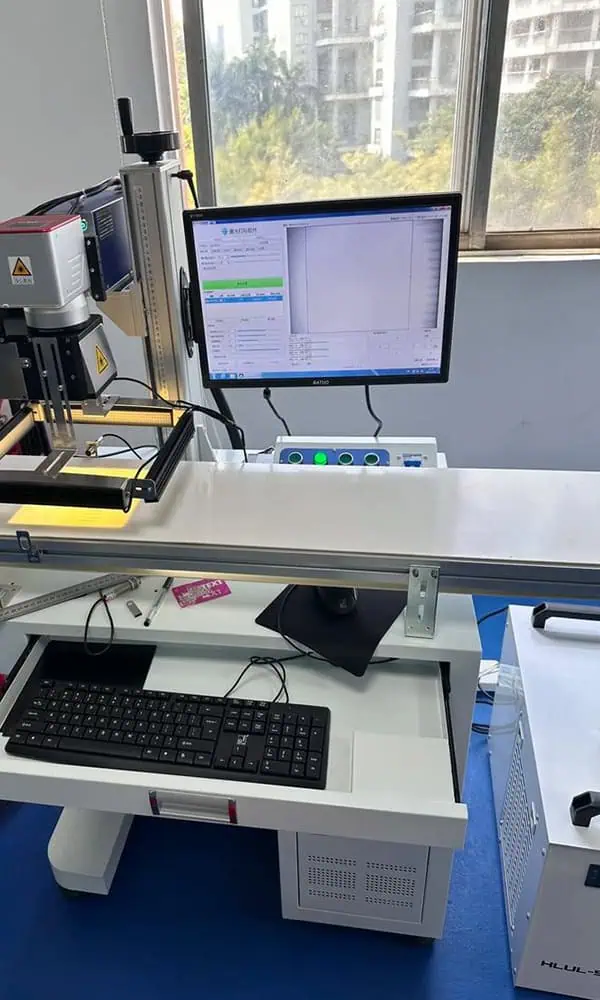
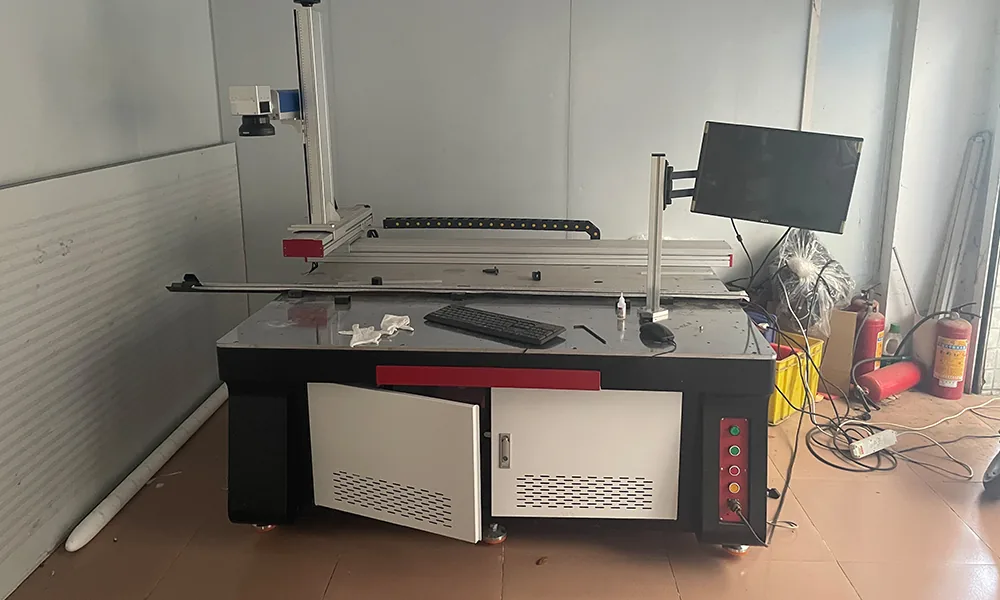
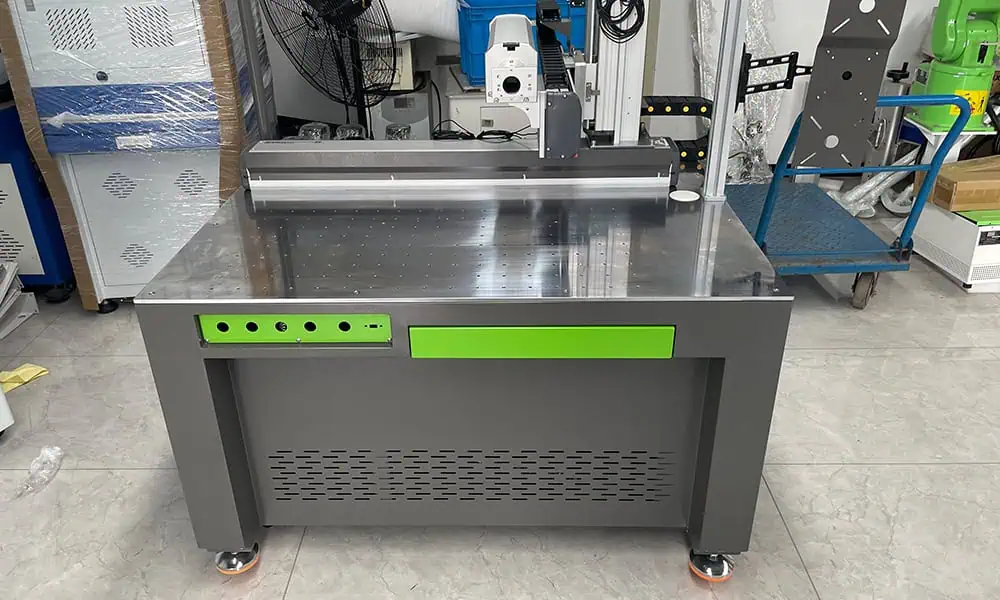
Representative Standalone Custom Machine Structures
These real machine examples show different workstation forms. They illustrate machine-level structural variation rather than a single standard platform.
Requirement to design
How Does the Workpiece Requirement Change the Machine Design?
A useful custom-machine review starts with the physical problem. The engineering question is what minimum change is needed to make the marking task practical, repeatable and serviceable.
An enclosure or interlock arrangement alone does not establish the final laser safety classification or market compliance. The complete machine configuration and destination requirements must be reviewed together.
Custom engineering workflow
From Requirement to Build / QC Handoff
This page stops at the approved custom-machine definition. Detailed machine assembly belongs to Manufacturing & Assembly, and commissioning, stability running and shipment release belong to Quality Control & Testing.
RequirementDefine the Machine Constraint
Provide the workpiece, dimensions, marking location, loading/access needs and the specific reason an existing standard platform cannot meet the requirement.
Engineering ReviewDetermine What Must Actually Change
Review the work envelope, table or cabinet dimensions, clearance, fixture, head arrangement, optical access, electrical/site constraints and whether any laser-machine automation function should be reviewed separately.
Configuration / LayoutConfirm the Custom Machine Definition
Agree the machine layout, major dimensions, work area, fixture concept, structural travel or mounting provisions, installed configuration and acceptance basis before production starts.
HandoffRelease to Build and QC
Once the custom configuration is approved, the project is handed to the normal complete-machine build and pre-shipment QC processes. Their detailed assembly and testing steps are covered on the dedicated Manufacturing & Assembly and Quality Control & Testing pages.
Before build starts, the physical machine requirements should be clear enough that the approved layout can be assembled without reopening the core work-envelope, fixture, access or machine-structure decisions.
Before production
What Should Be Confirmed Before a Custom Machine Is Released for Build?
Pre-Build Confirmation
Confirm part identity, material/surface, dimensions, weight, marking position, required marking area and the target result.
Confirm the work area, operator access, loading direction, workpiece clearance, table requirement and Z-axis requirement.
Confirm the fixture concept, datum/clamping, required physical travel or mounting provision, marking field, working distance and optical access.
Confirm voltage, electrical layout, required interface provisions, enclosure/access concept, utilities, installation space and service clearance. Active I/O or triggering logic is reviewed under Automation Integration.
Useful Inputs for Engineering Review
Send enough information to show both the marking task and the physical machine constraint.
Buyer questions
Custom Laser Marking Machine FAQ
Can a custom machine use Fiber, MOPA, UV or CO2 technology?
Yes, where the application is suitable. The laser technology is selected from the material, surface and required marking result. Custom-machine engineering then addresses the physical machine layout, work envelope, fixture, access, motion and standalone functions required around that marking process.
Does Zhuorui manufacture the laser source, galvo and field lens used in a custom machine?
No. Zhuorui builds and supplies the complete laser marking machine. Specialist components such as laser sources, galvos, field lenses and controllers are sourced from appropriate professional suppliers, then selected, matched, installed, configured and integrated into the completed machine.
Next step
Start With the Workpiece and the Machine Constraint
Send the part, the marking task and the specific reason a standard laser marking machine does not fit. Zhuorui will determine whether the requirement can remain a standard configuration, needs a standalone custom-machine change, or requires laser-machine automation review for motion, vision, positioning, I/O or triggering. Projects centered on robot handling, automatic loading/unloading, conveyor material handling or complex production lines are outside Zhuorui’s current primary capability scope.