Custom Laser Marking Solutions
Custom Laser Marking Solutions for Complex Production Requirements
Some laser marking projects cannot be solved reliably by selecting a standard machine and adding conventional options. They require the machine structure, motion system, material handling, or control sequence to be developed around the actual production requirement. This page presents selected custom laser marking systems completed by Zhuorui where the production requirement required a project-specific machine architecture rather than a standard configured machine.
Selected Custom Laser Marking Projects
Selected Custom Laser Marking Projects
These examples are reserved for projects where the production requirement called for more than a conventional machine configuration. The value is not a list of options; it is the engineering approach used to make a non-standard production method workable.
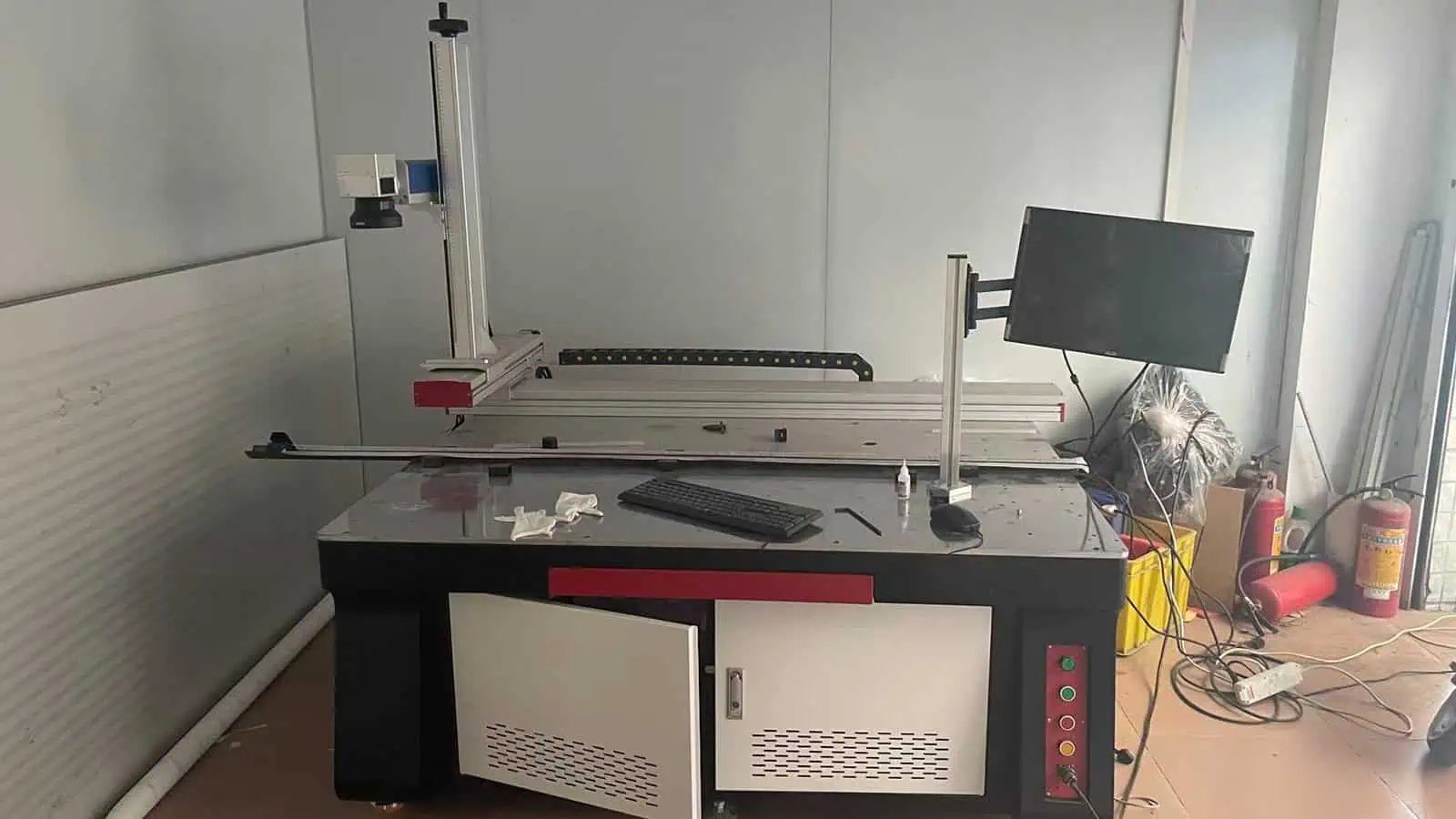
Large-workpiece custom architecture
Custom Laser Marking System for Large Workpieces
Customer requirement
A large workpiece required a custom laser marking machine based on a lathe-type mechanical structure rather than a conventional marking workstation.
Why custom engineering was required
The non-standard machine architecture had to establish the relationship between the workpiece support, marking system, and available work area.
Engineering approach
Zhuorui developed a project-specific laser marking system using the required non-standard lathe-type architecture rather than forcing the task into a standard platform.
- Non-standard machine structure
- Large-workpiece support and access
- Project-specific relationship between machine and marking area
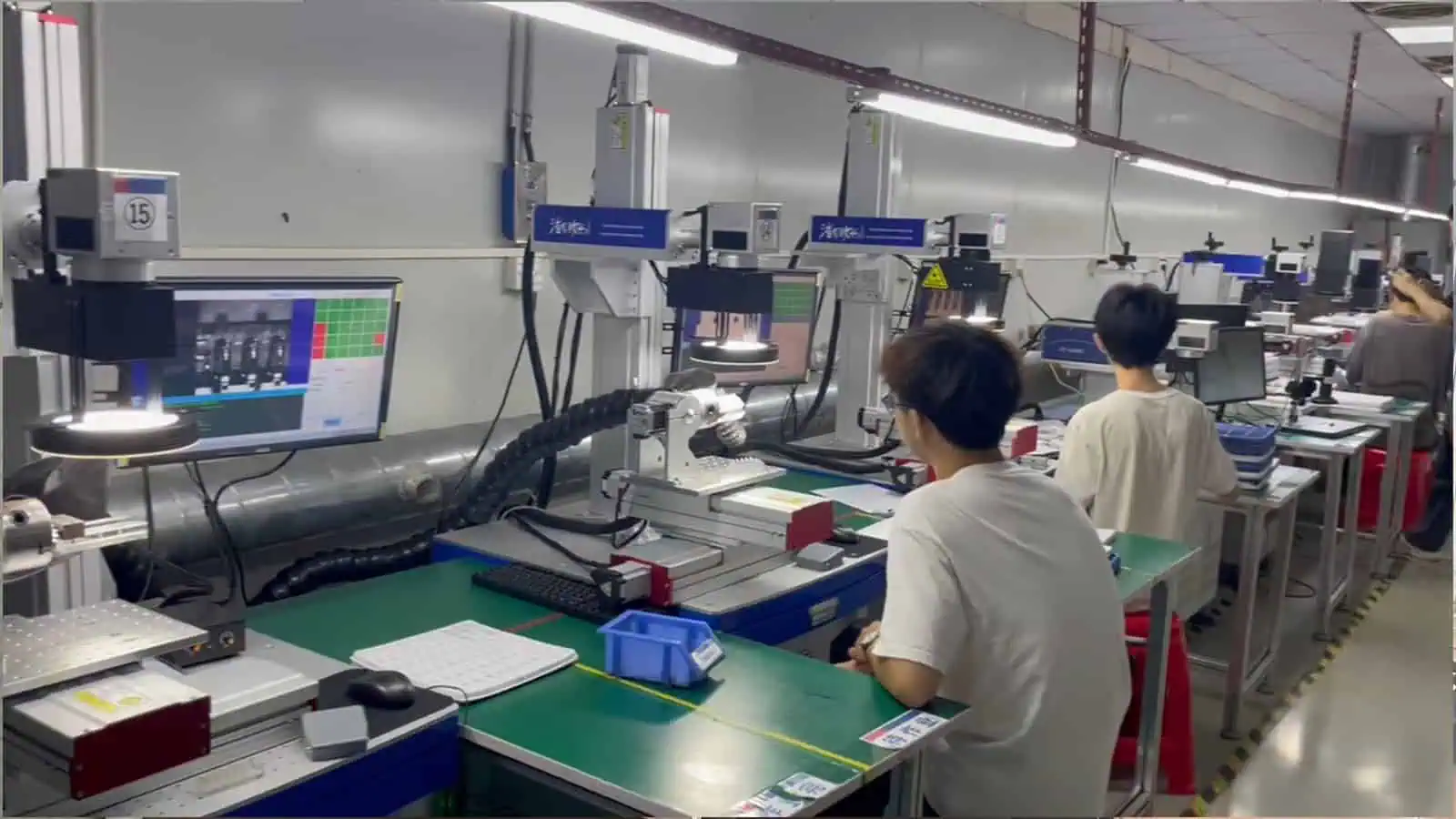
Coordinated multi-axis motion
Custom Multi-Axis Laser Marking System
Customer requirement
The marking task required an uncommon coordinated multi-axis structure rather than a conventional fixed marking station with only a simple Z axis or rotary attachment.
Why custom engineering was required
The project required XY-axis table movement, a rotary axis mounted on the XY platform, electric Z-axis lifting, and an additional motion axis for the galvo marking head mounted on the Z-axis assembly. This combined motion structure is uncommon and had to be developed around the actual marking task and workpiece setup.
Engineering approach
Zhuorui developed a custom multi-axis laser marking system around this coordinated motion architecture instead of forcing the task into a standard fixed marking platform.
- XY table movement with rotary positioning on the table
- Electric Z-axis lifting plus a dedicated moving axis for the galvo marking head
- Project-specific coordinated relationship between motion system and workpiece
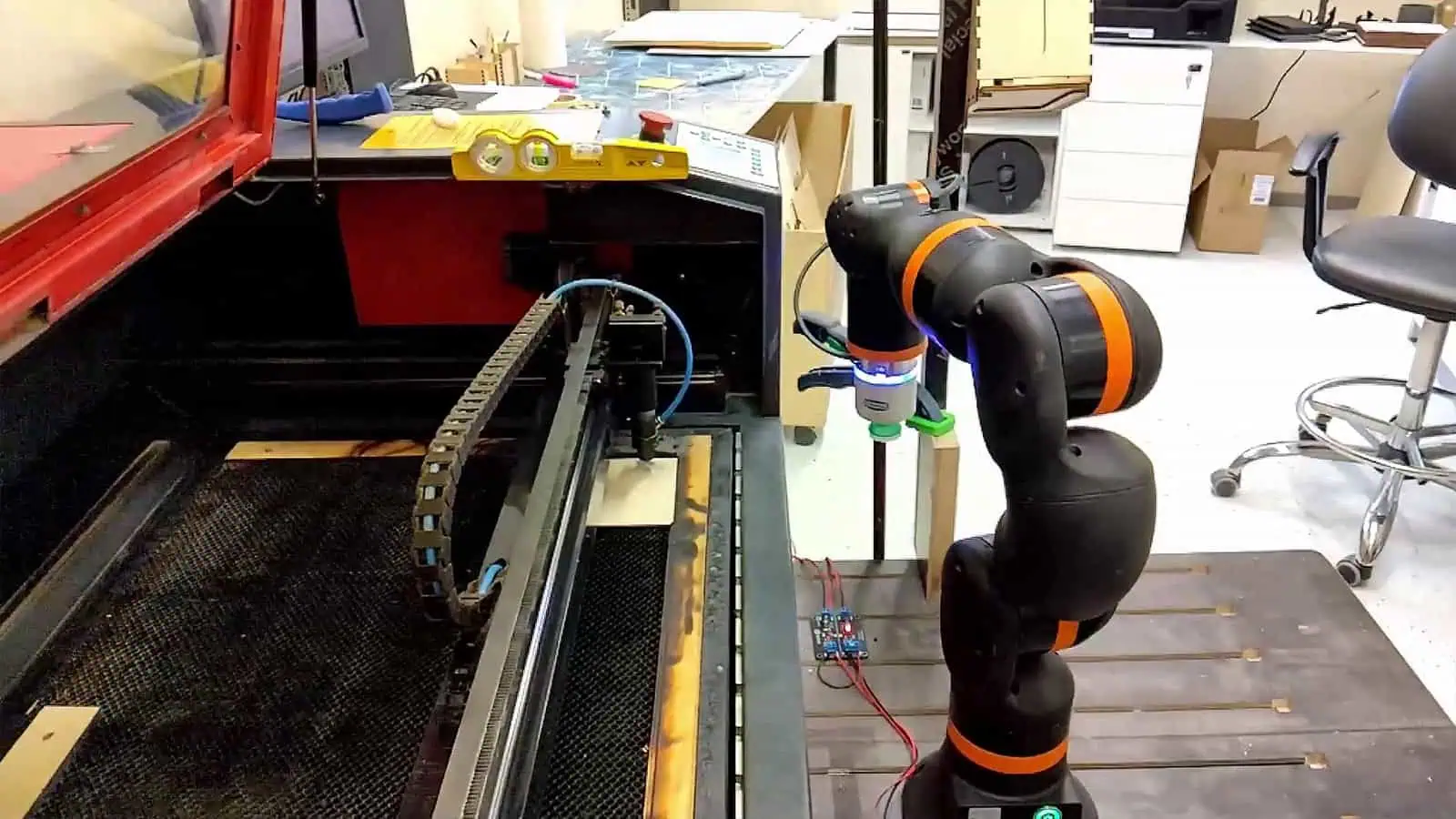
Robotic material handling
Robotic Laser Marking Cell with Automated Loading & Unloading
Customer requirement
The production task required loading and unloading to be integrated with laser marking rather than treating marking as a separate manual station.
Why custom engineering was required
The material-handling sequence and laser marking process had to operate as one production method.
Engineering approach
Zhuorui developed a custom laser marking cell with robotic loading and unloading integrated into the marking workflow.
- Robotic loading and unloading
- Integrated marking-cell sequence
- Project-specific mechanical and automation integration
Evidence boundary: These project descriptions are limited to the engineering facts currently available. No workpiece dimensions, weight, laser power, accuracy, cycle time, robot brand, PLC, vision, MES, or measured production result is claimed without project evidence.
Custom Engineering Boundary
What Makes a Laser Marking Project a Custom Solution?
A machine can be customized without becoming a custom engineering project. The distinction is how much engineering was required to make the complete production method work.
Typical configurable projects
These normally belong in Case Studies rather than the Solutions portfolio:
- Standard laser marking machine with CCD positioning
- Conventional rotary attachment
- Dual red-light positioning
- Electric Z adjustment
- Conventional fixture or standard accessories
Custom Solutions
A project enters this category when the production requirement changes the system architecture itself:
- Non-standard machine structure
- Complex or coordinated motion architecture
- Robotic loading and unloading
- Multiple mechanical, electrical, and automation subsystems working as one machine
- Project-specific production sequence or integration requirements
Engineering Scope
Why These Projects Required Custom Engineering
The difficulty is usually not one component. It is the relationship between the mechanical architecture, motion, workpiece handling, production sequence, and integrated system interfaces.
Machine Architecture
Non-standard machine geometry or a work area that cannot be accommodated by a conventional marking platform.
Motion Complexity
Multiple controlled axes or a project-specific positioning relationship between the laser system and workpiece.
Workpiece Handling
Large, unusual, or production-oriented handling requirements that affect how the part is presented and accessed.
Production Sequence
Loading, marking, movement, and unloading may need to function as one defined production sequence.
System Integration
Mechanical, electrical, control, automation, and laser-process interfaces must be considered together.
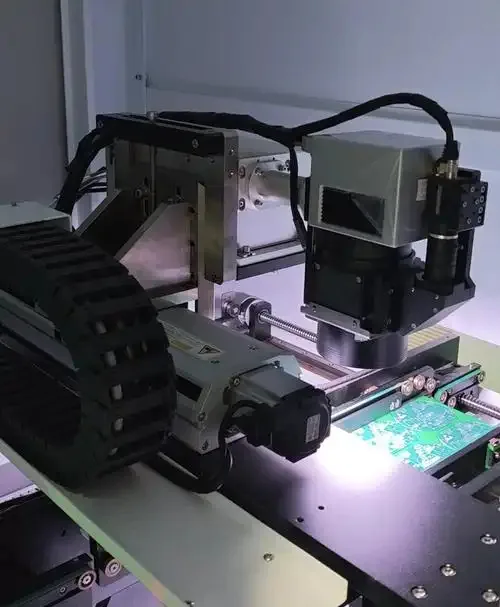
Representative motion-platform context only. This image does not prove the custom multi-axis project, its exact axis arrangement, accuracy, or production result.
The laser process still sets the technical boundary
A complex mechanical system cannot compensate for an unsuitable laser process. Material, surface state, required mark effect, geometry, and acceptance criteria still have to be evaluated before the complete custom system is approved.
Custom engineering therefore begins with the production requirement and remains constrained by the actual laser-marking process.
Engineering Workflow
From Customer Requirement to a Working Custom System
The exact validation scope depends on the project. The general engineering sequence is to define the requirement, establish the concept, validate the laser process, integrate the system, and verify the finished machine against the agreed scope.
Requirement Review
Clarify the workpiece, marking task, movement, handling, production sequence, layout, and acceptance requirements.
Engineering Concept
Develop the machine architecture, motion approach, workpiece support, handling method, and required interfaces.
Laser Process Validation
Confirm that the required marking result is technically compatible with the real material, surface, geometry, and target effect.
Mechanical & Control Integration
Bring the mechanical, motion, laser, electrical, and automation elements together around the approved concept.
Assembly & Debugging
Assemble and debug the project-specific system, including the interfaces defined by the project scope.
System Validation
Validate the agreed project requirements using the acceptance scope defined for that specific system.
Project Fit
Is Your Project a Good Fit for Custom Engineering?
The first decision is not whether a custom machine sounds more capable. It is whether a conventional machine and common options can reliably solve the complete production requirement.
Custom engineering is worth evaluating when
- The required machine structure is not available as a conventional platform.
- The task requires a complex or coordinated motion architecture.
- Robotic handling must be integrated into the marking process.
- Mechanical, electrical, control, and automation interfaces must work as one system.
- The production sequence itself is project-specific.
A standard configured machine may be more appropriate when
- The workpiece and marking position are stable.
- Manual loading is acceptable.
- CCD, rotary, dual red-light positioning, electric Z, or a conventional fixture solves the requirement.
- No project-specific machine architecture or integrated handling sequence is required.
Project Evaluation
What We Need to Evaluate Your Custom Project
The more complete the engineering input, the faster we can distinguish a standard configuration from a genuinely custom system requirement.
Discuss Your Custom Laser Marking Project
Start with the production requirement, not the machine model
We can first evaluate whether your task is better solved with a configured standard machine or whether it genuinely requires a project-specific custom laser marking system.