Gold Laser Marking
Gold can be laser marked for fine identification, shallow engraving, decorative detail and traceability, but the process changes significantly between high-purity gold, 18K or 14K alloys, polished surfaces and gold-plated parts. The laser route should be selected around alloy, surface condition, acceptable material loss and the result you actually need.
Request a Quote Contact Zhuorui LaserCan Gold Be Laser Marked?
Yes. Gold can be marked and engraved with laser systems, but “gold” alone is not enough information to choose the process. Karat, alloying elements, polish, plating thickness, substrate, geometry and the required visual finish all change the usable process window.
Do not assume a stainless-style black mark on gold
Gold does not normally use the same oxide-color mechanism associated with stainless-steel black or color marking. A darker or higher-contrast appearance on gold is usually sample-dependent and may come from surface texture, controlled material removal, reflectivity change, alloy response or a layered surface. The final appearance should be confirmed on the actual part.
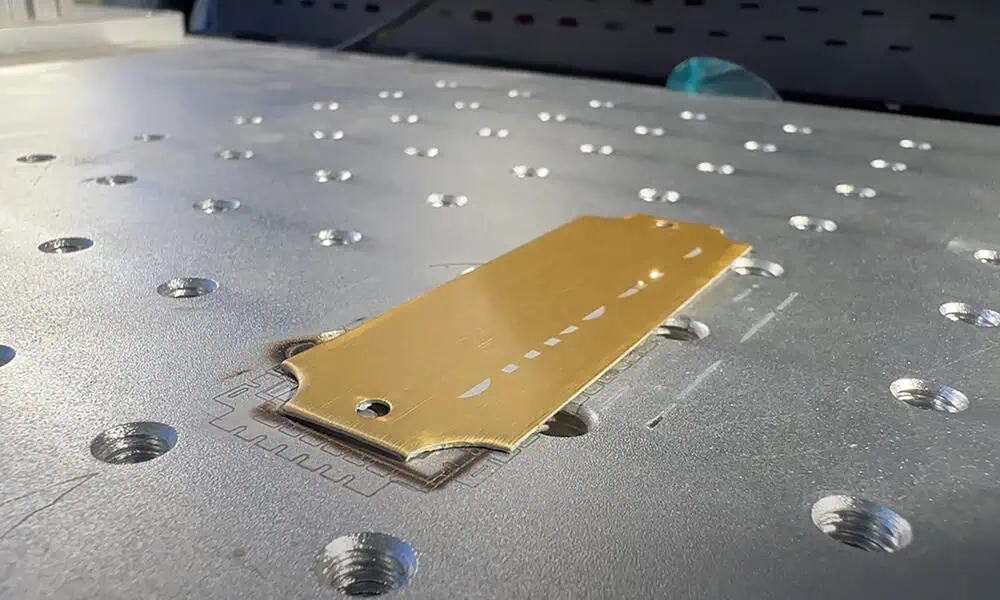
24K, 18K, 14K and Gold-Plated Parts Do Not Mark the Same Way
The gold content and layer structure affect hardness, thermal response, reflectivity, surface appearance and how much material can be removed without creating an unacceptable finish.
24K / High-Purity Gold
Very soft, highly reflective and valuable. Fine marking is possible, but excessive energy or repeated passes can roughen the surface or remove more precious metal than intended.
Primary checks: surface texture, edge quality, material loss and post-cleaning appearance.
18K Gold
Its response depends on the alloy system, including the metals used to produce yellow, rose or white gold. Two 18K parts should not be assumed to use identical parameters.
Primary checks: contrast consistency, finish change, heat tint and small-detail clarity.
14K Gold
The higher proportion of alloying metals can make the marking behavior differ further from high-purity gold. Hardness and visible contrast may change with formulation and finish.
Primary checks: actual alloy response, texture, edge quality and repeatability.
Gold-Plated Parts
Plating thickness and the substrate beneath it become critical. A setting that looks acceptable on solid gold may break through a thin plated layer and expose a different base-metal color.
Primary checks: plating breakthrough, substrate exposure, edge consistency and cosmetic acceptance.
Why sample testing matters
Karat alone is not a laser recipe. “18K gold” or “gold-plated” is still not a complete process specification. For production selection, Zhuorui Laser should review the actual part, surface finish, mark size and acceptance standard rather than transfer a parameter set from an unrelated sample.
Choose the Required Gold Marking Result Before Choosing the Laser
The process route changes depending on whether the goal is a fine surface mark, a shallow engraved feature, deeper material removal or controlled interaction with a plated layer.
| Target result | What changes on the part | Main risk | Acceptance check |
|---|---|---|---|
| Fine surface identification Text, logo, serial, micro-detail | Minimal material removal with a controlled surface or reflectivity change. | Weak contrast, glare on polished surfaces, loss of very fine detail. | Readability at the real viewing distance, edge sharpness and cosmetic finish. |
| Shallow engraving | A small amount of material is removed to create a tactile or visibly recessed mark. | Rough edges, unnecessary precious-metal loss, debris or finish damage. | Depth, edge quality, cleaning result and allowed material loss. |
| Deeper engraving / relief | Repeated removal produces a more pronounced recessed feature. | Higher material loss, longer process time, rougher texture and more residue. | Depth consistency, dimensional effect, debris management and surface restoration. |
| Plating interaction / layer removal | The laser affects a gold layer and may intentionally or unintentionally expose the substrate. | Uncontrolled breakthrough, uneven base-metal exposure or visible edge halos. | Layer boundary, exposed color, repeatability and cosmetic acceptance. |
Which Laser Source Should Be Evaluated for Gold?
Gold is a highly reflective metal, so wavelength and pulse control matter more than simply choosing a higher wattage. Fiber, MOPA fiber, green and UV systems solve different process problems and should be compared against the actual gold alloy and required result.
Standard Fiber
A practical route for many identification and engraving tasks on gold alloys when the actual sample provides acceptable coupling, contrast and material removal.
Best evaluated for: general marking, logos, serials and shallow engraving where finish acceptance is confirmed by test.
MOPA Fiber
MOPA is still a fiber-laser route, but its wider pulse-duration and frequency control can provide a more adjustable process window for fine detail, surface texture and heat management.
Best evaluated for: projects where standard fiber can mark the part but finer control over finish or material removal is needed.
Green Laser
Green wavelength should receive serious consideration on gold because reflective precious metals can absorb 532 nm more effectively than the common 1064 nm infrared route. That can provide a useful process window for fine, localized marking where 1064 nm coupling is difficult or inconsistent.
Best evaluated for: highly reflective surfaces, precision features and cases where 1064 nm performance is inconsistent or too aggressive.
UV Laser
UV may be considered for very fine, heat-sensitive or special precision requirements. It is not the default upgrade for every gold job and should be justified by the required spot size, heat effect and surface acceptance.
Best evaluated for: extremely fine detail or delicate processing where a conventional metal-marking route cannot meet the acceptance criteria.
Power alone is not the selection rule
A higher-power laser does not automatically produce a better gold mark. The useful process window depends on wavelength, pulse behavior, spot size, scan strategy, focus, alloy, polish and how much material loss the part can tolerate.
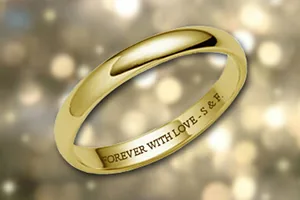
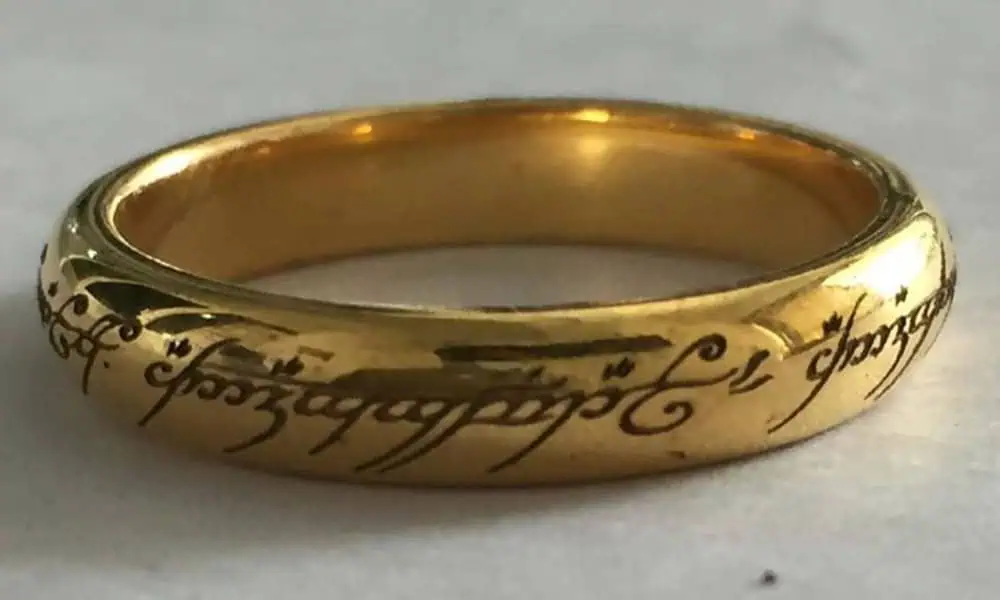
Gold Surface Conditions That Change the Process Window
The same alloy can produce a different result after polishing, brushing, coating or plating. Geometry then adds another layer of focus and positioning control.
Mirror-polished surface
High glare can reduce apparent contrast and make small changes in texture more visible. Evaluate the mark under the lighting used by the customer.
Brushed or textured finish
Existing texture can either support or mask the mark. Directional brushing can also change how engraved edges appear.
Coating or lacquer
A protective decorative layer may react before the metal beneath it. The coating chemistry and thickness should be considered separately from the gold alloy.
Curved and small parts
Rings, pendants and watch components can introduce focus variation, fixture pressure and positioning risk even when the material recipe is correct.
What Can Go Wrong When Laser Marking Gold?
For precious-metal parts, the main process risk is not simply whether the laser can create a mark. The real question is whether it can create the required mark without unacceptable surface damage, material loss or layer breakthrough.
High reflection and weak coupling
Polished gold can reflect a large portion of incident infrared energy, making the process more sensitive to wavelength, pulse behavior, focus and surface condition.
Excessive precious-metal loss
Deep or repeated engraving removes valuable material. Depth targets should therefore be tied to a real acceptance requirement rather than maximized by default.
Surface roughening or edge texture
A mark can be legible but still fail a luxury-finish inspection because of raised edges, local roughness, discoloration or residue around the feature.
Plating breakthrough
On plated items, too much energy can expose the substrate, producing an unwanted color change or uneven edge around the mark.
Scratches and fixture marks
Gold is soft. Clamping pressure, dirty fixtures and part handling can create defects that are more visible than the laser mark itself.
Residue and contamination
Polishing compound, oil, lacquer and engraving debris can change the apparent result. Cleaning method and post-mark inspection should be part of sample approval.
Where Gold Laser Marking Is Commonly Evaluated
Typical parts include jewelry components, pendants, rings, watch parts, premium tags, gold-plated components, bullion identifiers and precision decorative parts.
Identification
Fine text, serials, logos, purity or identification marks, and small traceability features.
Personalization
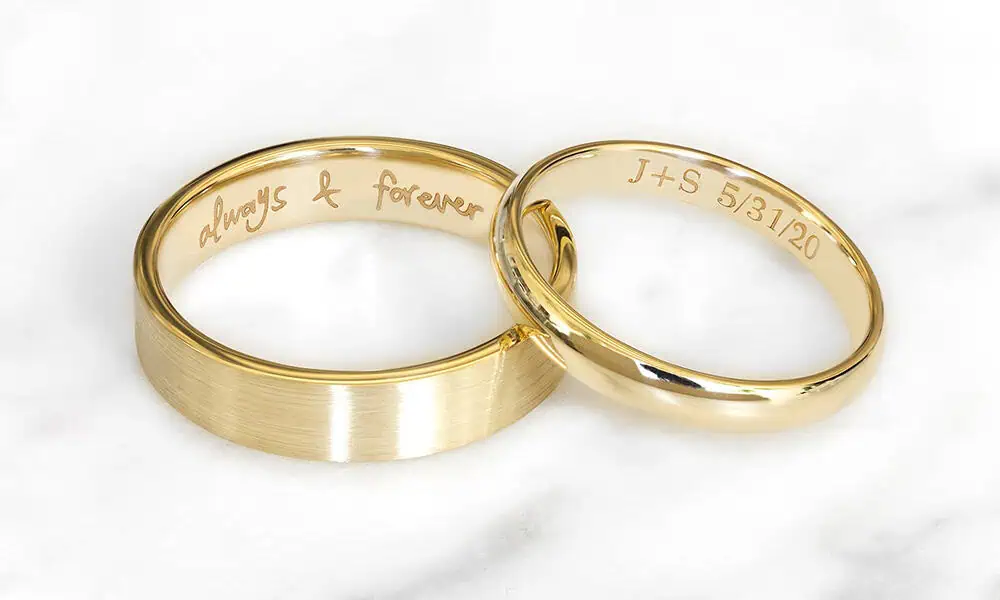
Names, dates, decorative lines and individualized artwork on finished precious-metal parts.
Shallow engraving
Permanent recessed detail where controlled depth matters more than surface-only contrast.
Codes and verification
QR or Data Matrix can be evaluated when cell size, contrast, flatness and scanner setup are suitable for the real part.
How to Validate a Gold Mark Before Production
A useful sample test should confirm both the visual result and the process boundary. For gold, appearance alone is not enough if the mark removes excessive material, breaks through plating or fails after normal cleaning.
1. Confirm the material
- 24K, 18K, 14K or other karat
- Yellow, rose, white or other alloy system if known
- Solid, plated, coated or lacquered construction
- Surface finish and cleaning state
2. Confirm the target
- Text, logo, serial, code or engraving artwork
- Mark size, smallest detail and location
- Required contrast, depth or texture
- Maximum acceptable material loss
3. Confirm acceptance
- Visual inspection under expected lighting
- Edge quality and surrounding surface integrity
- Plating breakthrough or substrate exposure
- Cleaning resistance and residue check
- Scanner readability when codes are required
Recommended evidence set for future sample approval
For the strongest page evidence, use real Zhuorui sample photos that identify the actual material condition—such as verified high-purity gold, a known K-gold alloy and a verified gold-plated part—together with the target effect and inspection notes. Until those assets are confirmed, existing images should remain supportive visuals rather than being presented as proof of a specific karat result.
Gold Laser Marking Questions
Can a fiber laser mark gold?
Yes, fiber lasers can be evaluated for many gold identification and engraving tasks. The actual result depends on karat, alloy, surface finish, geometry and the required contrast or depth.
Is MOPA always better than standard fiber for gold?
No. MOPA provides a wider pulse-control window, which can help with fine process tuning, but it is not automatically the best route for every gold part. The comparison should be made on the same material and target artwork.
When should a green laser be considered for gold?
Green 532 nm systems are worth evaluating on highly reflective gold surfaces, especially when a 1064 nm route gives inconsistent coupling, excessive heat effect or insufficient precision.
Can gold be marked black like stainless steel?
Do not assume the same black-mark mechanism used on stainless steel. Gold contrast is strongly dependent on alloy, surface texture, material removal and any coating or plated structure, so the final appearance should be approved from a real sample.
Can gold-plated parts be laser marked without exposing the base metal?
Sometimes, but the answer depends on plating thickness, substrate, required mark contrast and the process window. Sample testing should confirm whether the mark remains within the plated layer.
What should I send for a sample test?
Send the actual part or representative samples, the known karat or plating information, the final artwork, mark size, required depth or contrast, and any cosmetic or scanner acceptance standard.
Send Your Gold Part for Laser Marking Evaluation
Share the karat or plating structure, surface finish, artwork, mark size and acceptance criteria. Zhuorui Laser can compare the appropriate laser route and confirm the process direction through sample testing.
Request a Quote Contact Us