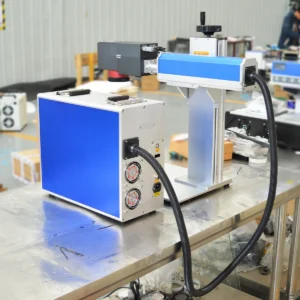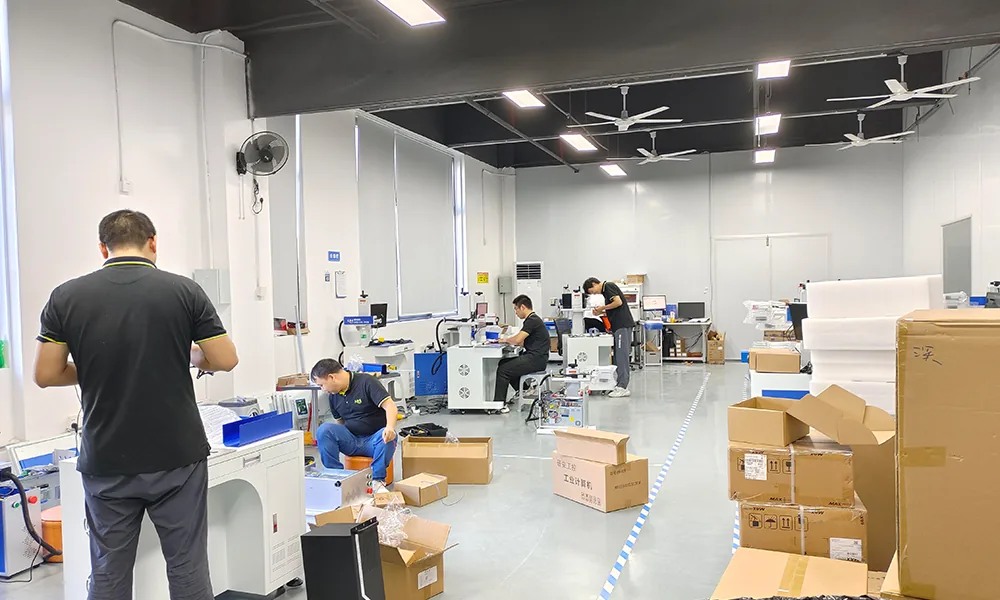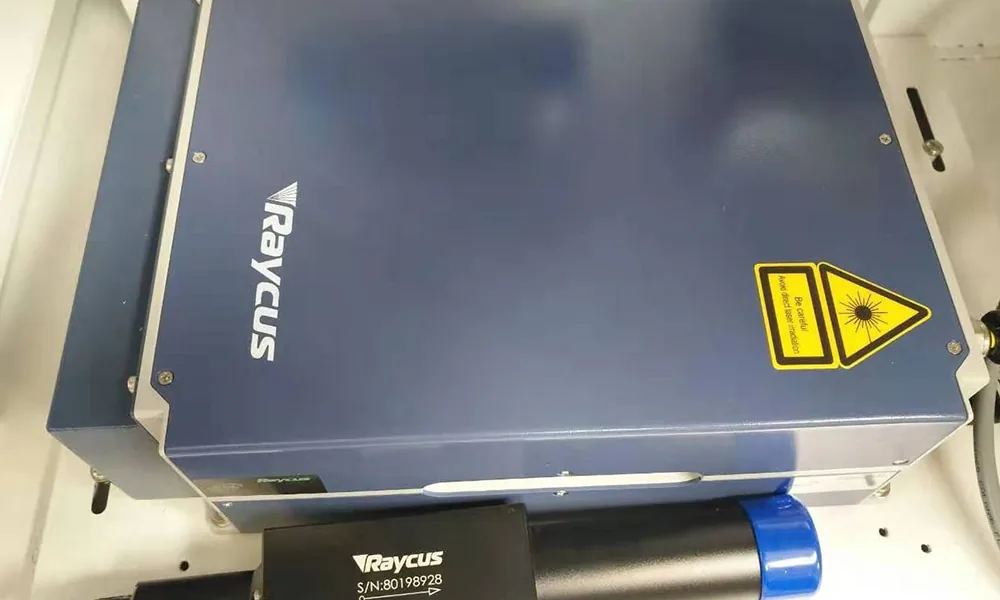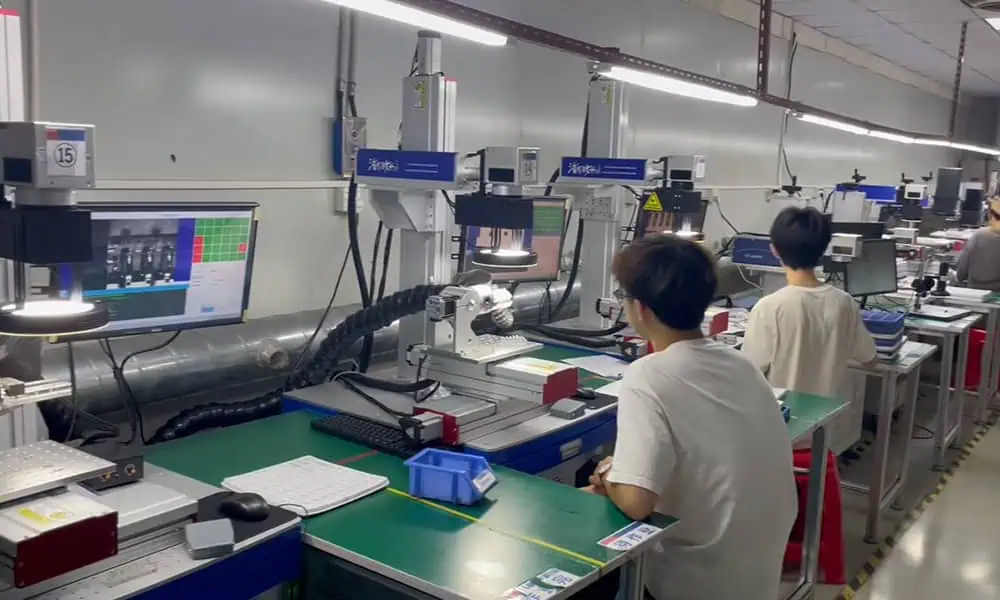
A brand name on a quotation tells you what the supplier says it will use; it does not verify the source of the component installed in the machine. When evaluating a laser marking machine manufacturer, ask three things: what exact component was promised, what is actually installed in the machine, and what evidence supports the source claim?
A practical verification path has several layers. First identify the component precisely. Then compare the approved machine configuration with the identifiers on the actual component. If the component manufacturer provides its own verification method, use it. If the claim extends beyond component identity to purchasing route or provenance, additional traceability records are needed.
The important discipline is to stop the conclusion where the evidence stops. A model number can help identify a component. A serial number may identify an individual unit when the manufacturer manages it that way. Neither, by itself, proves the complete upstream purchasing history.
What Does “Verifying a Component Source” Actually Mean?
Component-source verification becomes unreliable when brand, manufacturer, exact model, installed identity, genuineness and provenance are treated as the same question.
- Brand: Which brand name is being claimed?
- Manufacturer: Which company manufactured the component?
- Product family: Which series or general product group does it belong to?
- Exact model or part number: Which specific variant is being supplied?
- Installed-component identity: Does the physical component inside the machine match the approved configuration?
- Genuineness: Is the component recognized as genuine by the component manufacturer where an official verification method exists?
- Provenance: What evidence connects the component to its origin, transactions, custody or supply-chain history?
This distinction matters because each level needs different evidence. A supplier website may support only the statement that the supplier claims to use a certain brand. A quotation may document what was offered. A component nameplate can provide stronger evidence about the identity of the physical part. Linked transaction or traceability records are needed if the claim is specifically about how that part moved through the supply chain.
That distinction is also reflected in established traceability frameworks. GS1 distinguishes product or part identification from batch, lot and serialized instance identification, while traceability requires those identifiers to be connected with relevant events and records. NIST uses provenance more broadly to describe information about origin and history rather than simply an item identifier. NIST IR 8536 further treats manufacturing supply-chain traceability as a problem of organizing, linking and querying traceability data across organizations so that product history and provenance can be independently examined. For a buyer, the boundary is practical: an identifier can help establish what a component is, while provenance requires connected traceability information.
For a buyer, the practical result is simple: before asking for more documents, define exactly what you are trying to prove.
Decide Which Component Claims Need Exact Verification
You do not need the same verification effort for every screw, cable or bracket in a laser marking machine. Focus on component claims that could materially affect the configuration you are approving.
Depending on the machine and project, those claims may involve the laser source, scan head or galvo system, controller, optics, cooling system, power system or another subsystem that has been specifically agreed with the manufacturer. Verify exact identity when that identity affects your purchasing decision; there is no universal list of “critical parts” that applies to every machine.
Exact verification is particularly useful when you have approved a specific manufacturer or model because of a technical, compatibility, service or commercial requirement. In that situation, a general description such as “fiber laser source” or even a brand name may be too broad. The approved record should be precise enough to distinguish the configuration you accepted from an alternative that you did not evaluate.
A useful rule is:
The more important the exact component identity is to acceptance of the machine, the more precise the approved identifier should be.
That may mean recording an exact model or manufacturer part number rather than only a product family. An individual serial number is usually more relevant later, when checking the actual installed unit, than when defining the initial commercial configuration.
Build an Evidence Chain Instead of Trusting a Component List
Use the component list as the starting record, then connect each claim to evidence that is appropriate to that claim.
Start With Exact Component Identity
The first step is to move from a general brand description toward the strongest identifier that is reasonably available. Depending on the component manufacturer, this can include an exact model, product number, part number, batch or lot information, or an individual serial number.
Laser-source manufacturers provide a useful example. JPT’s official after-sales documentation describes nameplate information that can include the product model, serial number, part number and production batch. IPG’s product warranty registration also uses product model and serial number to identify equipment for registration. These are examples of manufacturer-specific identification systems; they do not mean that every laser source uses the same fields or verification process.
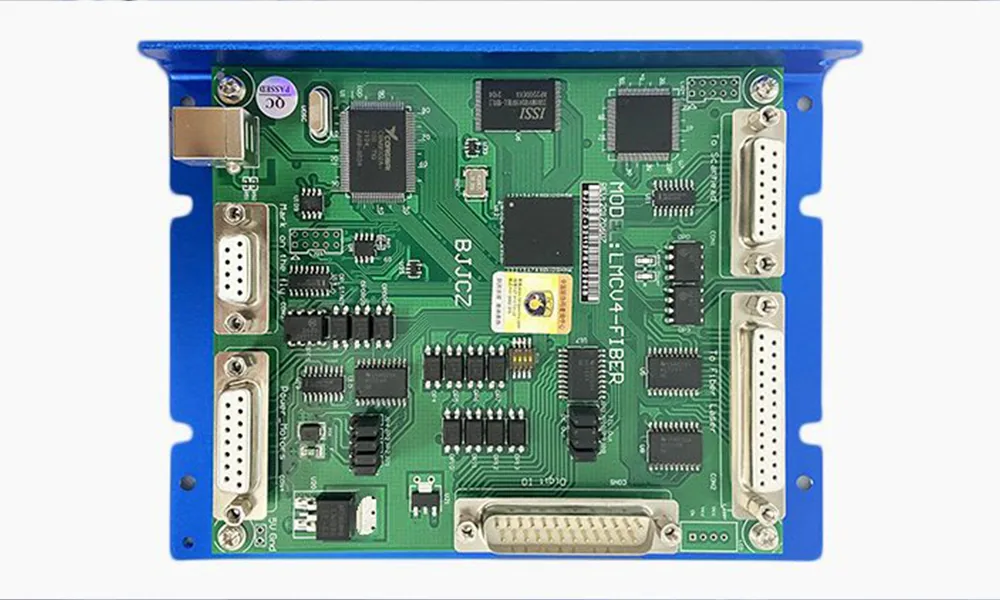
The same principle applies to other subsystems. JCZ publishes distinct controller families and exact controller models, so a general statement such as “JCZ controller” may not identify the exact approved board when model-level compatibility matters.
Match the Evidence to the Claim
The following framework helps prevent a common procurement mistake: treating every document as if it proved the same thing.
| Evidence | What It Can Support | What It Does Not Prove by Itself |
|---|---|---|
| Sales statement or website brand list | What the supplier claims to use | The exact installed component, genuineness or provenance |
| Quotation or approved technical configuration | What was offered or approved | What is physically installed in the delivered machine |
| BOM or component list | The documented machine configuration | That the physical machine necessarily matches the document |
| Official component datasheet | Whether a stated model corresponds to a manufacturer’s defined product | That the exact component in your machine is that product |
| Nameplate, label, model or part number | Physical component identity at the level shown by the identifier | The complete purchasing route or supply-chain history |
| Serial or instance identifier | Individual-unit identity when managed uniquely by the manufacturer | Complete provenance simply because the number exists |
| Official OEM authenticity check | Stronger evidence of genuineness for products covered by that OEM’s method | The complete path through every distributor, reseller or transaction |
| Linked purchasing and traceability records | Stronger support for a sourcing or provenance claim when tied to the relevant part, lot or instance | Automatic proof if the records cannot be connected to the actual component |
Do Not Turn Identification Into Provenance
If you read an exact model and serial number from the installed laser source, you have much stronger identity evidence than a brand name in a sales brochure. That still does not reconstruct the manufacturer’s purchasing route.
If your purchasing decision only requires confirmation that the approved model is physically installed, that may be enough. If your requirement is more specific—for example, confirming a particular sourcing channel—then the required evidence changes. You may need linked purchasing, supplier or other traceability records that connect the identified component to the claimed source.
Do not demand a stronger conclusion than your actual purchasing requirement needs, but do not claim a stronger conclusion than the evidence supports.
Cross-Check the Claimed Configuration Against the Actual Machine
Documents become useful verification evidence when they can be connected to the physical machine. The core task is therefore not collecting more PDFs; it is checking whether different representations of the same configuration agree.
A practical sequence is:
- Establish the approved baseline. Use the final quotation, technical configuration, BOM or other record that actually defines the configuration you accepted.
- Identify the exact fields that matter. Record manufacturer, model, part number or other identifier at the level required by your purchase.
- Inspect the actual component where it is safely accessible. Compare the visible nameplate or label with the approved record. Do not dismantle a laser subsystem solely to obtain an identifier.
- Resolve differences before moving on. Do not treat a similar brand name or visually similar component as an automatic match.
- Use an OEM-specific verification route when available. Some manufacturers provide direct authenticity or product-identity checks.
- Add traceability evidence when the claim concerns provenance rather than identity.
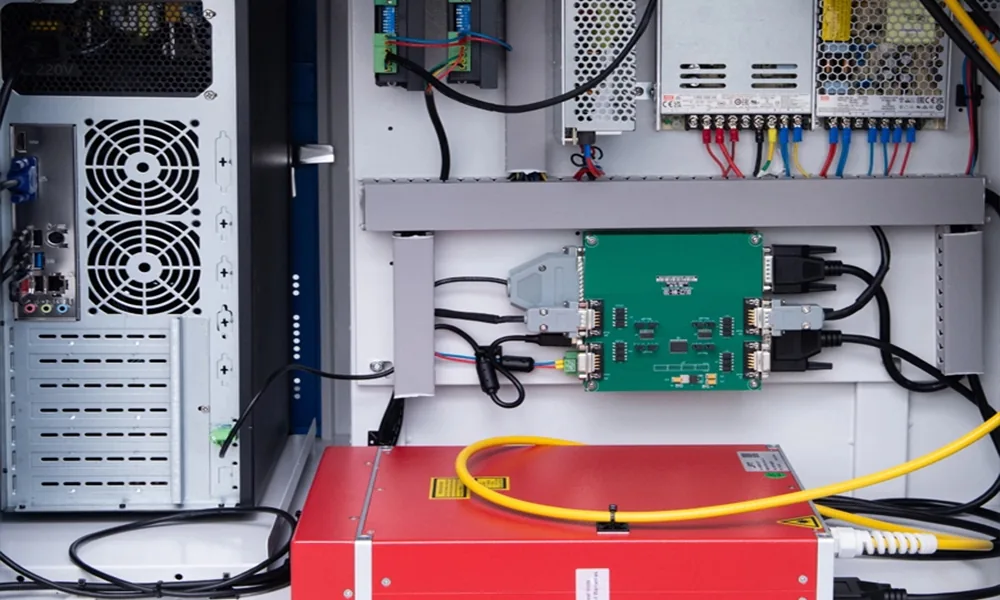
SCANLAB shows how an OEM-specific check can go beyond visual inspection. For covered scan systems and control products, the company uses security labels and can perform genuineness clarification using security information and the serial number. That is a direct manufacturer verification method—but it is a SCANLAB-specific method, not a universal rule for every galvo supplier.
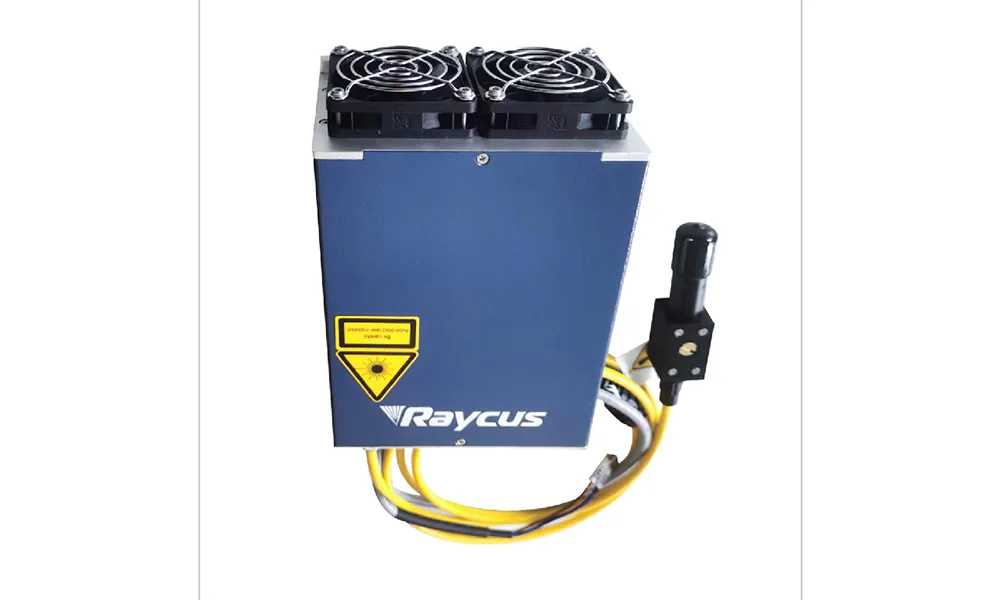
Visual appearance is also a weak basis for exact-model verification. Raycus has previously published an official notice explaining that two of its laser models could have the same external appearance while carrying different exact model codes and specifications. The procurement lesson is broader than those historical models: when exact model identity matters, read the identifier rather than infer the model from appearance.
Record the result using a precise verification state:
- Claimed: the supplier has stated the component identity.
- Documented: the identity appears in the approved configuration or BOM.
- Physically matched: the actual installed component carries identifiers that match the approved record.
- OEM-verified: where the OEM provides such a method, the unit has been checked through it.
- Traceability-supported: additional linked records support the source or provenance claim.
- Unresolved: available evidence is missing, inconsistent or insufficient for the conclusion required.
These are practical purchasing states, not an industry certification scheme. They help distinguish different levels of evidence instead of reducing every result to a vague “trusted” or “not trusted” judgment.
Treat Component Mismatches as a Diagnostic Problem
A mismatch deserves investigation, but the mismatch itself does not tell you the cause. Moving directly from “the information is different” to “the component is counterfeit” is not a sound verification process.
Instead, determine what is different and then use checks that can discriminate between possible explanations.
| Observed Difference | Check First | Do Not Assume |
|---|---|---|
| The same brand is shown, but the exact model is different | Compare the latest approved configuration, model family and any recorded change | That the difference is automatically acceptable or automatically fraudulent |
| The BOM and physical label disagree | Check document revision, machine serial/configuration record and substitution history | That the document or the hardware is necessarily the correct one |
| The physical component looks correct but the model cannot be confirmed | Read model/part identifiers and use OEM information where available | That visual similarity establishes exact model identity |
| A serial number is unavailable | Confirm whether that OEM and component type normally provides an instance identifier | That absence of a serial number proves the component is fake |
| An OEM verification method cannot confirm the unit | Clarify the identifier, product coverage and verification procedure directly with the relevant party | Fraud before the discrepancy has been resolved |
An important distinction is the difference between a naming mismatch and an identity mismatch. A quotation may list a product family while the machine label shows a more specific model. Those two descriptions may still refer to the same approved configuration. By contrast, two different exact models require a real explanation if the exact model was part of the approval basis.
Document timing matters as well. If an earlier BOM lists one model and a later approved change authorizes another, the correct comparison is against the current approved configuration, not whichever document is easiest to find.
When the evidence cannot distinguish between a documentation issue, an approved change and an unapproved substitution, the technically correct result is unresolved. Request the missing clarification rather than filling the gap with an assumption.
Lock the Verified Configuration Before You Place the Order
Verification loses much of its value if the result is not preserved through the purchasing process. A component can be checked during technical discussion and still become ambiguous later if the approved requirement is recorded only in email fragments or informal chat.
For components whose exact identity matters to acceptance, the final purchasing record should be specific enough to preserve the agreed configuration. Depending on the requirement, that may include:
- component manufacturer;
- exact model or part number;
- the specification that must remain unchanged;
- any permitted equivalent or substitution boundary;
- the rule for buyer approval when a material configuration change is proposed.
This is a configuration-control problem as much as a supplier-verification problem. ISO 10007 describes general configuration-management practices such as configuration identification, change control, status accounting and configuration audit. It is not a laser-marking-machine purchasing law, but the underlying principle is useful: define the approved configuration, control material changes, keep the current record clear, and compare the delivered configuration with that baseline.
If a supplier proposes an alternative component, the key question is not simply whether it is described as “equivalent.” Determine whether the characteristic that caused you to specify the original component still holds. If the exact brand or model was part of your acceptance requirement, the substitution should be reviewed explicitly rather than disappearing into an updated BOM without explanation.
A final pre-shipment or acceptance check can then answer a concrete question: does the delivered machine match the latest configuration that both sides actually approved?
Know What Component Verification Still Does Not Prove
Even a strong component-source verification process has limits. Confirming that an approved laser source, galvo or controller is physically installed does not automatically prove that the whole laser marking machine is well built.
Component verification does not, by itself, establish:
- assembly quality;
- optical alignment or calibration;
- marking quality on your material;
- cycle-time performance;
- long-term reliability;
- quality-control effectiveness;
- after-sales capability;
- the manufacturer’s complete supply-chain transparency.
Those require different checks. Laser marking machine manufacturing and assembly capabilities should be evaluated as a manufacturing question. Quality control, calibration and machine testing should be evaluated through appropriate quality-control evidence. Application performance should be verified with a representative marking test and defined acceptance criteria.
At component level, each piece of evidence should be used only for the conclusion it can actually support.
A robust supplier-verification process follows the evidence chain rather than the volume of documents collected:
Define the claim → identify the exact component → compare the approved records with the physical machine → use OEM verification where available → add traceability evidence when provenance is the actual question → investigate mismatches → preserve the verified configuration through delivery.
When a link in that chain cannot be verified, keep the conclusion narrow. An unresolved source claim is better purchasing information than a confident conclusion built on evidence that does not actually support it.