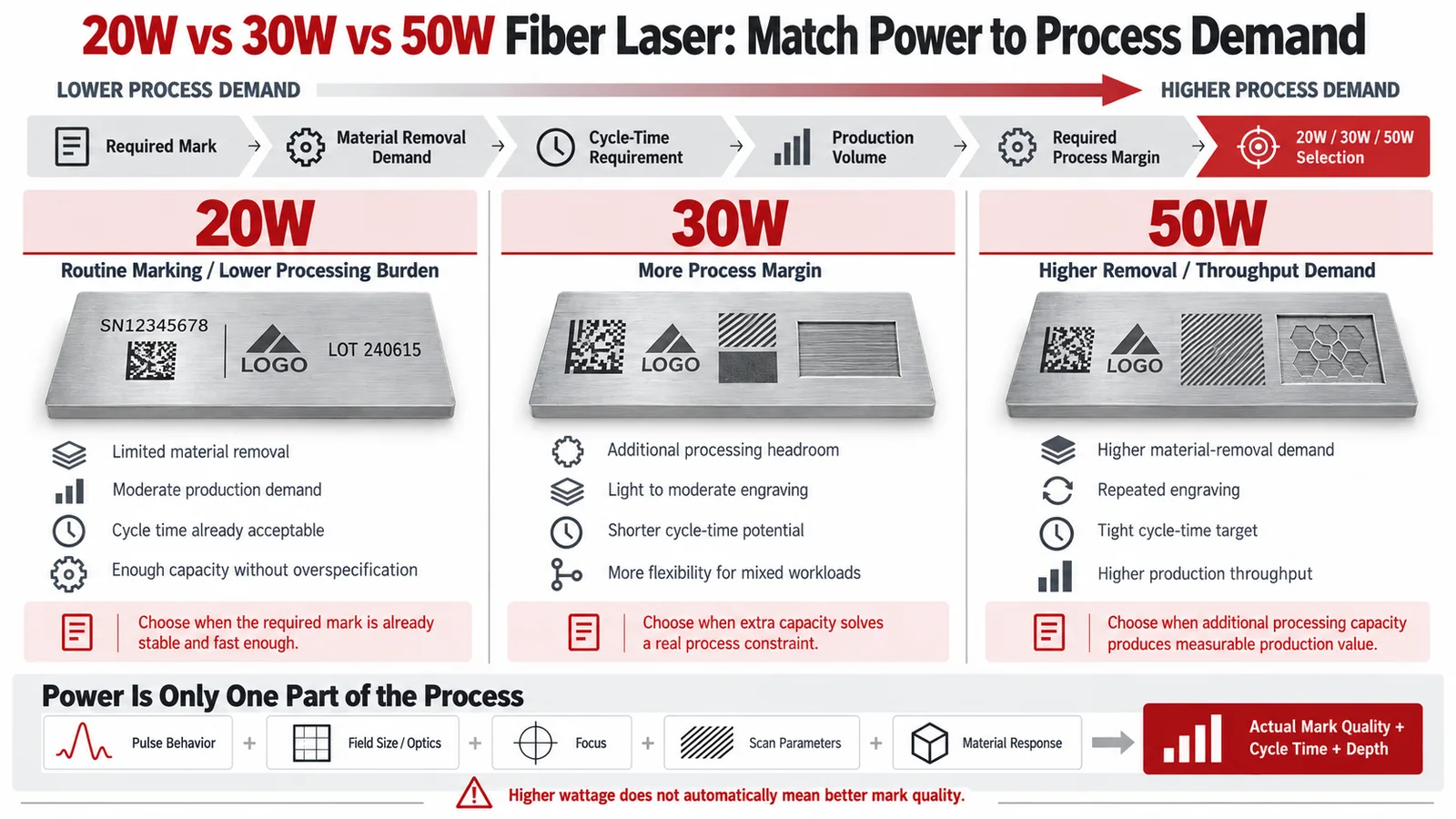
Once fiber is the right laser family for your application, the choice between 20W, 30W, and 50W should be based on process demand rather than on which number looks more powerful. The main questions are how much work the laser must do on each part and how quickly that work must be completed.
For routine identification marks with limited material removal and moderate production demand, a 20W fiber laser may already provide enough capacity. A 30W system becomes more useful when you need additional process margin, shorter cycle times, or more frequent engraving and ablation. A 50W system is easier to justify when material removal, repeated passes, higher production volume, or tighter cycle-time targets become major requirements.
20W is not a lower-quality choice, 30W is not automatically the best all-round option, and 50W does not produce a better mark simply because its wattage is higher. Average laser power is only one part of the process. Pulse characteristics, optics, focus, scanning parameters, material response, required depth, and production targets all affect the result.
20W vs 30W vs 50W Fiber Laser: The Short Answer
The three power classes overlap in many marking applications. Their differences become more important as the job requires more material removal, a shorter processing time, or more production headroom.
- 20W: Choose it when routine identification marking is the main job, material removal is limited, and the required cycle time is already achievable.
- 30W: Step up when you need more process margin, regular light or moderate engraving, or shorter production cycles.
- 50W: Evaluate it when repeated material removal, deeper engraving, tight cycle-time targets, or higher production throughput are the real constraints.
| Decision Requirement | 20W | 30W | 50W | Why It Matters |
|---|---|---|---|---|
| Routine surface marking | Strong candidate | Strong candidate | Often more capacity than the process requires | If the mark already meets quality and cycle-time targets, more wattage may add little |
| Light material removal | Possible when cycle time is acceptable | More process margin | More throughput margin | Removal demand makes available power more important |
| Deep or repeated engraving | Possible, but may require more time or passes | Better suited to moderate removal workloads | Stronger candidate for demanding removal workloads | Engraving requires repeated material removal rather than only surface modification |
| Tight cycle-time target | Lower throughput headroom | Additional headroom | Higher potential throughput | The same acceptable mark may need to be produced in fewer seconds |
| Higher production volume | Can be sufficient | Often worth evaluating | More likely to be justified when laser time is a production constraint | Small time savings per part can become important at scale |
| Main reason to choose | Enough capacity without unnecessary overspecification | Additional operating and production margin | Higher material-removal or throughput demand | Extra power is valuable only when it solves a measurable process need |
Treat the table as a starting point, not as a capability limit. A 20W laser can perform some engraving work, and a 50W laser can perform ordinary surface marking. What matters is whether the additional power produces a measurable benefit on the actual job.
What Does 20W, 30W, or 50W Actually Mean?
Wattage Is Average Laser Output Power
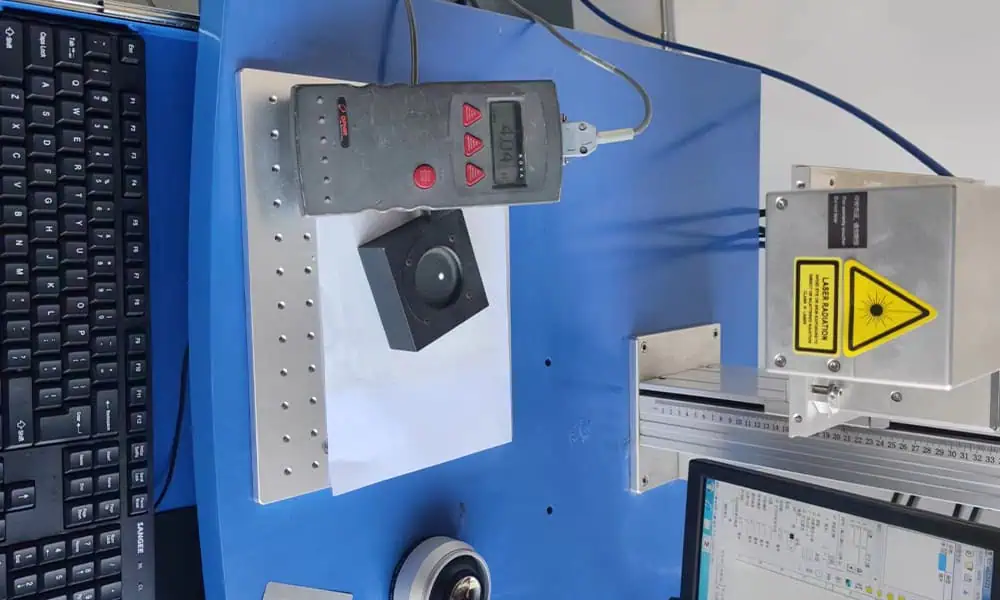
On a pulsed fiber laser, the 20W, 30W, or 50W rating primarily describes nominal average output power. It tells you how much laser energy can be delivered over time, but it does not tell you exactly how that energy is delivered to the workpiece.
For a pulsed source operating at a steady repetition rate, a useful simplified relationship is:
Average power = pulse energy × repetition rate.
A 50W source therefore should not be assumed to produce individual pulses with 2.5 times the energy of a 20W source. Higher average power may come from a different combination of pulse energy, repetition rate, pulse duration, and source design.
In practice, 20W, 30W, and 50W industrial fiber sources can use different repetition-rate ranges while having similar maximum pulse-energy figures. Some source families also provide adjustable pulse width. Wattage is an important specification, but it is not a complete description of the laser pulse.
Why Two Lasers With the Same Wattage Can Behave Differently
Two machines both sold as “30W fiber lasers” may have noticeably different process windows. Relevant differences include:
- pulse energy;
- pulse duration;
- repetition frequency;
- peak power;
- beam quality;
- beam diameter and optical configuration;
- available marking field and focal length;
- scan speed and hatch strategy;
- focus accuracy.
This matters particularly when comparing conventional Q-switched fiber lasers with MOPA fiber sources. If a job depends on pulse-width control, heat input, color formation, or a narrow surface-response window, increasing average power may not address the real process requirement.
For a fair 20W, 30W, and 50W comparison, keep the source architecture, optics, and basic machine configuration as similar as possible. If one candidate uses a different pulse architecture or a substantially different field lens, the test is comparing complete laser systems rather than wattage alone.

The Real Question: Can It Make the Mark, or Can It Make It Fast Enough?
Separate two questions before choosing power:
- Can the laser create the required mark?
- Can it create that mark at the required depth, quality, cycle time, and production volume?
A process can pass the first test and still fail the second.
Surface Marking Usually Requires Less Material Removal
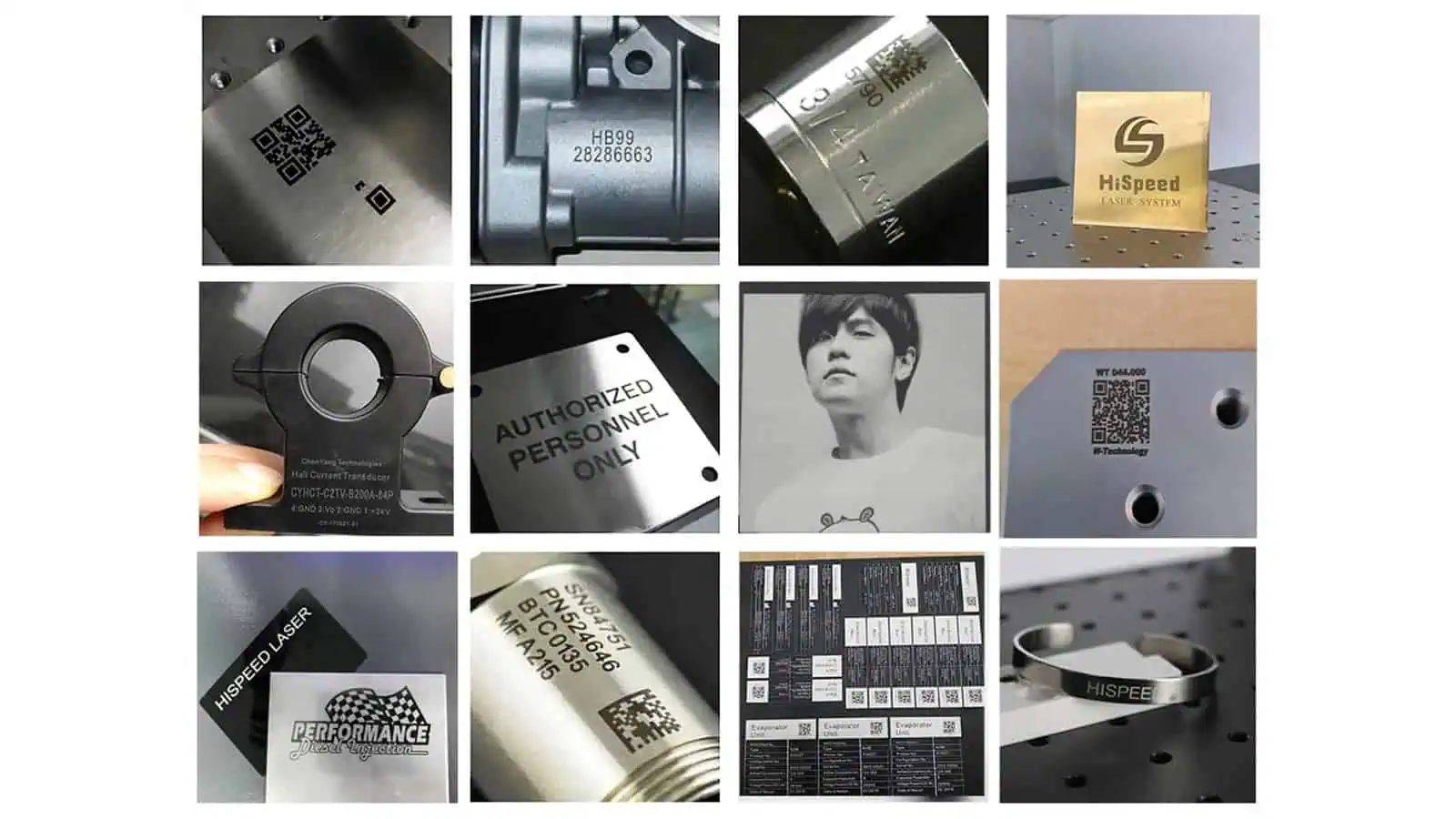
Many industrial jobs are primarily identification tasks: logos, serial numbers, part numbers, QR codes, Data Matrix codes, nameplates, and traceability marks. Depending on the material and marking mechanism, these jobs may require relatively little material removal.
If a 20W system already produces the required mark reliably, moving to 30W or 50W does not automatically make the result more accurate or more readable. The main potential gains are usually process margin and shorter processing time.
So “Can 20W mark this material?” is only the first question. Several power classes may be able to make the same logo or code. For production, the more important question is whether the lower-power system can make it fast enough and consistently enough.
Material Removal Changes the Power Decision
Power becomes more important as the job shifts from surface modification toward physical material removal.
Engraving, repeated ablation, recessed codes, and deeper cavities require material to be removed rather than only modified at the surface. As required depth increases, the process may need more passes, lower scanning speeds, tighter hatch spacing, or a different parameter strategy. All of these can increase processing time.
Higher average power can provide useful additional capacity, but engraving depth still cannot be predicted from wattage alone. A 20W laser can remove metal under appropriate conditions, while a poorly optimized 50W process can still give a poor result.
A published Trotec stainless-steel deep-engraving example shows how much the parameter strategy can matter even when laser power stays fixed. Using the same 20W MOPA laser with an F-160 lens on a 5 × 5 mm area and targeting about 200 μm engraving depth, a time-optimized process required 112 seconds, while a quality-optimized process required 375 seconds. Those numbers are not a universal 20W engraving rate; they show how strongly surface-quality requirements, pass strategy, speed, and frequency can change processing time at the same nominal power.
How Much Faster Can 30W or 50W Be?
Higher Power Can Reduce Cycle Time When the Process Can Use It
A common reason to move from 20W to 30W or 50W is not that the lower-power laser cannot mark the part. It is that producing an acceptable result takes too long for the production target.
Laserax has published an aluminum marking test that provides a useful example. Its team optimized repetition rate, line spacing, pulse energy, scanning speed, focus spot size, and filling strategy for Aluminum 380 and Aluminum 6061. For a specific 16 × 16 Data Matrix code measuring 10 × 10 mm, the reported marking times were:
| Tested Power | Published Marking Time |
|---|---|
| 20W | 5.25 seconds |
| 30W | 3.62 seconds |
| 50W | 2.37 seconds |
In that test, higher power reduced marking time substantially. The figures do not define a universal speed ratio for other fiber-laser jobs.
These are Laserax’s published results, not Zhuorui test data or a guaranteed machine specification. They are useful as an example of how throughput can change under defined conditions. Change the material, required contrast, engraving depth, marking field, source characteristics, code geometry, or process parameters, and the result can change as well.
Why Speed Does Not Increase by a Fixed Multiplier
A 50W machine is not automatically 2.5 times faster than a 20W machine simply because its nominal average power is 2.5 times higher.
Actual processing time depends on:
- mark geometry and filled area;
- required depth or contrast;
- material and surface condition;
- pulse characteristics;
- repetition frequency;
- scanning speed;
- hatch spacing;
- number of passes;
- lens and marking field;
- focus position;
- the acceptance criteria for the finished mark.
The practical takeaway is simple: higher available power can shorten processing time only when the material and process can make productive use of that additional capacity.
When Does a 20W Fiber Laser Make the Most Sense?
A 20W fiber laser should be judged against the requirements of the job, not dismissed simply because it is the lowest of these three power classes.
It can be a sensible choice when the work is mainly routine identification marking, material removal is limited, production volume is moderate, and the required mark can already be produced within the available cycle time.
20W is worth serious consideration when:
- the work is mainly serial numbers, logos, codes, and standard traceability marks;
- engraving or coating removal is limited;
- there is no demanding deep-engraving requirement;
- cycle time already meets the production target;
- batch size does not justify additional throughput capacity;
- the process has a stable parameter window at the lower power level.
The key question is:
What measurable requirement would fail if you stayed with 20W?
If there is no cycle-time, material-removal, process-margin, or realistic future workload requirement that needs more capacity, moving to a higher wattage may provide little practical return.
A 20W system can still engrave. The issue becomes increasingly economic as removal volume or depth rises: additional passes and longer processing times can make a higher-power system more attractive.
When Is 30W Worth the Step Up?
The main reason to choose 30W over 20W is not that 30W suddenly unlocks an entirely different set of metals. In many applications, the two power levels overlap in basic marking capability.
What 30W mainly adds is more process margin.
A 30W system becomes more attractive when:
- a 20W process is approaching the acceptable cycle-time limit;
- light or moderate engraving is becoming a regular requirement;
- the job needs repeated ablation or multiple passes;
- batch sizes are growing;
- mixed production jobs require more operating flexibility;
- realistic future demand is likely to require more throughput.
That makes 30W a useful middle power class, but not automatically the best-value choice for every buyer. The extra capacity matters only when it solves a real production or processing constraint.
If a 20W machine already meets mark-quality and cycle-time requirements with comfortable process margin, 30W may not materially change the economics. If engraving load or production volume is already substantial, the difference between 30W and 50W may be more important than the difference between 20W and 30W.
When Does 50W Become the Better Choice?
A 50W fiber laser makes more sense when the application can actually use the additional processing capacity.
Higher Material-Removal Demand
Engraving-heavy applications are one of the clearest reasons to evaluate 50W. Deeper cavities, repeated material removal, substantial coating ablation, or marks requiring many passes can consume significant laser time.
As a process moves from altering a surface to physically removing material, throughput becomes more important. A higher-power source may reduce the trade-off between required depth, surface quality, and processing time.
There is still no universal rule that says 50W is required above a certain engraving depth. Material, source characteristics, beam delivery, scan strategy, and quality requirements all remain part of the result.
Tighter Cycle-Time Targets
A process can be technically successful and still be unsuitable for production because it takes too long.
If an acceptable code takes several seconds at 20W but the production station needs a much shorter cycle, additional power may have direct economic value. The useful metric is not maximum scan speed. It is the time required to produce the accepted mark.
That includes every pass and processing step required to meet the specified contrast, depth, edge definition, readability, and surface condition.
Higher Production Throughput
Production volume changes the value of even a small cycle-time improvement.
Saving one or two seconds may not matter much for occasional batches. The same saving can become significant when thousands of parts are processed or when laser marking is the bottleneck in a production line.
For that reason, 50W is better treated as a production-capacity decision rather than simply a stronger version of a 20W or 30W marker.
When Will More Wattage Not Solve the Problem?
Increasing power helps only when insufficient processing capacity is the actual constraint. Several common marking problems come from something else.
When Pulse Characteristics Are the Limiting Variable
If the application depends strongly on pulse duration, peak power, thermal input, or a specific surface reaction, moving from 30W to 50W may not address the real requirement.
This is particularly relevant when comparing standard Q-switched fiber sources with MOPA architectures. MOPA systems can provide wider pulse-width and frequency control, which may matter more than a simple increase in average power for some surface-sensitive processes.
Applications involving controlled color formation, heat-sensitive surfaces, or a narrow process window should therefore be evaluated by source behavior as well as nominal wattage.
When Optics or Field Size Are the Limiting Variable
The optical configuration can change the process just as significantly.
A larger marking field generally requires a different optical setup and changes spot size and energy distribution at the workpiece. Two machines using the same 50W source but different field lenses should not be expected to behave identically.
If a mark looks weak or fails to reach the expected result, increasing source power without checking field size, focus, spot characteristics, and working distance may only hide the real problem.
When Mark Quality, Not Throughput, Is the Goal
Higher wattage should not be confused with higher precision.
Fine text, sharp code edges, controlled heat input, smooth engraving surfaces, and repeatable contrast depend on the complete optical and process setup. A properly configured lower-power laser can produce a better result than a higher-power machine running unsuitable parameters.
Higher wattage gives you more available processing capacity. It does not automatically give you better marking quality.
How to Choose the Right Fiber Laser Power for Your Job
Instead of choosing power from a generic material chart, start with the actual production requirement and work through it in order.
Step 1: Define the Required Mark
Start with the result, not the laser.
Specify whether you need:
- a readable identification mark;
- high visual contrast;
- a QR or Data Matrix code;
- coating removal;
- surface texturing;
- shallow engraving;
- a defined engraving depth;
- a mark that must survive a particular downstream process or service condition.
The required result determines how much processing work the laser needs to perform.
Step 2: Separate Surface Modification From Material Removal
Ask how much material must physically be removed.
If the application mainly changes color, contrast, oxide state, or a thin surface layer, additional wattage may offer less benefit than it does for repeated engraving or deeper removal.
This distinction is more useful than saying that a particular metal “needs” a particular wattage.
Step 3: Set a Real Cycle-Time Target
Do not ask only which machine is faster. Define the production requirement:
How many seconds per part can the marking operation use?
Once that target is known, sample testing can show whether 20W already meets it or whether 30W or 50W provides a meaningful advantage.
Step 4: Include Production Volume
The same mark can justify different machines at different production volumes.
A 20W process that takes a few additional seconds may be perfectly reasonable for occasional batches. At high daily volume, those seconds accumulate into machine utilization, labor, line balancing, and throughput constraints.
Power selection should therefore consider not only what the machine can produce, but how often it must produce it.
Step 5: Decide How Much Process Margin You Actually Need
Additional capacity can be useful when:
- part surfaces vary;
- mark depth may increase later;
- batch volume is expected to grow;
- the machine will handle several different jobs;
- future projects are likely to require more material removal.
But vague “future proofing” is not a strong reason to buy the highest wattage available. Extra capacity has more value when it protects against a realistic future constraint.
Step 6: Compare the Actual Laser Source, Not Only the Wattage Label
Once the choice has been narrowed to one or two power levels, compare the actual source and optical specifications.
Relevant questions include:
- Is the source Q-switched or MOPA?
- What pulse-energy range is available?
- What repetition-frequency range is available?
- Is pulse width fixed or adjustable?
- What beam quality is specified?
- What field lens and marking area will be used?
- What process window has been demonstrated on the actual material?
This comparison avoids a common procurement mistake: choosing between machines by wattage and price while ignoring the specifications that determine how that power can actually be used.
If the shortlisted machines use different source architectures, pulse specifications, or field lenses, record those differences. The result is then a system-level comparison, not proof that wattage alone caused the performance difference.
When Should You Test 20W, 30W, and 50W on the Actual Part?
If the application clearly fits one power class, testing all three may not be necessary. When the choice remains between two configurations, however, a controlled sample test is usually more useful than comparing another specification sheet.
Sample testing is especially useful for:
- deep or repeated engraving;
- tight cycle-time requirements;
- coated or treated metal surfaces;
- unusual alloys or surface finishes;
- small high-density QR or Data Matrix codes;
- applications with strict visual or dimensional acceptance criteria.
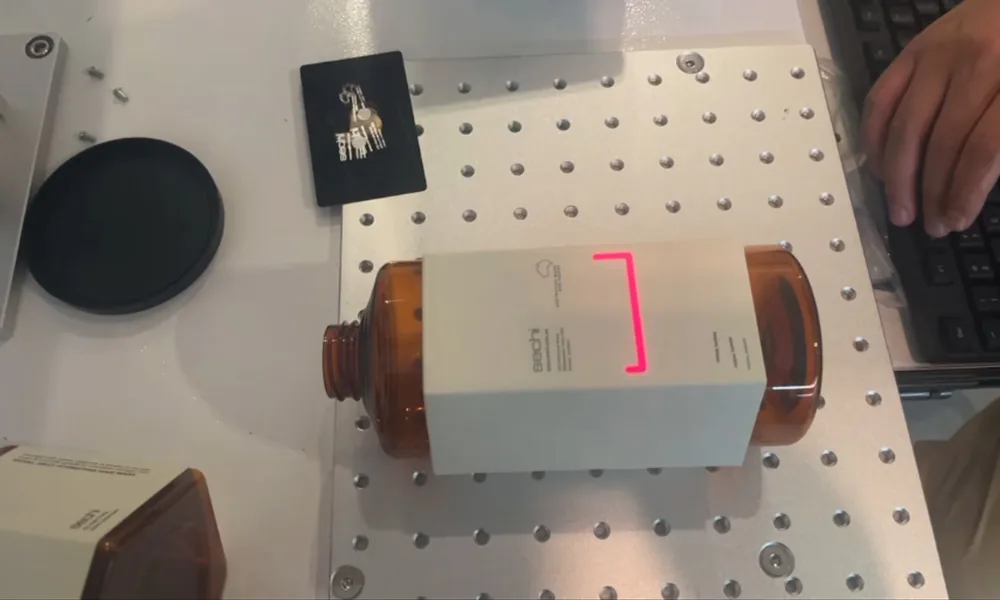
Compare each machine against the same required outcome, not by running every laser at arbitrary maximum settings. Keep the workpiece, mark geometry, marking area, and acceptance criteria consistent, while allowing each candidate machine to be optimized for that same target. Forcing identical speed, frequency, hatch, or pass settings across different power classes can produce an artificial comparison.
Record at least:
- mark readability and contrast;
- engraving depth;
- cycle time;
- number of passes;
- edge definition;
- heat effect or discoloration;
- surface condition after processing;
- repeatability across multiple parts.
If both 30W and 50W produce an acceptable mark, 50W is not automatically the better purchase. The decision comes down to whether its measured cycle-time or process-margin advantage is large enough to justify the higher configuration.
Which Power Should You Choose?
A good selection rule is:
Choose the lowest power class that can reliably achieve the required mark, depth, cycle time, and production volume with enough process margin for the real application.
A 20W fiber laser can be the right choice when routine marking is the main task and production speed is already sufficient. A 30W system becomes worthwhile when additional processing margin solves a real cycle-time, engraving, or workload constraint. A 50W system becomes more attractive as material-removal demand, production volume, and throughput pressure rise.
Wattage is still only one specification. If the application is sensitive to pulse characteristics, field size, spot behavior, focus, heat input, or source architecture, moving from 20W to 30W or 50W may not solve the actual process problem.
Start the final machine comparison with the part and the production requirement: material and surface, required mark, required depth, marking area, cycle-time target, batch volume, quality criteria, and realistic future workload. With those inputs defined, 20W, 30W, and 50W can be tested as engineering options instead of treated as simple “good, better, best” power levels.