When a distributor evaluates a laser marking machine supplier, a critical risk is not simply choosing the wrong company. It is approving one machine during quotation or sample testing, then receiving a shipment—or placing a repeat order—that no longer matches the configuration, marking result, documentation, or support assumptions behind the original decision.
That changes how supplier qualification should work. A distributor is not buying only a machine model or a nominal wattage. You are buying a repeatable supply package: a defined machine configuration, an application result that can be validated, a way to confirm what is actually shipped, and enough continuity to support later orders, replacement parts, software, and customer service.
The practical objective is therefore to connect four things before importing: what was quoted, what was tested, what will be shipped, and what can be supplied again.
Qualify a Repeatable Supply System, Not Just One Laser Marker
A single end user may be able to accept a machine once it produces the required mark. A distributor usually has a longer chain of responsibility. You may need to reorder the same model, stock spare parts, support machines already installed at customer sites, provide software or operating guidance, and explain why a later unit behaves differently from an earlier one.
This is why a successful demonstration is only one part of supplier qualification. Before committing to a supply relationship, establish whether the supplier can identify the configuration being offered, reproduce or properly control that configuration, disclose relevant changes, and provide the information needed to maintain the machines after delivery.
It is also useful to separate company identity from supply responsibility. Whether a seller describes itself as a manufacturer, assembler, exporter, or trading supplier does not by itself answer the important question. What matters is who controls the machine specification, who verifies the finished unit, who approves substitutions, and who is responsible when a technical issue appears after shipment.
Freeze the Machine Configuration Before You Compare Suppliers
Two quotations can both say “50 W fiber laser marking machine” and still describe materially different systems. Nominal laser power alone does not identify the complete machine that produced a sample.
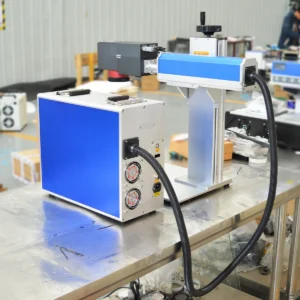
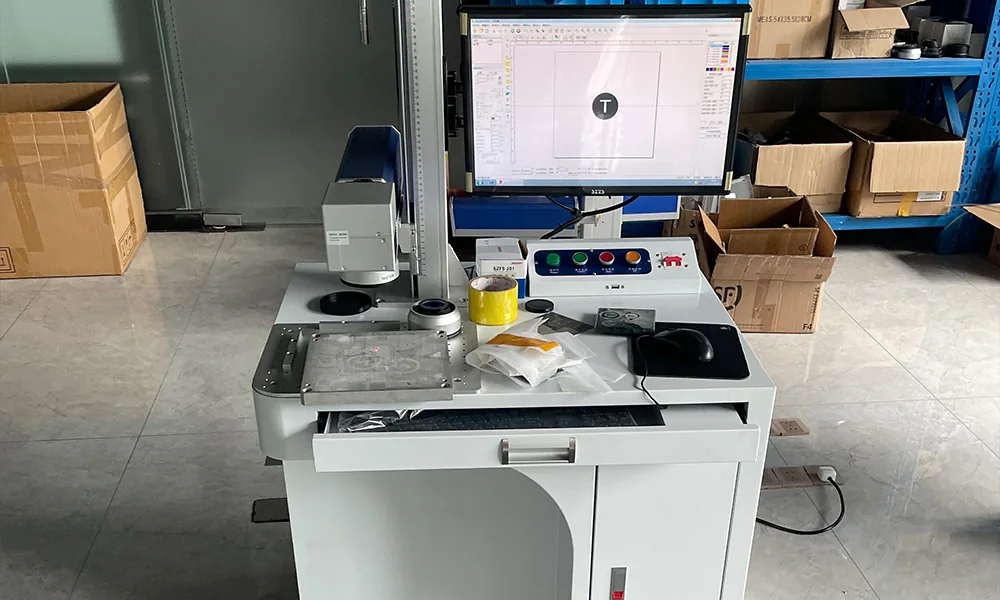
A typical galvo laser marker includes a laser source, scanning head, focusing optics and a controller/software system. The source generates the laser energy, galvanometer mirrors position the beam, and an F-theta lens focuses it onto the workpiece. Different source architectures can also provide different pulse behavior. These relationships are part of why the technical configuration matters when a buyer wants to transfer an approved marking result from a sample to a production machine. Coherent’s technical overview of laser marking systems describes these core machine elements and source differences.
Identify the configuration that actually produces the mark
The required level of detail depends on the application, but a distributor should normally be able to identify the variables that were material to the approval. Depending on the machine and marking task, these may include the laser type or wavelength, source architecture, power class, lens or marking field, focusing arrangement, controller, software, fixture or rotary equipment, and other options used during testing.
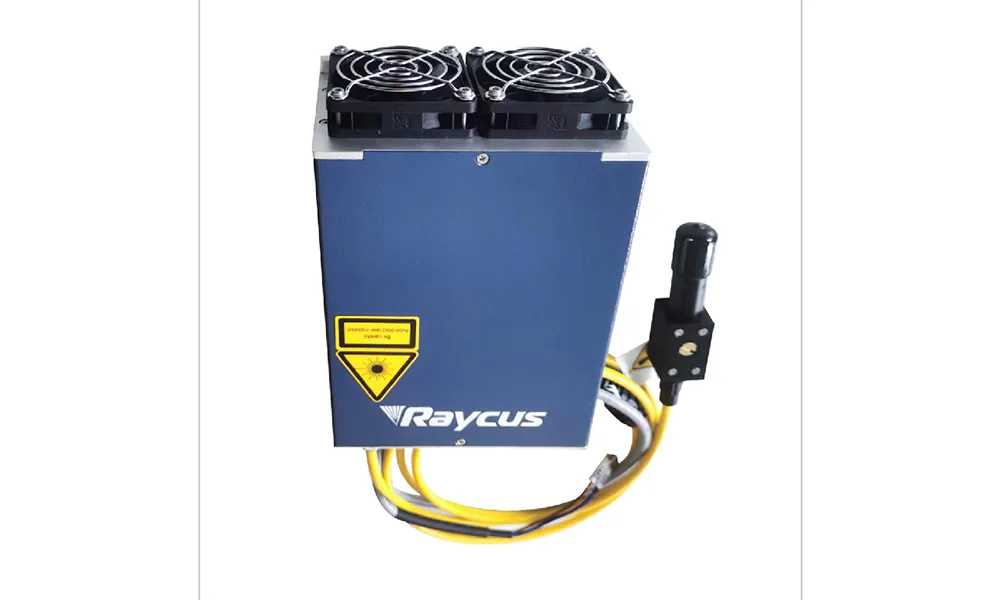
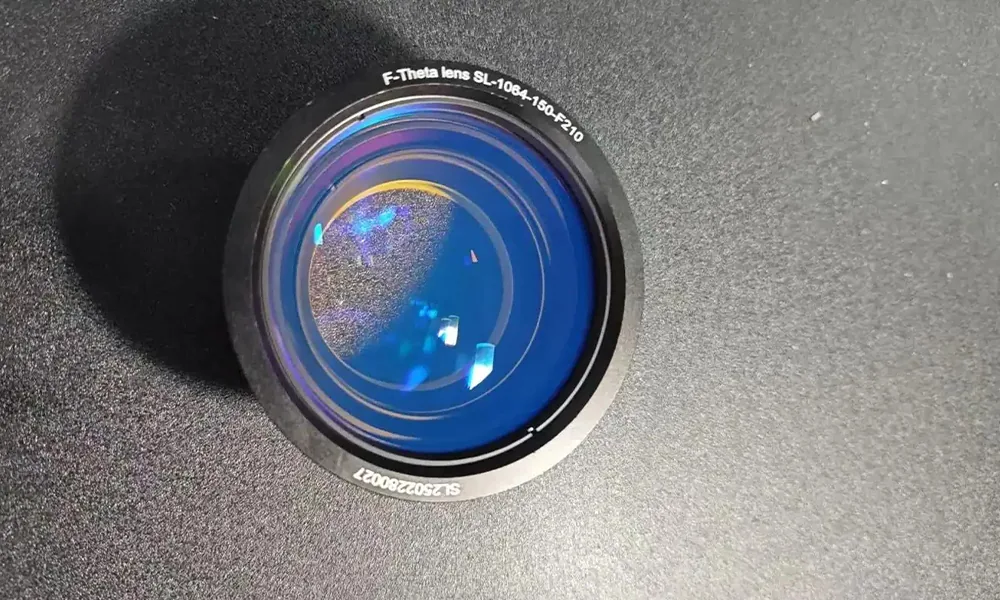
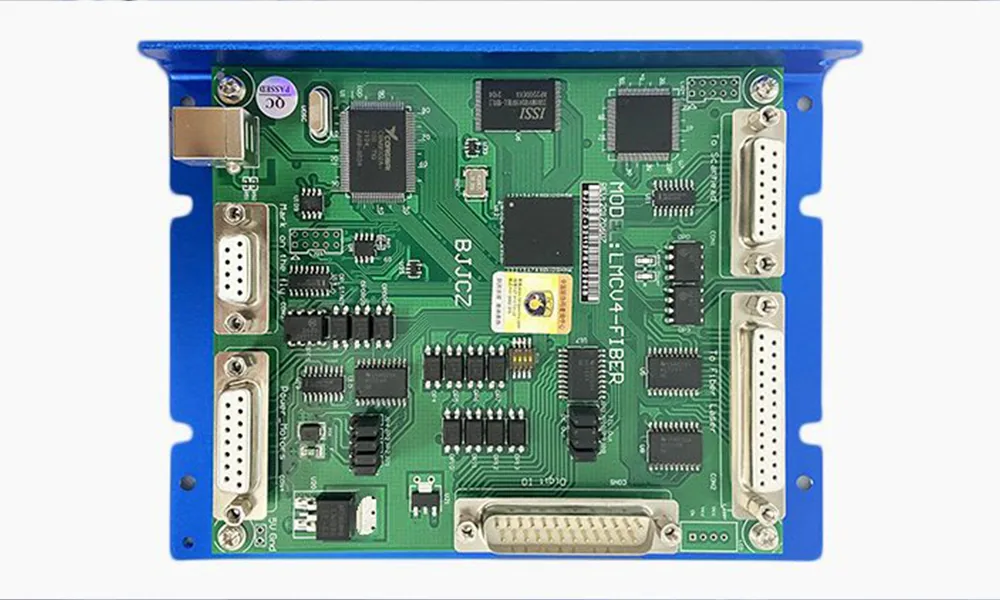
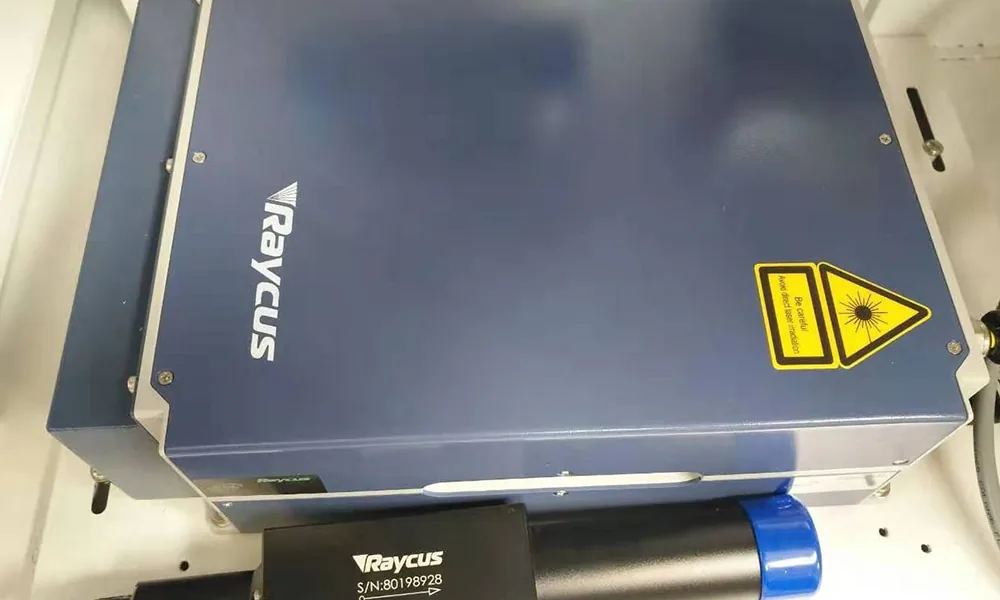
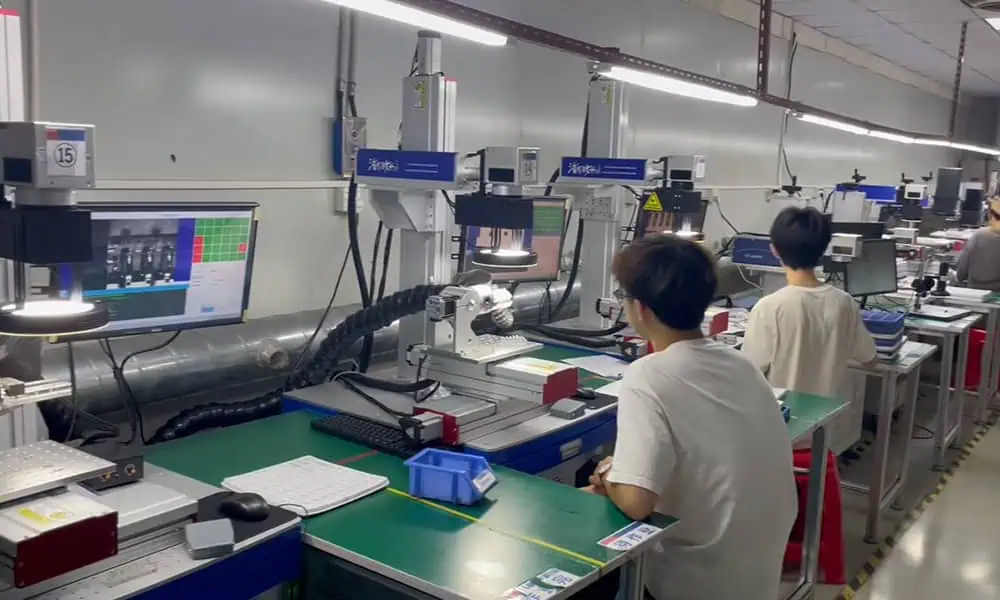
These photos show the kinds of component details that may need to be recorded. The actual source, lens and controller must be confirmed for the specific machine and order; one example does not establish a standard component set for every laser marker.
The process settings used for validation also matter. Laser marking is a multi-variable process: power or pulse-energy capability, scanning speed, pulse frequency, hatch or raster spacing, overlap, number of passes and focus can interact with the material and surface condition. Experimental work on stainless steel laser marking, for example, shows that scanning speed, frequency, raster spacing and energy-related variables can change surface roughness and color formation rather than behaving as independent switches. Published AISI 304 laser-marking research illustrates this interaction.
This does not mean every parameter value must be frozen forever. It means you need enough information to know which configuration produced the result you approved and which later changes could make that approval less transferable.
Separate performance-critical items from commercial options
Not every difference between two machines has the same consequence. A different laser source, pulse capability, lens, field size or focusing arrangement may affect the marking process directly. A software, interface or controller revision may instead create compatibility or service problems even when the physical mark remains acceptable. Cabinet color, logo placement or packaging may have little connection to marking performance at all.
Grouping these differences helps avoid two opposite mistakes: treating every cosmetic change as a technical failure, or assuming that every machine sold under the same model name is technically equivalent.
Agree how substitutions will be handled
Component substitutions are not automatically unacceptable. Industrial suppliers sometimes change parts because of availability, revision updates or product lifecycle changes. The important question is whether a change affects something that was part of the validated result or the distributor’s support obligations.
A practical purchase agreement should therefore make the change process clear. If a supplier proposes a different source architecture, optical configuration, control system or other validation-critical item, the buyer should be able to assess whether the change is technically equivalent for the intended application or whether the relevant test needs to be repeated.
Treat Sample Marking as an Acceptance Test, Not a Sales Demo
A polished supplier sample is useful only when you know what question it answered. “The machine can mark metal” or “the sample looks good” is usually too vague for an import decision.
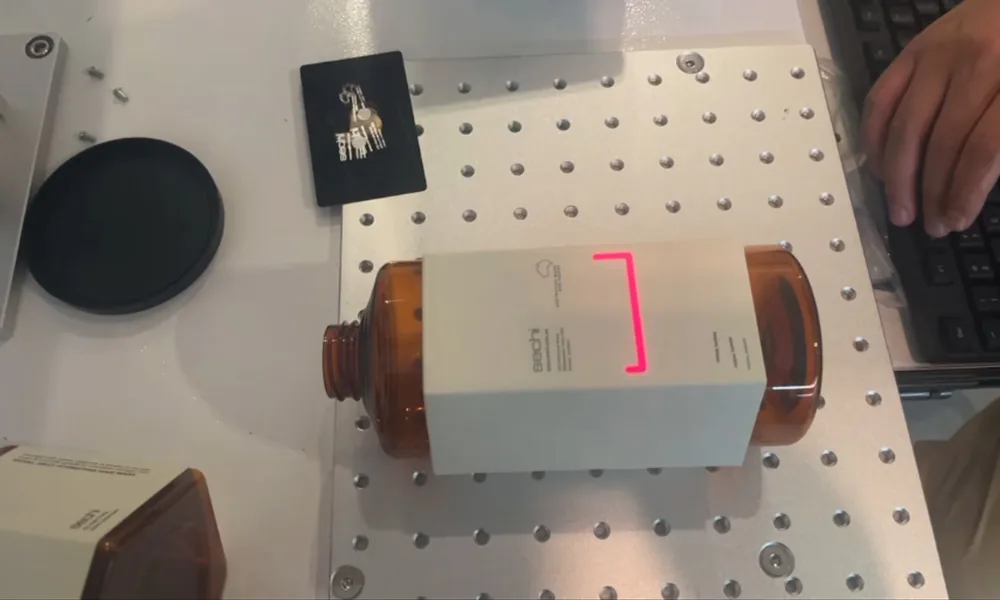
A meaningful sample test starts with the intended application. Define the actual or representative material, its surface condition, the required content, and what an acceptable result means. For one project the priority may be visual contrast. Another may require a readable Data Matrix code, controlled engraving depth, low surface damage, resistance to a downstream cleaning process, or a target cycle time.
Material identity matters because apparently similar materials can respond differently to the same laser. Research on polyoxymethylene, for example, found substantially different marking responses between tested material variants as laser parameters changed. That does not create a universal recipe for plastics; it demonstrates why results from one material presentation should not automatically be transferred to another. The published POM marking study is a useful example of this transfer limit.
Control the conditions that matter to the decision
The test does not need to become a laboratory experiment, but the important inputs should be identifiable. If the approved sample was produced with a particular source type, lens, focus condition, marking field and process recipe, those details provide context for the result.
This is especially important for small codes, fine features, curved parts or components with changing surface height. Focus and optics affect the beam condition at the workpiece, so a sample marked on a flat coupon does not automatically validate a geometrically different production part.
Define acceptance before judging the sample
Do not rely on “looks acceptable” if the downstream requirement is more specific. Decide what will change the purchasing decision. Depending on the application, the acceptance basis could include visual appearance, code readability, mark depth, surface condition, durability after a specified downstream process, or cycle performance.
The correct acceptance criterion is application-specific. A distributor should not invent a universal contrast value, focus tolerance, marking depth or cycle target and apply it to every machine.
The purpose of the sample is to create a traceable relationship:
Relevant material and requirement → identified machine configuration → controlled marking conditions → observed result → acceptance decision.
Once that relationship exists, the sample becomes much more useful during shipment inspection and repeat purchasing.
Verify Configuration Consistency Through Production and Repeat Orders
This is where distributor purchasing differs most from a one-time machine demonstration. The first question is whether a tested combination can produce the required mark. The next question is whether the machine that arrives—and the machine reordered months later—still corresponds closely enough to the validated combination.
A supplier does not need to promise that every component will remain unchanged forever. What the distributor needs is control over changes that matter.
Link the shipped machine back to the approved baseline
Before shipment, define what evidence will allow you to confirm that the order matches the agreed specification. Depending on the project, useful evidence may include the final configuration record, machine or serial identification, confirmation of major components and options, agreed functional checks and machine testing, sample-marking results, electrical configuration, accessory lists, documentation, and records of any approved deviations.
This should be treated as buyer-defined acceptance rather than a universal industry protocol. Factory Acceptance Testing is a well-established concept in industrial automation, where equipment is tested against previously defined requirements before deployment, but there is no single FAT procedure that every ordinary laser marking machine must follow. The useful principle is specification-based acceptance: define what must be checked before shipment and what result will cause acceptance, correction or re-testing. ISA’s discussion of factory acceptance testing illustrates this specification-driven approach.
Control changes before repeat orders
The phrase “same model” should not be your entire repeat-order specification. If the original approval depended on a particular laser behavior, optical setup, focus arrangement, material condition or marking recipe, a later change to one of those variables may reduce the value of the earlier validation.
That does not mean every revision requires a complete new qualification. Use a risk-based question: could this change plausibly affect the validated marking result, machine compatibility, or supportability?
If the answer is yes, determine whether the replacement is technically equivalent for your application. If equivalence cannot be established from the available information, repeat the relevant part of the validation before treating the new configuration as interchangeable.
This same logic applies to machine components and replacement parts and software. A change that does not alter the physical mark may still affect file compatibility, controller communication, replacement-part interchangeability or the distributor’s ability to support machines already in the field.
| What to verify | Evidence to request | What it helps confirm | What it does not prove by itself |
|---|---|---|---|
| Machine configuration | Defined model and relevant source, optics, controller, software and options | What is actually being quoted and approved | That it will produce your required mark |
| Application result | Sample on the relevant material with an agreed acceptance basis | That the tested configuration can meet the defined application under the tested conditions | That every later configuration will perform identically |
| Shipment conformity | Final configuration confirmation, functional checks and agreed pre-shipment evidence | Whether the shipped order corresponds to the approved specification | Compliance in every destination market |
| Configuration changes | Change disclosure and technical comparison where relevant | Whether earlier validation may still transfer | That every substitution is automatically acceptable |
| Support continuity | Written support, parts, software and warranty responsibilities | Who is responsible after delivery | The quality of future service unless it is actually demonstrated |
Verify Import and Destination Requirements Before Production Is Locked
Technical marking performance is only one part of import readiness. Before production is finalized, confirm the destination country and the electrical, documentation and safety requirements that apply to the exact machine.
At the practical level, this can include voltage and frequency, plug or connection requirements, software and interface language, manuals, machine labels, packing requirements and documents requested by the importer or destination market.
Laser-product safety also needs market-specific verification. IEC 60825-1 addresses laser-product classification and safety requirements, but referencing IEC 60825-1 does not by itself prove that a machine satisfies every market-entry requirement worldwide.
The United States is a useful example of why generic statements such as “FDA/IEC certified” should be examined carefully. The U.S. Food and Drug Administration applies federal requirements to laser products and explains that an accession number or acknowledgement of a product report is not the same as FDA approval. Importers therefore need to determine which requirements, reports, labels and declarations apply to the actual product being introduced into the U.S. market. FDA’s current market-entry guidance provides the relevant U.S. context.
The broader purchasing rule is simple: ask for documents by requirement and destination, not by certification acronym alone. Then verify that the document refers to the machine configuration you intend to import and check the applicable CE, FDA and laser compliance requirements for the destination market.
Verify After-Sales Support Before Your Customers Need It
After-sales service and technical support matter differently to a distributor than to an individual machine buyer. If one of your customers has a marking problem, the distributor becomes part of the diagnostic chain even when the original manufacturer provides technical support.
Before ordering, establish who handles technical escalation and what information will be needed when a problem occurs. Useful items may include the machine serial or configuration record, controller and software version, photos or video of the symptom, marking files, parameters, material information and any recent component changes.
Also clarify how replacement parts are identified and whether revisions remain compatible with machines already sold. If software, controllers, optical components or other critical parts change over time, the distributor needs a way to determine what is interchangeable and what requires additional setup or validation.
Warranty language should be equally specific. Avoid treating “one-year warranty,” “lifetime support,” or similar phrases as complete service definitions. Confirm what is covered, what is excluded, who supplies replacement parts, who pays shipping where applicable, what evidence is required for a claim, and which responsibilities must be negotiated in the commercial agreement.
There is no universal warranty duration, spare-parts package or response-time standard that can safely be assumed for every laser marking machine supplier. These are supplier-specific commercial terms and should be confirmed in writing.
Keep OEM and Private Label Separate from Technical Qualification
Distributors often need logo branding, customized nameplates, cabinet colors, packaging, manuals or other private-label elements. These can be important commercially, but they belong to a different decision layer from technical qualification.
A supplier should not become technically qualified simply because it can place your logo on a machine. First establish the validated machine baseline, the sample acceptance method, the shipment-verification process and the support responsibilities. Then define which OEM or private-label elements may be changed without affecting that baseline.
This separation also makes later changes easier to manage. A new logo, carton design or cabinet color may require commercial approval but no marking re-validation. A change to the laser source, optics or another application-critical element may require technical review even if the external appearance of the machine remains identical.
Use Two Approval Gates Before You Import
The checks above become easier to use when they are divided into two purchasing gates. The first gate determines whether the supplier and proposed machine are sufficiently defined to commit to the order. The second determines whether the actual shipment is ready to accept.
Questions to Send Before You Pay the Deposit
- Please confirm the exact machine configuration for this quotation, including the laser source, power, marking field or lens, controller/software version, voltage and included options.
- Please confirm which configuration and relevant settings were used to produce the sample we approved.
- If any component that may affect the validated marking result changes before shipment or on a repeat order, please notify us before substitution and tell us whether the application should be re-tested.
- Before shipment, please provide the agreed evidence showing that the finished machine corresponds to the approved configuration, including any deviations or substitutions.
- Please confirm which electrical, documentation, labeling and compliance requirements you will prepare for our destination market, and who is responsible for after-sales support, spare parts and warranty issues after delivery.
Gate 1: Before commitment or payment
- Define the intended material, surface, mark requirement and production context.
- Identify the machine configuration clearly enough to know what is being quoted.
- Agree how the relevant application will be sample-tested.
- Define what result will count as acceptable.
- Clarify which configuration changes require disclosure or additional validation.
- Confirm the destination, electrical requirements and required documentation.
- Clarify support, spare-parts, software and warranty responsibilities.
- If OEM or private label is required, define it separately from the technical baseline.
Gate 2: Before shipment
- Confirm that the finished machine corresponds to the agreed configuration.
- Review the agreed functional, sample or quality evidence.
- Check whether any relevant component, software or configuration changed.
- Resolve deviations before treating the machine as equivalent to the approved sample.
- Confirm voltage, accessories, documentation, labels and packing for the destination.
- Record the final configuration information needed for future support and repeat orders.
The final question is not simply, “Is this a good supplier?” A more useful question is:
Do we have enough verified information to accept this supplier, this configuration and this shipment—and enough configuration history to make the next order safer than the first one?
For distributors, that is the difference between buying a laser marker and building a supply relationship that can be supported, repeated and controlled.