
Laser Marking Comparison Guides
Compare laser-source routes, marking mechanisms and non-laser alternatives before a machine specification is written. Start with the material, required mark, production method and acceptance test, then open the guide that owns that decision.
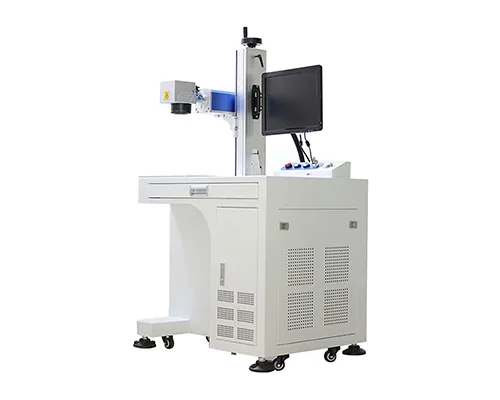
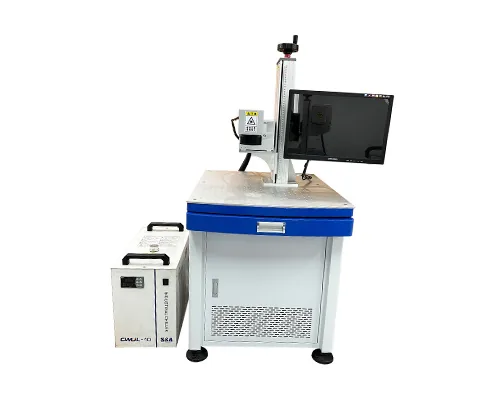
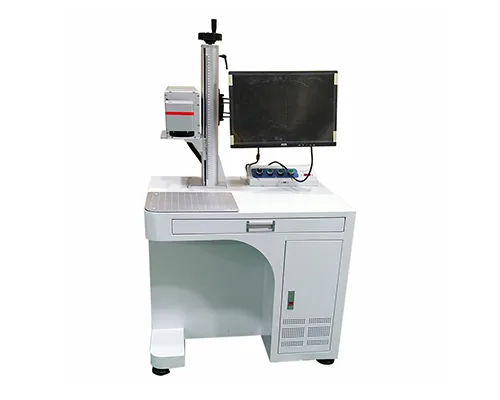
Representative registered equipment images. They identify route families, not a guaranteed result for a specific sample.
Choose Your Laser Marking Comparison Path
Do not begin with wattage or machine price. First decide whether the unresolved question is the laser source, the physical mark, or a different coding process. Each path below leads to a focused technical guide.
Choose a laser source
Compare wavelength family, material response, heat input, pulse behavior, mark effect and practical operating constraints.
See four source comparisonsDefine the physical result
Separate surface marking from material-removal engraving and chemical or electrochemical etching before discussing equipment.
Compare marking, engraving and etchingCompare another coding process
Evaluate permanence, contact, consumables, maintenance, line integration and inspection against dot peen or inkjet.
See alternative-process guidesCompare Laser Sources by Material Interaction
A source family narrows the search, but it does not approve the application. Surface condition, additives, coatings, geometry, field size, focus, pulse settings and the acceptance test can change the practical result.

Compare Marking Processes Before Machines
Two systems can produce readable characters while creating very different surface changes, maintenance tasks and validation requirements. The process owner should define what must remain after cleaning, wear, heat or chemical exposure.
Clarify whether the target is a surface color or texture change, deliberate material removal, or an etching mechanism. Depth, roughness, debris, corrosion behavior and dimensional limits are different questions.
Open the terminology and mechanism guideCompare non-contact processing with permanent mechanical indentation. Part stiffness, surface deformation, noise, tool wear, data needs and readable depth belong in the decision.
Open the laser vs dot peen guideCompare a laser-created mark with deposited ink. Substrate response, contrast, line speed, changeovers, consumables, cleaning, ventilation and code verification should be evaluated together.
Open the laser vs inkjet guideRoute Your Laser Marking Comparison
| Starting condition | Open this guide first | Bring these variables |
|---|---|---|
| Metals and selected plastics; UV is also under review | Fiber vs UV | Alloy or polymer grade, surface finish, contrast target, feature size, heat limit and throughput. |
| Metal-focused route compared with organic or coated surfaces | Fiber vs CO2 | Material family, coating stack, required mechanism, field size, extraction and maintenance context. |
| Fine or heat-sensitive processing compared with CO2-responsive materials | UV vs CO2 | Surface absorption, damage threshold, mark detail, packaging or organic material condition and cycle target. |
| A fiber route is selected, but pulse flexibility is unresolved | MOPA vs Q-switched | Required color or contrast, pulse-width need, mark speed, source range and sample acceptance method. |
| The requested result is described inconsistently | Marking vs engraving vs etching | Target depth, roughness, material removal, surface integrity, corrosion or cleaning requirement. |
| Permanent industrial identification may use mechanical indentation | Laser vs dot peen | Part stiffness, permitted deformation, required depth, noise, tool access, data and maintenance. |
| A production line currently uses or considers deposited ink | Laser vs inkjet | Substrate, ink adhesion, consumables, cleaning, line speed, code verification and ventilation. |
Use One Evidence Method for Every Comparison
A useful comparison keeps the sample and acceptance test constant. Otherwise the result may reflect a different material condition, mark file or production target rather than a better process route.
- 1
Freeze the part condition
Record material grade, color, finish, coating, contamination, wall thickness and geometry.
- 2
Define the required mark
Provide the file, size, line width, code type, contrast, depth, texture and protected areas.
- 3
Compare the production system
Include loading, fixture, focus control, cycle target, extraction, guarding, software and verification.
- 4
Approve with a repeatable test
Set the inspection lighting, reader, cleaning, abrasion, heat, chemical or dimensional acceptance method.
Prepare a Testable Laser Marking Brief
Zhuorui Laser can configure standard machines, function upgrades, custom machine structures and project-based automation. The recommendation becomes more reliable when the real process boundary is supplied before quotation.
Laser marking comparison questions
These answers define the starting point. The linked guide and a controlled sample test own the detailed decision.
Which laser marking technology is best?
There is no universal best source. The practical choice follows material and surface response, required mark effect, geometry, cycle target, integration, safety controls and the acceptance test. Use the source comparisons to narrow the test route.
Is MOPA a separate laser family from fiber?
MOPA is a type of pulsed fiber-laser architecture, not an unrelated wavelength family. Compare it with a conventional Q-switched fiber source when pulse-width flexibility or selected color and contrast effects matter.
Does higher wattage make one route better?
No. Rated power alone does not define absorption, peak power, pulse behavior, spot size, heat input, mark quality or cycle time. Compare the complete source, optics, settings and sample result.
When should dot peen be compared with laser marking?
Compare them when permanent industrial identification could accept mechanical indentation. Required depth, surface deformation, part stiffness, noise, tool wear, access and data workflow are central variables.
When should inkjet be compared with laser marking?
Compare them when a line can use deposited ink or a laser-created mark. Review substrate compatibility, contrast, consumables, cleaning, changeover, line speed, ventilation, maintenance and verification together.
Can a comparison guide replace sample testing?
No. A guide can identify the most defensible route to test, but it cannot confirm contrast, damage, adhesion, depth, durability, code grade or cycle time on an unseen production part.
Test the Route Before Selecting the Machine
Share the material, surface condition, mark file, production target and pass/fail method. Zhuorui Laser can then recommend a source, configuration and sample-test plan without treating a comparison table as a guarantee.