
Paper and Cardboard Laser Marking
Paper is not one laser material. Fiber furnish, recycled content, color, coating, print, adhesive and corrugated construction can all change contrast, charring, edge quality and smoke. This guide helps you define the material before selecting a laser direction or approving a sample.
Can paper and cardboard be laser marked?
Often yes, but the useful answer depends on the exact surface and the acceptable thermal effect. A result that is clear on brown kraft may be weak, uneven or damaging on a white coated label.
CO₂ laser marking is a frequent starting direction for cellulose-based paper and board because the material can respond strongly to infrared energy. The visible result may come from controlled darkening, light surface removal, or interaction with a coating or printed layer. The same response that creates contrast can also scorch an edge, curl thin stock, expose a corrugated flute or create smoke residue.
Do not select a machine from the words “paper” or “cardboard” alone. First identify whether the laser reaches raw fiber, a clay or polymer coating, print ink, varnish, laminate, thermal layer or adhesive-backed construction. Then define the required contrast, smallest feature, allowed halo and whether the mark must remain readable after rubbing, folding or handling.
The outer surface may matter more than the carton name
Two boxes described as “white cardboard” can have different liners, fillers, coatings, ink coverage and recycled fiber. Their laser windows may not transfer from one supplier or print run to another. For labels, the face stock, topcoat and adhesive form one construction; approving only a loose sheet does not validate the production label.
Ask for a material specification or safety information when a coating, laminate or adhesive is unknown. The test plan should include the actual printed and converted part whenever those layers are present.
Material decision: identify the layer that creates the mark and the layer most likely to fail. That choice determines the starting laser route and the inspection criteria.
Paper and board types do not share one parameter window
The categories below are starting points for sample planning, not universal settings. Supplier grade, basis weight or grammage, caliper, moisture condition, color, print and finish all remain part of the material identity.
Uncoated paper
Direct fiber exposure can make darkening relatively easy to observe, but thin stock has little thermal margin. Curling, edge discoloration and handling damage should be checked.
Test emphasis: detail, halo, flatness and rub-off.
Kraft paper and board
Natural brown tone can support a darker mark, while fiber variation and recycled content may make contrast less uniform. A readable code needs evaluation against the actual background range.
Test emphasis: contrast across color variation and normal batches.
Coated paperboard
The coating may react differently from the fiber underneath. Excess energy can create cracking, a wide brown halo or an exposed layer with a color that was not expected.
Test emphasis: coating response, edge cleanliness and surface integrity.
Corrugated cardboard
The outer liner is the marking surface, while its fiber furnish, color, coating and recycled content may differ from the inner liners. Treat the board construction as part of the material identity rather than using total board thickness as the only description.
Test emphasis: outer-liner response, background variation and normal board grades.
Printed cartons
Ink coverage can either help or disrupt the mark. Tests should include every representative color block and the real print process instead of only an unprinted blank.
Test emphasis: contrast consistency across ink colors and registration zones.
Adhesive labels
Face stock, topcoat, adhesive and release liner are separate layers. Heat and smoke behavior must be reviewed on the converted label, especially if the mark penetrates the face stock.
Test emphasis: face-stock integrity, adhesive effect and converted-part handling.
Applications & Why Paper Products Are Marked
The product format changes both the purpose of the mark and the surface conditions the laser must handle. Start with the real carton, label, box or tag—not an abstract material name.

Start from the actual packaging construction
A folding carton, corrugated shipper, label or kraft tag can all be described as paper-based, but the surface seen by the laser may be very different. Product format, print coverage, coating and the panel being marked should be defined before the laser route is selected.
Folding cartons
Consumer, pharmaceutical, cosmetic and electronics cartons may need variable production or traceability information without adding ink or labels to the coding step.
Corrugated boxes
Shipping cases and secondary packaging often need readable production or logistics identifiers on a large, inexpensive substrate.
Paper labels
Labels may carry dense variable information in a small area, so code quality can depend on the complete converted construction rather than the face stock alone.
Kraft tags and paper cards
Hang tags, kraft cards and paper identification pieces can use a permanent non-contact mark for branding, identification or batch information.
If the main question is how cartons or labels will be coded while moving on a production line, the material result still needs to be combined with line speed, trigger timing, product spacing and code position. See Carton and Label Laser Coding.
What Is Usually Marked on Paper & Cardboard?
The content matters because a large human-readable date code and a small machine-readable symbol do not require the same edge definition, feature size or inspection method.
Variable production data
Manufacturing date, expiry or best-before date, batch or lot number and other information that changes during production.
Traceability codes
Serial numbers, QR codes, Data Matrix codes, barcodes and other identifiers that may need scanner verification.
Product identification
Model, SKU, product reference, internal ID or other fixed and variable text used to distinguish the packaged product.
Branding and graphics
Logos, symbols, simple graphics and decorative marks where appearance may matter more than machine readability.
Acceptance changes with the content: a mark can look dark enough to the eye and still fail if small characters lose edge definition or a code module becomes distorted. Test the smallest real feature, not only a large demonstration logo.
Desired Marking Results
“A visible mark” is too broad for laser selection. Define the visual or functional result first, then compare the laser route and process window that can reach it without unacceptable damage.
A visible mark is only the first acceptance check
This cardboard example shows why visual contrast should be evaluated on the real board surface. Final approval still needs to consider edge halo, surface damage, rub-off and—when codes are used—machine readability.
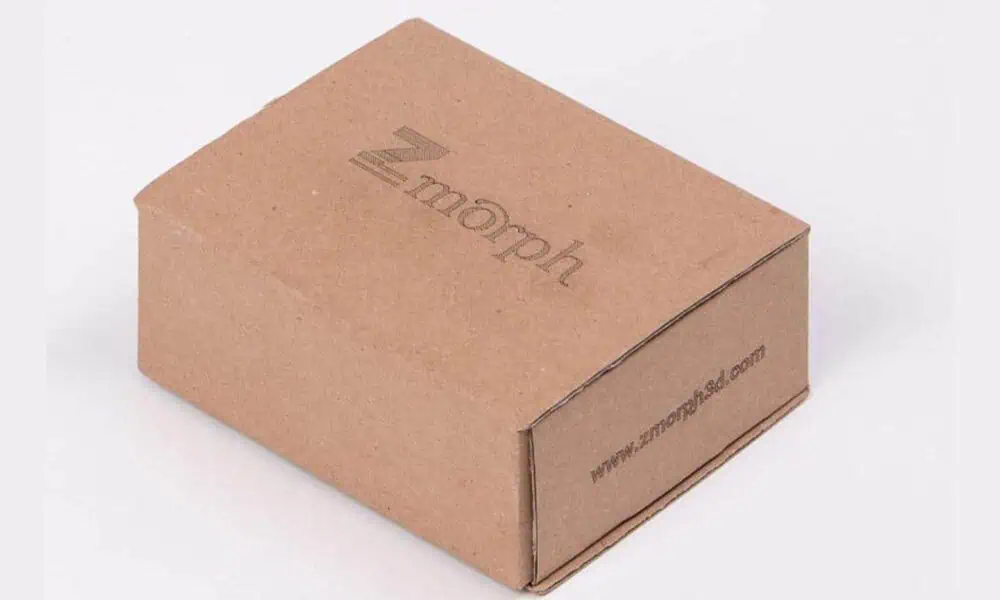
Dark, readable surface mark
Common on kraft and other exposed-fiber surfaces where controlled darkening can create useful contrast.
Judge: contrast, edge halo, loose char, rub-off and background variation.
Clean contrast on coated or printed board
The useful effect may come from changing or removing a responsive surface layer rather than simply darkening the underlying fiber.
Judge: coating integrity, edge cleanliness, color consistency and whether the substrate is unintentionally exposed.
Fine text or machine-readable code
Small characters and code modules require tighter control of spot size, overlap, focus and thermal spread than large text or decorative graphics.
Judge: minimum feature, module shape, scanner readability and consistency across the marking field.
Minimal thermal damage
Thin premium paper, labels and appearance-sensitive cartons may need a narrow process window that limits browning, curling, cracking or penetration.
Judge: flatness, backside change, cut-through, discoloration, residue and post-mark handling.
Part Geometry, Thickness & Size
Paper and board are often described by total thickness, but the laser only sees the local surface presented at the focus. Basis weight or grammage, caliper, moisture condition, sheet stiffness, flute structure, folds, height changes and marking area can therefore change heat response, flatness, process repeatability and machine configuration.
Thin sheets and labels
Low thermal mass leaves less margin before curling, edge discoloration or penetration appears. Fixture support and airflow can influence whether a good optical result remains physically flat.
Check: flatness, backside change, handling after marking and the converted label construction.
Corrugated board
Total board thickness can be misleading because the printable outer liner may be thin and supported by an air gap over the flute. Local pressure, flute geometry and board flatness can change focus and burn-through behavior.
Check: liner protection, local flatness, focus tolerance and whether the mark exposes the flute.
Folded or converted cartons
Folds, seams, raised panels and local curvature can move the marking surface away from the nominal focal plane or change how the part is presented under the scan head.
Check: mark position, height variation, fixture or conveyor support and clearance around edges or folds.
Large sheets and large marking fields
A larger usable field changes optical demands and may reduce the margin for fine detail at the edges. Do not treat a larger field as a free increase in working area.
Check: smallest feature and contrast at center and edge, field coverage, part positioning and required focus tolerance.
Choose the starting laser by the layer and result
Machine wattage is not the selection method. Wavelength, pulse behavior, spot size, field, focus, scanning strategy and the material’s thermal margin must be reviewed together.
CO₂: frequent starting direction
Often worth evaluating for exposed paper fiber, kraft and many board surfaces. It can create darkening or remove a responsive surface layer, but too much delivered energy can widen the heat-affected area or cut the stock.
Start here for many cellulose surfacesUV: conditional precision route
May deserve comparison when the surface is thin, coated, heat-sensitive or requires a smaller feature. Suitability is not guaranteed: the actual coating and desired contrast still control the result and production economics.
Compare when thermal margin is narrowFiber: surface-dependent exception
Usually not the first route for bare cellulose paper. It may interact with certain printed, metallized or additive-containing layers, so it should only be proposed when the production surface gives a reason to test it.
Evaluate the coating, not the label “paper”| Variable | Why it matters | What to observe |
|---|---|---|
| Delivered energy and passes | More energy can deepen darkening but also increases heat accumulation. | Contrast, halo, loose char, cut-through and backside change. |
| Scan speed and line spacing | They change energy overlap and the uniformity of filled characters. | Patchiness, banding, edge definition and cycle contribution. |
| Spot size and focus | Fine detail and usable focus tolerance depend on optics and surface flatness. | Smallest feature, edge sharpness and center-to-edge consistency. |
| Marking field | A larger field can alter spot and energy density; it is not a free upgrade. | Detail and contrast across the required area. |
| Surface color and print | The same physical change may be visible on one background and unreadable on another. | Contrast on every production color and code verification if required. |
Common paper marking failures and what to check first
Increasing power is rarely the best first reaction. Identify whether the failure comes from the layer stack, delivered energy, focus, smoke control or acceptance method.
Wide brown halo
Reduce accumulated heat, review scan strategy and confirm the coating is not spreading the thermal effect. Compare fewer passes and a different speed before changing machine class.
Burn-through or flute exposure
Check liner thickness, focus and peak delivered energy. A corrugated board can have a thin printable liner over an air gap, so total board thickness is misleading.
Weak or uneven contrast
Test unprinted and printed zones separately. Record background color, coating and recycled-fiber variation; then decide whether the mark mechanism or inspection method needs to change.
Curling or distortion
Thin stock can move as heat and moisture redistribute. Review delivered energy, fixture support, airflow and the time between marking and inspection.
Smoke deposit around the code
Move extraction closer, review airflow direction and clean the optical path. Residue can reduce apparent contrast and make repeat tests look inconsistent.
Good sample, unstable batch
Repeat the matrix on normal supplier lots, print colors and converted parts. The first sample may not represent coating weight, fiber color or moisture variation.
Identify every layer before heating it
Paper is combustible, and packaging surfaces may contain materials that should not be evaluated without supplier information. Extraction and operating controls are part of the process definition.
Record the complete construction
Obtain the paper grade and the supplier safety information for every coating, ink, laminate and adhesive the beam may reach. Do not laser-process an unknown construction until its composition and emissions risk have been reviewed. Halogen-containing or otherwise restricted layers require material-specific SDS and EHS review; do not treat them as ordinary paper.
Capture emissions close to the mark
Extraction layout should match the marking field, smoke direction and duty cycle. Poor capture can deposit residue on the part and optical components.
Control ignition and smoldering risk
The final installation should address observation, combustible waste, accumulated dust, extraction maintenance, emergency stop and safe handling after marking. Requirements depend on the complete system and workplace assessment.
Validate at representative duty
A few characters may not reveal odor, filter loading or heat buildup during a batch. Confirm the process using realistic repetition and production material.
Define laser-system safeguards
Material feasibility does not establish machine safety. Select the enclosure, guarding, access interlocks, safety circuit and abnormal-stop response from the laser source, beam and reflection hazards, loading method and workplace risk assessment. Automated cells also need a controlled response to access, jams and extraction faults.
Build a test that can transfer to production
A useful test compares controlled parameter changes on representative production material and records which window meets the required mark quality. It is not a single attractive sample photographed under ideal light.
Material set
Send the actual grade, basis weight or grammage, caliper or thickness, moisture condition when relevant, color, print, coating, adhesive construction and at least two normal batches when variation is expected.
Artwork and field
Provide the smallest character or module, filled areas, code type, full marking field and position on the converted part.
Acceptance target
State the pass/fail limits that matter for the real part, such as visual contrast, edge condition, backside change, residue, rub resistance or code reading.
Parameter matrix
Compare controlled changes in speed, overlap, passes, focus and laser route. Keep the sample map so the result is traceable.
Variation check
Repeat the chosen window across print colors, supplier lots, board flatness and converted labels or cartons.
Production handoff
Only after material approval should line speed, triggering, fixture or conveyor presentation, extraction and inspection be validated together.
Move from material result to equipment configuration
The sample result should drive the configuration rather than the other way around. The proven material response narrows the laser route; artwork and the smallest required feature influence optics and usable marking field; part geometry determines focus tolerance, fixture or presentation needs; production mode determines stationary or online handling; and smoke, odor or ignition behavior influences extraction, enclosure and safety controls.
A stationary sheet test can establish material feasibility, but it does not prove line-speed performance or code position. After a workable process window is identified, compare the available CO₂ laser marking machine configurations. If cartons or labels will be marked while moving, the Flying & Online Laser Marking Solution also needs to account for trigger timing, speed synchronization, product spacing, extraction and line integration.
Paper and cardboard laser marking FAQ
Short answers to common questions that remain after material, process and sample-test planning.
Is CO₂ always the best laser for paper?
No. CO₂ is a frequent starting route for cellulose-based surfaces, but a coating, print, metallized layer, thermal layer or very narrow thermal margin can justify comparison with another laser. Test the surface that actually receives the beam.
Can one setting work for every cardboard carton?
No. Liner grade, color, recycled content, coating, print and flute construction can change the result. The approved window should be checked on normal production variation.
Why does a white coated carton show a brown edge?
The coating and fiber below it may respond at different energy levels, while heat spreads beyond the intended mark. Compare scan overlap, speed, passes and laser route on the exact coated stock.
Can a paper label be tested as a loose sheet?
A loose face stock can be useful for early screening, but it does not validate the converted label. The topcoat, adhesive, release liner and mounting surface may affect heat, smoke and handling.
Does higher laser power make the code faster?
Not automatically. Usable speed depends on the material response, field, spot, scan strategy, required contrast, code geometry and allowed damage. Machine wattage alone cannot predict cycle time.
What should I send for a meaningful sample test?
Send production-grade material, the real artwork and marking field, plus the product variation that the approved process must tolerate. Include the inspection method when readability or appearance is critical.
Send the real paper construction and acceptance target
For a useful review, include the supplier and grade, thickness, color, coating or adhesive construction, artwork, marking field, smallest feature, normal batch variation, acceptance criteria and production context. Zhuorui Laser can then review the material and test scope before recommending a configuration.