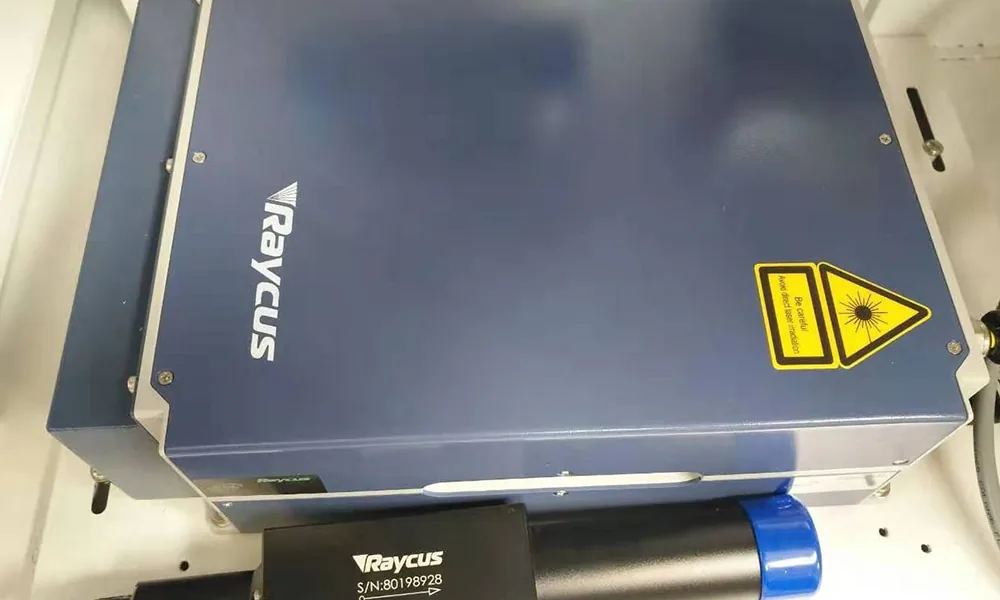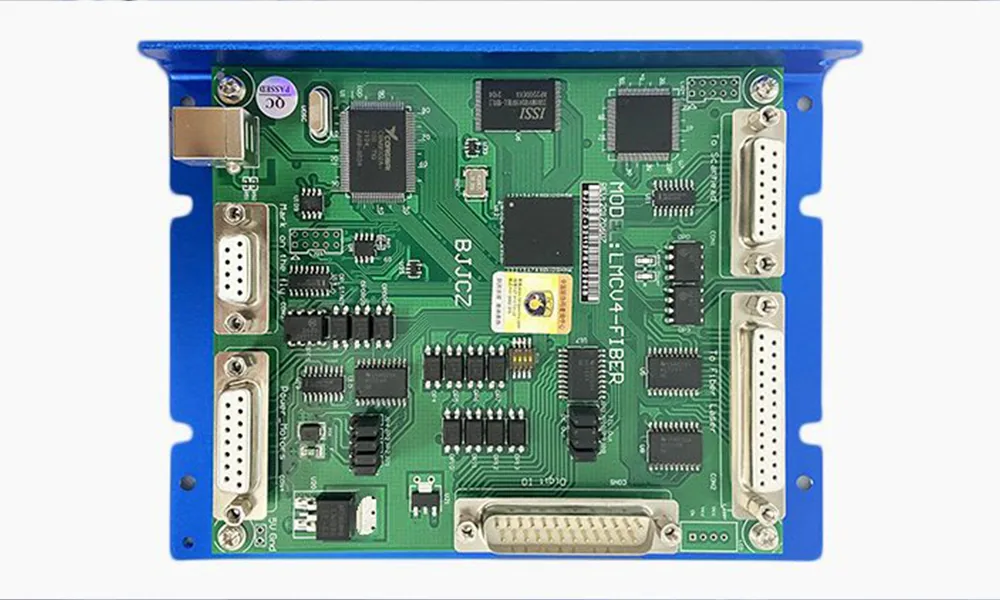
A laser marking machine may be quoted at one price and cost considerably more by the time it reaches the location where you plan to use it. The difference is not necessarily a hidden supplier charge. It often comes from comparing the machine quotation with a broader import budget that can include freight, insurance, customs charges, clearance, destination handling, and final delivery.
For procurement purposes, the useful question is therefore not simply, “What does the laser marking machine cost?” It is: What will this specific machine cost to reach a clearly defined destination under the terms of this quotation?
For this calculation, landed cost means the estimated cost of getting the specified laser marking machine from the supplier to a defined buyer destination, including the supplier amount plus applicable transport, insurance, import, clearance, destination, and delivery costs that are not already included in the quotation. This is a practical purchasing definition, not a universal customs formula. The exact treatment of customs value, duty, tax, and other import charges depends on the importing country and the actual shipment.
Quick answer: Estimated landed cost = supplier amount + applicable costs not already included in the quotation. Before using the formula, lock the machine configuration, destination, Incoterm and named place, then mark each cost as included, excluded, or unknown. Duty and tax inputs still need destination-specific confirmation.
Machine Price vs. Landed Cost: What Are You Actually Calculating?
The supplier’s machine price is the starting point, not automatically the final import cost. A quotation may cover only the equipment at the supplier’s premises, or it may already include some combination of export handling, transport, insurance, or delivery. Two quotations showing different headline prices may therefore represent very different scopes.
What the supplier quotation tells you—and what it may not
A useful quotation should let you identify the exact machine and configuration being priced. For a laser marking system, that can include the laser source, power level, machine structure, controller, lens, enclosure, rotary device, vision system, extraction equipment, fixtures, spare parts, or other options relevant to the project. If Supplier A and Supplier B are not quoting the same functional package, there is little value in comparing their prices as if the machines were identical.
The quotation also needs a clear delivery basis. Incoterms® rules help define how delivery-related responsibilities, costs, and risks are divided between seller and buyer, but the Incoterm alone does not calculate the final landed cost. The exact rule and named place or port matter. A quotation described only as “FOB,” “CIF,” or “DDP” without a clear named location is not enough for a careful cost comparison.
Landed cost is not the same as lifetime machine cost
Landed cost is also different from total cost of ownership. Long-term electricity use, maintenance, replacement parts, operator labor, production downtime, financing, depreciation, and future service costs may matter to an investment decision, but they should not automatically be mixed into an import landed-cost worksheet.
Keeping these cost boundaries separate prevents one spreadsheet from trying to answer three different questions: what the supplier charges, what the machine costs to import and deliver, and what the machine will cost to own over its service life.
Start With the Supplier Quote Before Adding Any Import Costs
The most common mistake in landed-cost calculations is starting with arithmetic before defining the quotation. If you do not know where the supplier’s cost responsibility ends, you cannot reliably know what should be added next.
Lock the machine and quotation basis
Before calculating, record the exact machine configuration and the quotation currency. Then identify the Incoterm and its named place or destination. The International Chamber of Commerce uses Incoterms® to allocate delivery-related obligations, costs, and risks between seller and buyer. The rules do not replace the complete sales contract, and they do not determine every customs, tariff, payment, or ownership issue.
The difference can be substantial. Under EXW, the seller’s delivery obligation is relatively limited, so the buyer can have much more transport and export-related work to arrange. Under DDP, the seller assumes a much broader delivery obligation to the named destination, including import-clearance responsibilities under the Incoterms® rule. These examples show why two supplier prices should not be compared before their delivery scopes are understood.
Do not assume that FOB or CIF is appropriate terminology for every international shipment. Those rules are specifically designed for sea and inland-waterway transport. The actual shipping arrangement and contract should determine which rule applies.
Mark every cost as included, excluded, or unknown
Before calculating, classify each cost into one of three states:
- Included: the supplier quotation already covers this item.
- Excluded: the buyer will need to add this cost separately.
- Unknown: the quotation or logistics information does not yet establish who pays it or how much it will cost.
Classifying costs this way helps prevent double counting. If international freight is already included in the quoted delivery basis, adding another full freight allowance would overstate the budget. If freight is excluded but the spreadsheet silently assumes it is included, the budget will be understated.
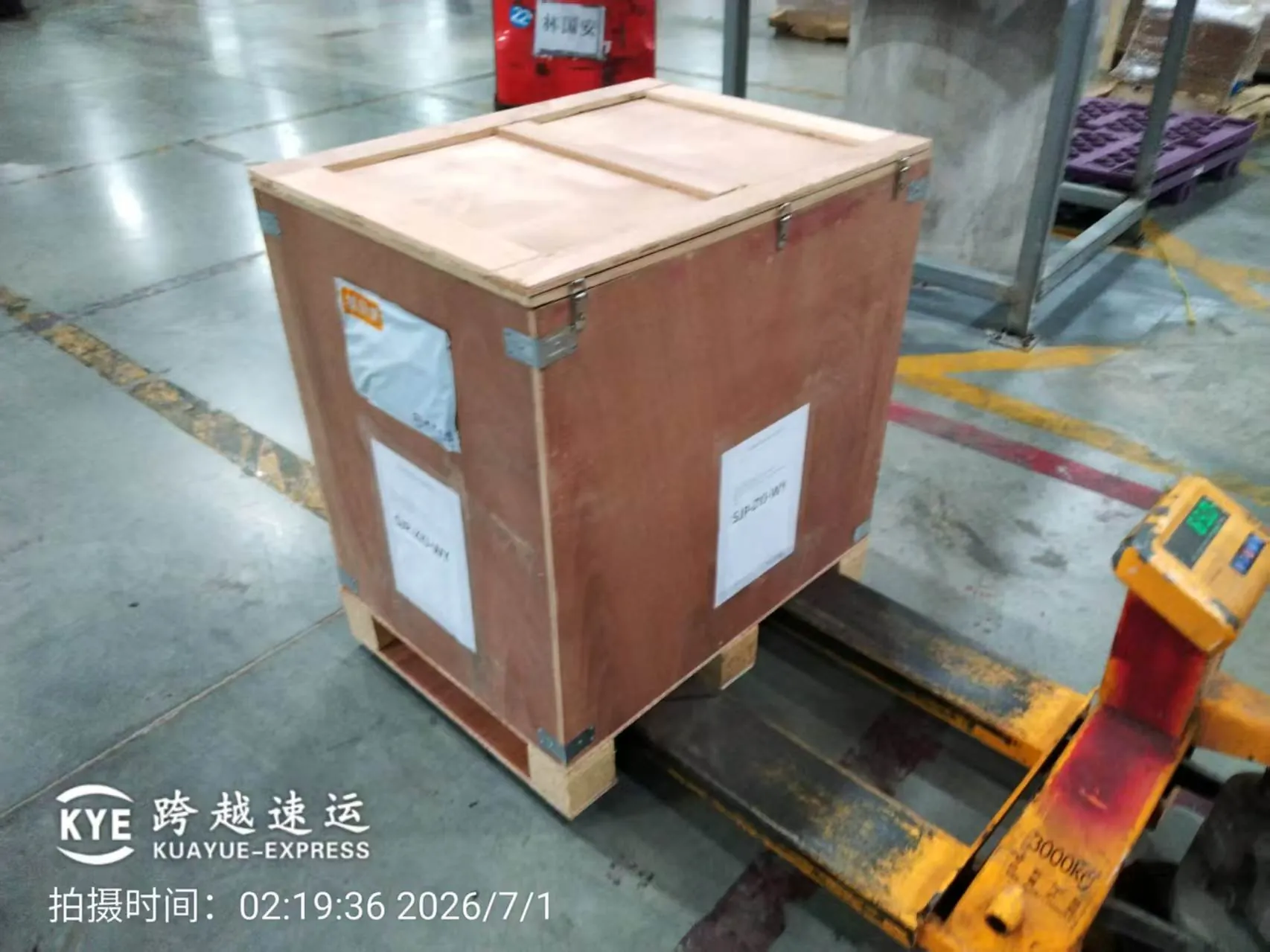
For transport planning, obtain the shipment details before treating a freight estimate as meaningful. At minimum, the forwarder will normally need information such as the shipment origin and destination, number of packages, gross weight, external package dimensions, and intended transport method. Weight and dimensions can both affect transportation pricing, so a machine price alone is not enough to estimate freight accurately.

Build the Landed-Cost Calculation Layer by Layer
Once the quotation boundary is clear, the calculation becomes a controlled process rather than a guess. A practical purchasing model is:
Estimated landed cost = supplier amount + applicable costs not already included in the quotation.
This is a procurement worksheet formula. It is not a customs-duty formula, and it should not be used to infer a country’s tax or customs rules.
| Cost item | Included in supplier quote? | Primary input source | Status | Amount |
|---|---|---|---|---|
| Machine and approved configuration | Yes / No / Unknown | Supplier quotation | Estimated / Confirmed | Enter project amount |
| Packing or supplier-side export costs, where applicable | Yes / No / Unknown | Supplier / logistics provider | Estimated / Confirmed | Enter if applicable |
| International freight | Yes / No / Unknown | Freight forwarder / carrier | Estimated / Confirmed | Enter current quote |
| Cargo insurance, where applicable | Yes / No / Unknown | Supplier / insurer / forwarder | Estimated / Confirmed | Enter if applicable |
| Customs duty | Yes / No / Unknown | Destination-country customs source / broker | Estimated / Confirmed | Enter verified amount |
| Import VAT, GST, or other applicable import tax | Yes / No / Unknown | Destination-country authority / broker | Estimated / Confirmed | Enter verified amount |
| Clearance or brokerage | Yes / No / Unknown | Broker / carrier / forwarder | Estimated / Confirmed | Enter if applicable |
| Destination handling or other local charges | Yes / No / Unknown | Carrier / forwarder / destination agent | Estimated / Confirmed | Enter if applicable |
| Final delivery to the defined destination | Yes / No / Unknown | Forwarder / local carrier | Estimated / Confirmed | Enter if applicable |
Use the worksheet to trace each amount to its source and check whether it is already included elsewhere.
International freight and insurance
Freight should be based on current shipment information rather than a generic percentage of machine price. Origin, destination, package dimensions, gross weight, number of packages, transport mode, carrier, and service level can all affect the quotation. Depending on the transport method, chargeable weight may also differ from actual scale weight.
Insurance should be added only when it is relevant to the selected shipping arrangement and is not already included. Do not assume every quotation handles insurance in the same way.
Customs duty and applicable import taxes
This is where a generic landed-cost calculator can become misleading. The World Customs Organization’s Harmonized System provides the international foundation for product classification, but it does not create one global duty rate for laser marking machines. The actual classification and tariff treatment must be checked for the importing country and the actual goods.
Customs value also should not be assumed to equal the supplier’s machine price in every jurisdiction. Under the WTO Customs Valuation Agreement, transaction value is the primary valuation basis, subject to applicable adjustments. National rules can determine how items such as transport, handling, and insurance are treated when establishing customs value.
For that reason, a formula such as machine price × duty rate should not be presented as a universal customs calculation. A safer purchasing process is to confirm three inputs separately: the applicable classification, the customs value under the destination country’s rules, and the current tariff or tax treatment.
Currency introduces a similar distinction. You may use a planning exchange rate to compare supplier quotations internally, but customs authorities can prescribe the exchange rate and relevant date used for official valuation. A purchasing spreadsheet and an official customs declaration therefore do not necessarily use the same currency-conversion basis.
Clearance, destination charges, and final delivery
Depending on the shipment and destination, additional costs can arise from customs brokerage, carrier services, clearance, handling, destination processing, or local delivery. These costs should be treated as conditional rather than universal. If a particular fee does not apply to the shipment, it does not belong in the calculation simply because it appeared on somebody else’s import checklist.
The endpoint also matters. “Delivered to port,” “customs cleared,” and “delivered to our factory” are different cost boundaries. Write the final destination directly into the worksheet so that every supplier comparison uses the same endpoint.
A hypothetical calculation example
The figures below are hypothetical and show the arithmetic only. They are not a Zhuorui machine quotation, not a real freight quote, and not evidence of any country’s duty or tax rate.
| Item | Hypothetical amount |
|---|---|
| Supplier quotation for the defined machine configuration | US$2,500 |
| International freight not included in the quotation | US$900 |
| Applicable cargo insurance | US$80 |
| Duty and import-tax amount already confirmed for this hypothetical scenario | US$720 |
| Clearance and destination charges | US$350 |
| Final local delivery | US$200 |
| Estimated landed cost | US$4,750 |
The US$4,750 total is not a benchmark. What matters is that every added amount has a defined scope and source. If the original quotation already included the US$900 freight, adding it again would be wrong. If the US$720 customs amount had not yet been confirmed, the final total should remain an estimate rather than being presented as a known payable cost.
How to Compare Two Supplier Quotes on the Same Cost Basis
A landed-cost calculation becomes most useful when comparing suppliers. The lowest quotation is not necessarily the lowest delivered budget if the quotations describe different machines or stop at different points in the transport chain.
Normalize the technical scope first. Check whether both suppliers include the same laser type, power, machine structure, lens or working area, enclosure, rotary device, extraction equipment, control hardware, accessories, fixtures, and other project-specific options. A cheaper system with fewer required components is not an equivalent quotation.
Then normalize the commercial and delivery boundary. At minimum, compare:
- the same machine configuration and required accessories;
- the same buyer destination;
- the exact Incoterm and named place or point;
- which freight, insurance, customs, clearance, and destination costs are included;
- the same internal currency basis for procurement comparison;
- the date of time-sensitive freight or logistics estimates.
Suppose Supplier A provides a lower ex-works machine price while Supplier B quotes a higher amount with international transport already included. Comparing only the two headline numbers would exaggerate the price difference. The right comparison is to add the remaining buyer-paid costs to each offer until both reach the same defined endpoint.
The same logic applies in the opposite direction. A quotation that appears expensive because it includes more delivery responsibility should not automatically be rejected before the buyer separates the machine value from the transport and import scope.
Landed cost is only one procurement criterion. Technical suitability, marking results, machine quality, documentation, service, warranty, spare-parts support, and supplier reliability can also affect the purchasing decision. Landed-cost normalization prevents unequal quotation scopes from creating a false price comparison.
Where Landed-Cost Estimates Most Often Go Wrong
Most serious budgeting errors are not caused by difficult arithmetic. They come from using the wrong boundary or treating an uncertain input as if it were confirmed.
- The machine configurations are different. One quotation includes accessories or safety equipment that the other does not.
- The delivery terms are different. Two headline prices stop at different points in the shipping process.
- A cost is counted twice. Freight, insurance, or another item is already included but is added again in the worksheet.
- A destination charge is missing. The calculation reaches the port or airport but not the buyer’s actual facility.
- An assumed HS classification or duty rate is used as fact. Classification and tariff treatment need destination-specific verification.
- The freight estimate is based on incomplete packing data. Actual crate dimensions or gross weight later change the transport price.
- An old logistics quotation is treated as current. Freight and related charges can change, so the estimate date matters.
- A planning exchange rate is confused with the customs valuation rate. Internal budgeting and official customs conversion may follow different rules.
- Landed cost and lifetime ownership cost are mixed together. Maintenance, labor, future service, and other operating costs can matter to the investment decision but answer a different question.
A reliable worksheet therefore needs more than an “Amount” column. Add a status such as Confirmed, Estimated, or Unknown. That makes uncertainty visible instead of hiding it inside a precise-looking total.
What to Confirm Before You Approve the Purchase
A landed-cost spreadsheet should become more accurate as the purchase moves closer to approval. The last step is to close the inputs with the party that actually controls each piece of information.
| Confirm with | Typical information to verify |
|---|---|
| Machine supplier | Exact machine configuration, included accessories, quotation currency, Incoterm and named place, packing method, package count, gross weight, external dimensions, and which logistics-related costs are already included |
| Freight forwarder or carrier | Current transport quotation, route, service level, insurance where relevant, expected destination handling, and final-delivery cost |
| Customs authority, tariff source, or qualified customs broker | Applicable classification, customs valuation treatment, duty or tariff treatment, import VAT/GST or other taxes, required customs procedures, and the relevant official exchange-rate basis where applicable |
| Internal purchasing team | Comparison currency, budget exchange-rate assumptions, approval contingency, required delivery endpoint, and which values are still estimates rather than confirmed liabilities |
Do not ask one party to validate information outside its authority. A machine supplier can provide shipment dimensions and quotation scope, but that does not automatically make the supplier the final authority on the importing country’s tariff classification or tax treatment. A freight forwarder can provide a transport quotation, but that does not make a provisional shipping estimate the final machine purchase cost.
For supplier comparisons, attach three fields to every important cost: scope, source, and status. If one of those is missing, the total should still be treated as provisional.
A useful estimate does not need to predict every future charge to the cent before an order is placed. It needs to remove the large unknowns, compare supplier offers on the same basis, and identify which remaining figures still require confirmation before purchase approval.
Once the machine configuration, quotation scope, shipping data, destination, and import-specific inputs are aligned, the landed-cost estimate becomes a useful procurement tool rather than a headline price with hidden assumptions.
If you are comparing an imported laser marking machine for a real project, request a project-specific laser marking machine quotation with your required configuration and destination so you can compare the offer on a consistent landed-cost basis.