You usually do not need to order a duplicate of every replaceable component when you buy a new laser marking machine. A better approach is to separate potential spares into three groups: parts worth stocking before production starts, parts that should be identified and priced before shipment, and parts that normally make more sense to order only when they are actually needed.
The right list depends on the exact machine configuration, how difficult a replacement would be to source, what happens to production if the part is unavailable, how much capital the spare ties up, and whether the part can realistically be replaced through your normal service route. Compatibility matters just as much as the part name. A spare that does not match the installed source, optics, control system, electrical interface, or cooling configuration is not useful inventory.
For initial stock planning, review routine service or wear-related items and lower-cost machine-specific replacements first. For optics, control, power, cooling, and high-value core modules, identify the exact compatible part and service route before shipment, then decide whether carrying a spare is justified by downtime risk, sourcing difficulty, and cost. A selective stocking plan should reduce avoidable supply risk without turning the spare cabinet into a second machine BOM.
Start with Three Spare-Parts Decisions, Not a Full Machine BOM
Before looking at individual components, decide what action each potential spare actually deserves. This prevents a common purchasing mistake: treating every replaceable component as something that should automatically be bought with the machine.
| Decision | What It Means | Typical Question |
|---|---|---|
| Order with the machine | Carry initial stock before the machine enters production. | Would waiting for this part create enough operational risk to justify keeping one on hand? |
| Confirm before shipment | Identify the exact compatible part, price, service route, and availability now, but decide separately whether to buy it. | Do we know exactly what we would need if this component had to be replaced? |
| Order when needed | Do not tie up initial budget in the part unless the actual operating risk justifies it. | Can this component be sourced quickly enough that carrying inventory adds little practical value? |
A universal checklist cannot account for operating context. Two buyers can purchase similar laser marking machines and still make different stocking decisions. A machine used occasionally in a local workshop has a different risk profile from a machine running an important production process in a location where compatible components are difficult to obtain.
What Makes a Spare Part Worth Ordering with the Machine?
A practical stocking decision starts with the consequence of not having the part. A component does not need to fail frequently to matter. If its loss stops the marking process and a correct replacement is difficult to obtain, knowing the replacement route before production starts can be valuable. Conversely, a component can be inexpensive without being worth stocking if it is readily available and does not create meaningful downtime risk.
Five questions are especially useful when reviewing a potential spare:
- What happens if the part is unavailable? Does the machine stop completely, lose only one optional function, or continue operating with a temporary workaround?
- How difficult is replenishment? Consider the actual supplier route, shipping distance, customs or import friction, and whether a locally available substitute is genuinely compatible.
- How configuration-specific is the part? A generic description such as “lens,” “controller,” or “power supply” is usually not enough to place a safe replacement order.
- What does the spare cost to hold? An expensive module deserves a different stocking decision from a low-cost service item, particularly when its replacement route is well supported.
- How is the part serviced or replaced? Some parts may be straightforward service items. Internal optical, electrical, or laser-source work may instead require trained personnel, supplier guidance, or authorized service.
Expected wear or replacement frequency can also matter when reliable machine-specific maintenance data exists. It should not, however, be replaced with assumptions such as “this part normally fails after a certain number of hours” unless the manufacturer documentation for that exact component and operating condition actually supports the claim.
Spare-parts planning is a risk-and-support decision, not a simple price comparison. The cheapest part is not automatically the highest priority, and the most expensive part is not automatically unnecessary.
Which Laser Marking Machine Spare Parts Deserve Review Before Shipment?
Review component categories against the actual machine instead of copying a generic parts list. For each category, decide whether it belongs in initial stock, needs to be identified before shipment, or can be ordered later.
| Component Category | Why It Deserves Review | Initial Stocking Decision |
|---|---|---|
| Routine service or wear-related items used by the installed configuration | Some machine setups include items that require periodic inspection, cleaning, or replacement. | Often worth reviewing for initial stock if the exact machine uses the item. Confirm the part number, maintenance requirement, and supplier recommendation before deciding quantity. |
| Lower-cost machine-specific replacement items | Low inventory cost can make advance stocking reasonable when the part is important and not easily sourced locally. | Often worth initial stock when the part is important, inexpensive to hold, and difficult to source quickly. Confirm compatibility before deciding quantity. |
| Optical components | Lenses and other optical components can be highly configuration-dependent. | Confirm the exact optical specification before any advance purchase. Stock it only when damage or contamination risk, replenishment difficulty, and the replacement route justify carrying a spare. |
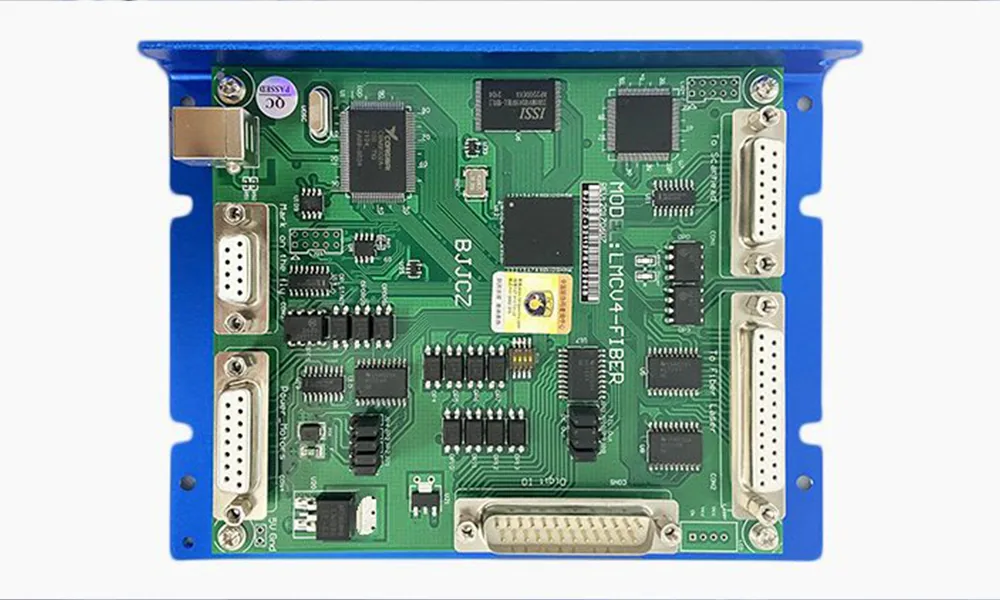
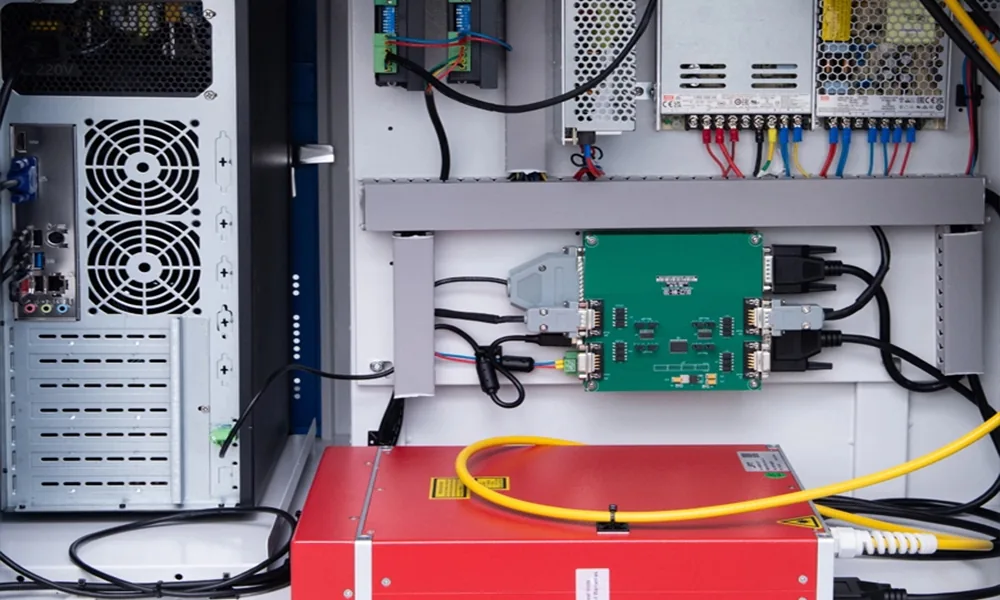
| Control, power, electrical, or cooling components | These components can be important to machine operation but may differ substantially between configurations. | Identify and document the installed model before shipment. Carry a spare only when downtime impact and replenishment difficulty justify the inventory cost and service requirements. |
| High-value core assemblies such as the laser source or scan head | A failure could have a major production effect, but the component is costly and replacement may require technical service. | Treat as a case-by-case decision rather than automatic starter stock. Confirm the exact model, service responsibility, warranty implications, replenishment path, and cost first. |
Brady’s official laser marking parts catalog lists separate spare-parts kits for fiber and CO₂ systems and asks customers to provide the machine-head serial number when ordering parts. A generic kit should not be assumed to fit every fiber, CO₂, UV, or other laser marking system.
Routine and Lower-Cost Items
Items linked to routine service deserve early attention because they are the easiest category to overlook during the original machine purchase. Depending on the system, this may include service items associated with filtration, cooling, protective optical elements, or other installed subsystems. The exact list should come from the machine documentation and supplier confirmation rather than from a universal internet checklist.
For these items, it is reasonable to ask the supplier what should normally be kept available and what identification information will be required for reordering. The answer may be that a small amount of initial stock is worthwhile, or simply that the buyer should record the correct part number so the item can be ordered later.
High-Value Core Modules Need a Different Decision
A laser source, galvo or scan head, controller, and other expensive core assemblies should not automatically be treated in the same way as a low-cost service item. Their stocking value depends on the machine’s role in production, the cost of the component, how quickly a compatible replacement can be supplied, and how the repair or replacement is actually performed.
Service responsibility is particularly important. Laser manufacturers commonly distinguish between routine replacement parts and work that belongs in a technical service process. For example, IPG Photonics’ official support and warranty information states that damage caused by repairs or adjustments not specifically authorized by a certified IPG employee is not covered by its warranty. For that reason, a buyer should confirm not only the component price but also whether replacement is customer-permitted, technician-level work, or a service-center task.
If a marking machine supports a critical production step and obtaining the exact core module would take significant time, identifying the replacement model and commercial route before shipment can still be valuable even when the final decision is not to keep the module physically in stock. “Know exactly what you would need” and “buy it now” are two different procurement decisions.
Why Exact Machine Compatibility Matters Before You Buy
A replacement component is useful only when it matches the actual machine. Laser marking systems combine optical, electronic, mechanical, cooling, and software elements, and a generic component name usually does not describe enough of that interface.
An F-theta lens is a clear example. Coherent’s official F-theta lens specifications distinguish lenses by variables including wavelength, focal length, working distance, scan field, beam or aperture dimensions, and galvo geometry. Buying “an F-theta lens” without confirming the installed specification can therefore produce a perfectly real lens that is still the wrong replacement for the machine.

For other components, keep the identifiers that determine compatibility, such as:
- the complete machine model;
- the machine serial number;
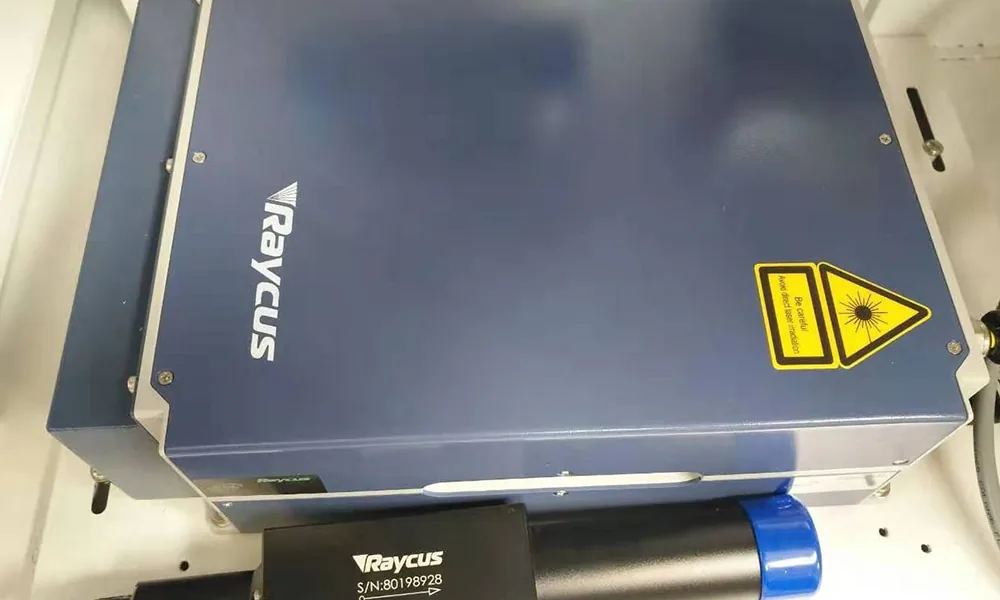
- the installed component manufacturer and model;
- the component part number or PN, when available;
- relevant optical information such as wavelength or field size when applicable;
- the machine manual, BOM, service record, or approved configuration sheet.
Not every spare requires every field. Keep the identifiers that define compatibility for that component. Laser-source manufacturers, for example, commonly use model, serial-number, and part-number information as part of after-sales identification. Recording those details at delivery is much easier than reconstructing the machine configuration after a failure.
Advance planning still has value even when you decide not to buy a component. If the exact compatible part has already been identified, quoted, and linked to the machine record, an emergency replacement order becomes a more controlled procurement task.
Spare Parts and Production Accessories Are Different Purchases
A spare or replacement part generally restores or supports a function that already exists on the machine. A functional accessory or attachment changes or adds production capability, positioning, workholding, handling, or automation.
For example, an additional rotary device, fixture, vision module, or motion attachment may be very useful for production, but buying it does not automatically make it a spare-parts decision. Conversely, a replacement component for the machine’s existing optical, control, power, or cooling system belongs to a different purchasing discussion.
The same hardware can be an original option in one project and a replacement in another. Classify the purchase by its purpose: restoring the approved machine configuration or adding a new function.
Keeping those two budgets separate prevents a “spare parts” quotation from quietly becoming a mixture of emergency replacements, production upgrades, and optional accessories.
What Should You Confirm with the Supplier Before the Machine Ships?
Before shipment, turn the spare-parts review into a machine-specific record that can be used when a replacement is needed. Review each candidate item with the supplier and record the answers that affect the purchasing decision.
- What is the exact spare description and part number? Avoid records that only say “lens,” “power supply,” “controller,” or “galvo.”
- Which machine or installed component is it compatible with? Record the relevant model, serial number, or configuration information.
- Is it already included with the machine or quoted separately? Do not assume an item is standard simply because another supplier includes it.
- What quantity does the supplier recommend for this exact machine and expected use? Ask for the basis of the recommendation rather than applying a universal quantity.
- What is the current price? Inventory value matters when comparing a low-cost service item with an expensive core assembly.
- How would you obtain another one later? Confirm the normal sourcing or replenishment route and whether the part is commonly available or machine-specific.
- Who is expected to replace it? Distinguish customer-replaceable items from technician or service-center work.
- Are there warranty or authorized-service conditions? Confirm these before planning internal optical, electrical, or laser-source replacement work.
- Which documents should be kept for future reordering? Preserve the machine configuration, component identifiers, and service documentation with the equipment record.
These questions are more reliable than assuming one supplier’s spare kit applies to another machine. Exact quantities, included parts, pricing, stock, replenishment time, and warranty terms are commercial and machine-specific details that should be confirmed for the actual order.
By the time the machine ships, every potential spare does not need to be sitting in your warehouse. But the important parts should have a clear status: order now, confirm and document now, or intentionally order when needed.
A good new-machine spare-parts plan gives you enough inventory to reduce avoidable supply risk, enough configuration information to order the correct replacement later, and enough restraint to avoid buying a second machine’s worth of components “just in case.”