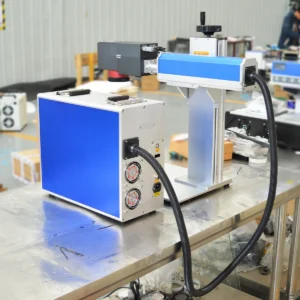
Two laser marking machine quotations can look almost identical at first glance. Both may say “30W fiber laser,” show a similar machine photo, and include a final price. That does not mean they describe the same machine, the same supplied scope, or even the same interpretation of your application.
Before comparing prices, normalize five things: the application, the machine configuration, what is included or excluded, how the proposed setup was validated, and the commercial basis of the quotation.
If any of these remain unclear, the quotations are not yet ready for a like-for-like comparison. The missing item should become a clarification question for the supplier—not an assumption in favor of the lower price.

First Make Sure Every Supplier Is Quoting the Same Job
The first comparison is not Supplier A versus Supplier B. It is each supplier’s quotation versus the same application requirement.
A supplier may have interpreted your request differently even when everyone received the same drawing or inquiry email. One quotation may be based on a small marking field and manual loading, while another assumes a larger field, rotary positioning, vision alignment, an enclosure, or a different production target.
Before comparing the machines, establish one application baseline that applies to every supplier.
Define the application baseline once
Record the information that materially affects the marking requirement, such as:
- workpiece material and relevant surface condition;
- the required result, such as contrast, engraving, annealing, color change, coding, text, logo, barcode or Data Matrix;
- actual part geometry and marking location;
- required marking area;
- manual or automated part positioning;
- production volume or throughput expectation when relevant;
- quality or acceptance criteria;
- any space, voltage, safety, integration or operating constraints that affect the machine.
Keep the RFQ focused on one consistent application requirement so every supplier is solving the same problem.
This matters because laser-marking suitability is not determined by machine power alone. Material, target result, wavelength, pulse behavior, optical configuration and process conditions can all affect how a marking process behaves.
If two suppliers are solving different versions of the job, their prices are not yet directly comparable.
Normalize the Machine Configuration Behind the Price
A model description such as “30W Fiber Laser Marking Machine” is useful shorthand, but it is not a complete configuration.
Two laser sources can have the same nominal power and wavelength while still having different pulse-duration and repetition-frequency ranges. That does not automatically make one better than the other. It means that the shared “30W” label is not enough to establish technical equivalence.
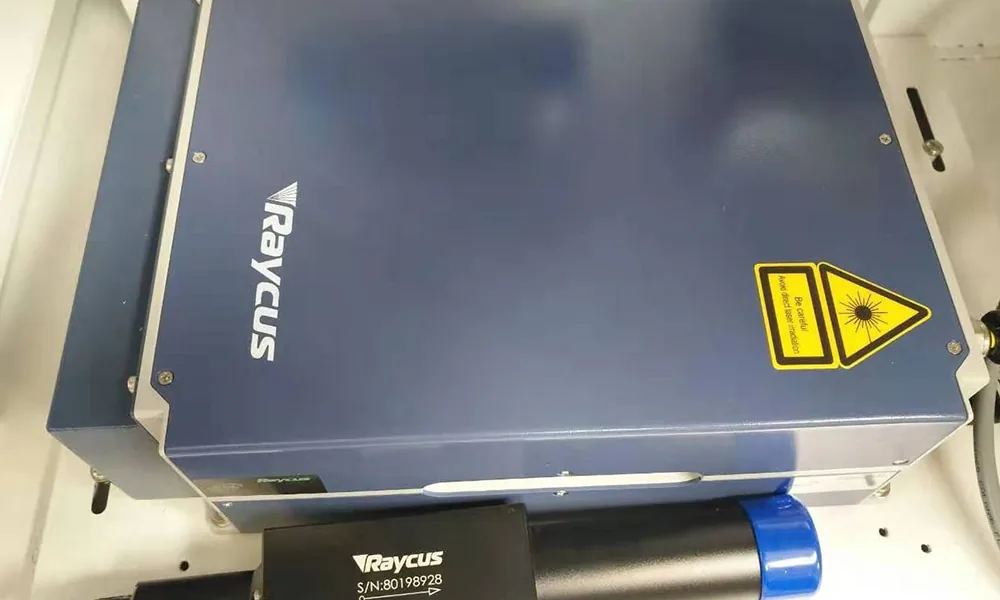
Manufacturer specification example: Raycus lists its 30W RFL-P30MX MOPA source with a 1–2000 kHz repetition-frequency range and 2–500 ns pulse-width range, while its 30W RFL-P30QS Q-switched source lists 40–60 kHz and 130–160 ns. These are component specifications, not complete-machine performance guarantees. Raycus RFL-P30MX specification · Raycus RFL-P30QS specification.
The rest of the machine should be compared with the same level of specificity.
Laser source and source specification
Where the application makes the source configuration important, compare what the supplier has actually specified:
- laser technology or source architecture;
- source brand and exact model, if provided;
- nominal output power;
- pulse characteristics relevant to the application;
- any other source parameter the supplier is relying on to justify the proposed result.
Do not assume that the quotation with the higher wattage is automatically the faster, deeper or better machine.
A direct question usually resolves this point:
What exact laser source and model is installed in the quoted machine?
If the supplier has not specified it, mark it as unconfirmed.
Optics and marking field
The marking field also needs to be compared explicitly.
Different F-theta lens configurations can provide different marking areas, working distances and optical spot characteristics. A machine quoted with a 110 × 110 mm field is therefore not automatically equivalent to one configured for a much larger field, even if both use the same nominal laser power.
Optics reference: EKSMA Optics’ 1064 nm F-theta catalog lists separate scan-field, working-distance and spot-size values across lens models, which is why field size belongs in the quoted optical configuration rather than being inferred from laser power alone. EKSMA 1064 nm F-theta lens data.
Record the actual field size being supplied and confirm that it matches the required part geometry.
Do not reduce the decision to “smaller field is better” or “larger field is better.” The correct field depends on the job.
Motion, positioning and functional configuration
Additional functions should be compared only when the application actually needs them.
Depending on the project, this may include:
- rotary positioning;
- XY motion;
- electric Z adjustment;
- camera or vision positioning;
- fixtures;
- online or flying marking;
- autofocus or positioning aids;
- machine-side I/O or other integration functions.
A feature that is essential for one application may be irrelevant for another. Compare only the functions needed to perform the same job; a longer option list does not make a quotation more suitable.
Controller, software and supplied machine functions
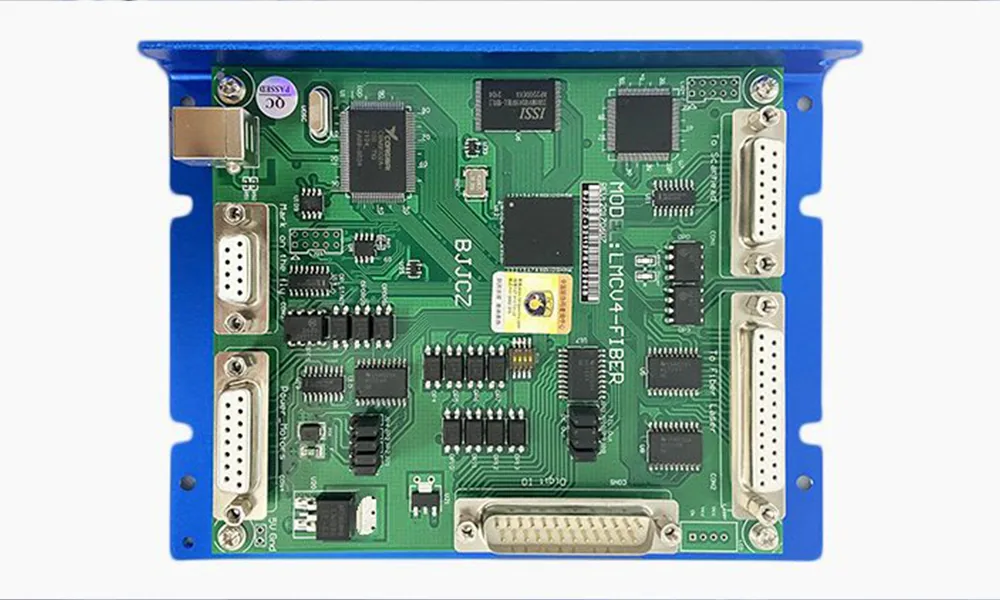
Software and controller scope can also disappear inside a short quotation description.
Check what is actually supplied, including any software license, control hardware, supported functions and computer configuration that form part of the delivered machine.
If an item matters and the quotation does not identify it, do not fill in the blank yourself.
Mark it as unconfirmed and ask.
Separate Included, Optional, Excluded and Unconfirmed Items
Once the technical configuration is visible, the next problem is quotation scope.
Classify each relevant line item into one of four states:
- Included — clearly supplied in the quoted price.
- Optional — available, but requires an additional charge or selection.
- Excluded — clearly not part of the quotation.
- Unconfirmed — the quotation does not provide enough information to know.
Pay particular attention to Unconfirmed: it does not mean included.
If Supplier A explicitly includes a rotary fixture and Supplier B says nothing about one, the correct conclusion is not that both quotations include a rotary. The correct conclusion is that Supplier B’s scope needs clarification.
A normalization matrix makes these gaps easier to see.
| Comparison Item | Supplier A | Supplier B | Supplier C | Status / Action |
|---|---|---|---|---|
| Application baseline confirmed | Comparable / Clarify | |||
| Target throughput / cycle-time basis | Comparable / Clarify | |||
| Acceptance criteria | Comparable / Clarify | |||
| Laser source type | Comparable / Clarify | |||
| Exact source brand/model | Comparable / Clarify | |||
| Nominal power | Comparable / Clarify | |||
| Marking field | Comparable / Clarify | |||
| Z/focus configuration | Comparable / Clarify | |||
| Fixture | Included / Optional / Excluded / Unconfirmed | |||
| Rotary | Included / Optional / Excluded / Unconfirmed | |||
| Vision/CCD | Included / Optional / Excluded / Unconfirmed | |||
| Controller/software | Comparable / Clarify | |||
| Enclosure/safety scope | Comparable / Clarify | |||
| Accessories | Included / Optional / Excluded / Unconfirmed | |||
| Spare parts | Included / Optional / Excluded / Unconfirmed | |||
| Sample validation | Comparable / Clarify | |||
| Installation/commissioning | Included / Optional / Excluded / Unconfirmed | |||
| Training | Included / Optional / Excluded / Unconfirmed | |||
| Warranty terms | Comparable / Clarify | |||
| After-sales support | Comparable / Clarify | |||
| Currency / price basis | Comparable / Clarify | |||
| Payment terms | Comparable / Clarify | |||
| Quoted lead time | Comparable / Clarify | |||
| Quotation validity | Comparable / Clarify | |||
| Shipping basis | Comparable / Clarify | |||
| Incoterm and named place | Comparable / Clarify |
Use the matrix to expose whether the quotations cover the same purchasing scope; it is not a supplier scorecard.
For example, one quotation may appear more expensive because it includes a fixture, rotary attachment, enclosure, spare parts and delivery, while another lists only the base machine. Until those differences are separated, the price gap does not tell you which quotation offers better value.
Check Whether the Quoted Configuration Was Actually Validated
A sample marking test can be one of the most useful steps before purchasing a laser marking machine, but “sample tested” is not enough information by itself.
A meaningful test should connect the result to the actual application.
Ask what material was tested, what result the supplier was trying to achieve, and which machine configuration produced the sample.
Confirm the following:
- Was the actual workpiece tested, or only a generic demonstration sample?
- Was the surface condition representative of the production part?
- Which laser source and model were used?
- What marking field or optical configuration was used?
- Were fixtures, rotary positioning, vision or other relevant functions involved?
- What result was used as the acceptance basis?

Then compare the test configuration with the quotation.
If production rate matters, confirm that each supplier is using the same throughput or cycle-time basis and the same acceptance criteria. Otherwise, two sample results may look comparable while the production expectations behind the quotations are not.
If the sample was produced with one source or optical setup but the quotation specifies another, that difference should be clarified before using the sample as evidence for the quoted machine.
Suppliers may use different test procedures. What matters for quotation comparison is whether the test conditions and the quoted configuration are comparable.
A successful sample can demonstrate useful information about feasibility under the tested conditions. It does not automatically prove long-term reliability, production cycle time, future service performance, durability under every operating condition or guaranteed production acceptance.
The closer the test conditions are to the real application and the actual quoted configuration, the more useful the result becomes for the purchasing decision.
Put the Commercial Terms on the Same Basis
After the technical scope has been normalized, the commercial comparison becomes much more meaningful.
Start by separating the machine price from everything surrounding the machine.
Check whether the quotation includes or separately charges for:
- optional equipment;
- required fixtures;
- accessories;
- spare parts;
- packaging;
- freight;
- installation or commissioning;
- training;
- documentation;
- warranty coverage;
- technical support.
Also normalize the quotation currency, payment terms, quoted lead time and quotation validity. These items do not change the laser process itself, but they can materially change the commercial basis on which two offers are being compared.
Pay particular attention to shipping terms.
An EXW quotation and a DDP quotation are not based on the same seller obligations. One may leave much more of the transportation, export, import and destination-side responsibility to the buyer, while the other includes a broader delivery scope.
Commercial reference: ICC Incoterms® 2020 defines EXW and DDP with materially different delivery, risk and cost responsibilities. Record both the Incoterm and the named place rather than comparing only the quoted total. ICC Incoterms® 2020 rules for EXW and DDP.
Record the Incoterm and named place, not just the price printed at the bottom of the quotation.
The same discipline applies to after-sales terms.
Technical support, warranty and replacement parts are related, but they are not the same thing. A supplier may provide remote technical assistance without including free replacement parts. A warranty may cover certain failures while excluding consumables, shipping, labor or other costs depending on the contract.
Do not compare “warranty: yes” against “warranty: yes.” Compare the actual written terms.
A full landed-cost or total-cost-of-ownership calculation is a separate purchasing exercise. For quote normalization, the commercial basis must be visible before headline prices can be treated as equivalent.
Turn Every Gap Into a Supplier Clarification Question
A good comparison will usually expose unanswered items. Those gaps show exactly what still needs to be clarified before shortlisting.
For each item marked Unconfirmed or Clarify, convert the gap into a specific question.
Instead of asking:
“Is this machine good?”
ask:
“What exact laser source brand and model is included in this quotation?”
Instead of:
“Does it include everything?”
ask:
“Is the rotary fixture included in the quoted price, optional at extra cost, or excluded?”
Instead of:
“Can it mark my part?”
ask:
“Was my sample tested using the same laser source, marking field and relevant configuration specified in this quotation?”
Other useful clarification questions may include:
- What marking field is included in this price?
- Is the fixture included or quoted separately?
- Which software and controller are supplied?
- Is the vision system included, optional or not part of this configuration?
- What enclosure and safety functions are part of the machine as quoted?
- Which spare parts are included?
- What installation or commissioning support is included?
- What training is included?
- What exactly does the warranty cover?
- What technical support is available after delivery?
- What currency, payment terms, quoted lead time and quotation validity apply?
- What Incoterm and named place apply to this price?
- Are there any required items not included in the quotation?
When the answer changes the machine or commercial scope, ask for a revised quotation or written confirmation rather than relying on an informal assumption.
Move each important comparison line into one of three states:
Confirmed and comparable.
Both suppliers have provided enough information to compare the item.
Clarification required.
The information is incomplete or the configurations differ in a way that matters.
Not applicable.
The item is not needed for this application and should not distort the purchasing decision.
Once the major items are confirmed, the quoted prices finally have context.
Shortlist the Quote, Then Evaluate the Supplier
A normalized quotation helps you evaluate the offer. It does not, by itself, prove the quality of the company behind it.
A clear quotation can show that the supplied configuration, options, exclusions and commercial scope are well defined. That is useful information, but supplier evaluation may still require separate checks.
Depending on the purchase, those checks may include:
- complete-machine assembly capability;
- component and configuration control;
- calibration and machine testing processes;
- sample-validation capability;
- quality-control and release procedures;
- documentation;
- spare-parts support;
- after-sales support;
- evidence relevant to the specific application or project.
Keeping quotation comparison separate from supplier evaluation avoids two common mistakes.
One is choosing the cheapest quotation before establishing that it covers the same machine and delivery scope.
The other is treating a well-written quotation as proof that the supplier will necessarily deliver the best long-term performance.
Quotation comparison and supplier evaluation are connected, but they answer different questions.
The quotation tells you what is being offered and on what basis.
Supplier evaluation helps determine whether the organization behind that offer can support the project as required.
Compare the Same Scope Before You Compare the Price
The most useful comparison is rarely a simple three-column price table.
Before shortlisting laser marking machine suppliers, confirm that each quotation represents:
- the same application requirement;
- a clearly defined machine configuration;
- the same required functions;
- visible included, optional and excluded scope;
- a relevant validation basis;
- comparable commercial terms.
If an important item is still unknown, mark it as unconfirmed and ask the supplier to clarify it.
Only after those differences have been normalized can a lower price be interpreted as a real price difference rather than the result of missing equipment, different assumptions or a narrower supply scope.
Need a quotation you can compare line by line? Send your material, marking requirement, part dimensions, marking area, required functions, and sample expectations through our Request a Quote form so the proposed machine configuration and supply scope can be reviewed against one application baseline.