Choosing a laser marking machine manufacturer is not simply a matter of comparing machine wattage, catalog specifications, or quoted prices. Two suppliers can propose machines with similar names and power ratings while taking very different approaches to application engineering, optical configuration, sample validation, assembly, testing, documentation, and after-sales responsibility.
Instead, evaluate whether the supplier can connect your actual marking requirement to a clearly defined machine configuration and provide enough evidence to justify that recommendation. The longest specification sheet or lowest quotation does not answer that question. What matters is whether you can understand and verify the supplier’s engineering decisions, responsibilities, validation methods, and delivery scope.
The evaluation should therefore follow the project itself: define what must be marked, identify who owns each technical responsibility, examine why a particular system is being proposed, verify the result under representative conditions, and then assess whether the supplier can build, test, document, deliver, and support that configuration.
Define Your Marking Requirement Before You Compare Manufacturers
A manufacturer cannot be evaluated in isolation from the application. A machine that is appropriate for one material, surface, geometry, or production process may be a poor choice for another. Laser wavelength, optical configuration, focusing conditions, part access, handling, and the required marking result can all affect the suitability of a proposed system.
Before comparing suppliers, give each one the same basic project information. This creates a common engineering baseline and makes their recommendations easier to compare.
- Material: identify the material as precisely as practical, including grade or formulation when it matters.
- Surface condition: note coatings, plating, anodizing, paint, polish, texture, or other finishes that may affect the laser interaction.
- Required mark: define whether you need text, logos, barcodes, Data Matrix codes, serial numbers, decorative contrast, traceability, engraving, or another result.
- Acceptance requirement: explain what matters most—contrast, readability, permanence, depth, surface damage, code verification, appearance, or another measurable result.
- Part geometry: provide dimensions, marking position, available access, curvature, height variation, and any features that may complicate focusing or fixturing.
- Production requirement: state expected volume, cycle-time expectations, manual or automated loading, data changes, and any upstream or downstream process constraints.
If a supplier recommends a machine before clarifying these inputs, the recommendation may be based more on the equipment it wants to sell than on the application it needs to solve.
Verify What the Supplier Actually Controls
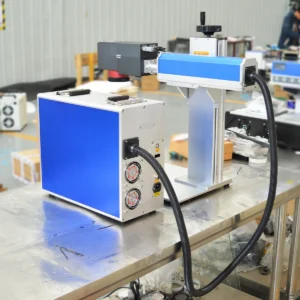
The word manufacturer is useful, but it is not sufficient evidence of capability. Laser marking systems can reach the market through several business models. One company may design and assemble complete machines, another may integrate purchased laser and motion components into custom equipment, and another may distribute systems built elsewhere.
Those models are not automatically good or bad. What matters is where engineering and delivery responsibility actually sits.
Manufacturer, integrator, distributor, or reseller?
Ask who is responsible for the major decisions and who will solve the problem if the delivered machine does not behave as expected. Depending on the project, that may include:
- application review and laser selection;
- machine configuration;
- mechanical and electrical assembly;
- optical setup and calibration;
- fixtures, motion, vision, or automation;
- software and communication interfaces;
- sample validation and acceptance testing;
- safety documentation;
- warranty administration;
- technical troubleshooting and spare parts.
A supplier does not need to manufacture every laser source, scanner, lens, controller, or mechanical component internally to be technically competent. Industrial system integration itself can involve substantial engineering responsibility. The important distinction is whether the supplier understands the complete system, controls the responsibilities it claims to control, and can clearly identify the parties responsible for anything it does not control.
Responsibility ownership is therefore more informative than the manufacturer-versus-reseller label alone.
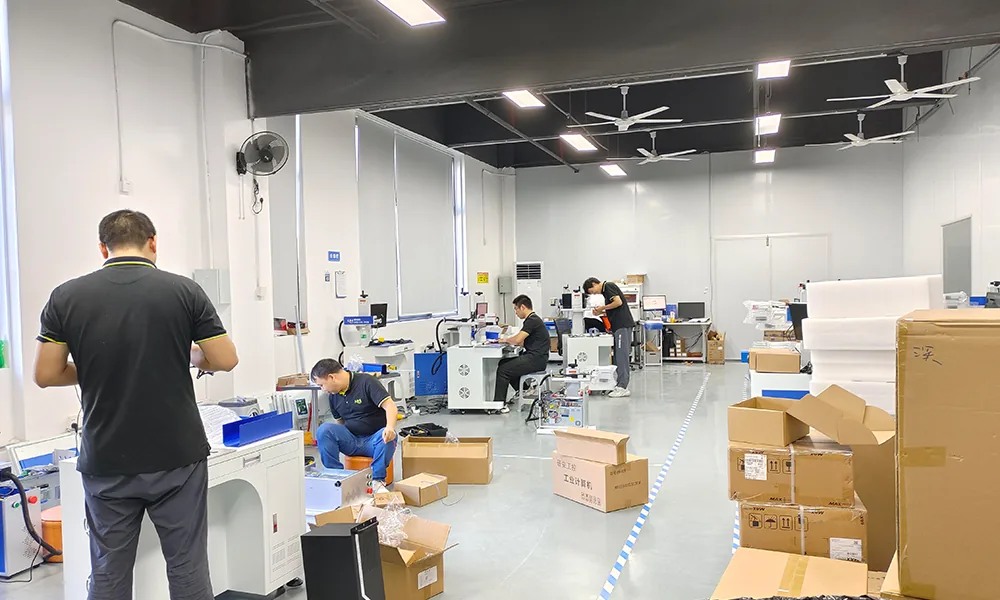
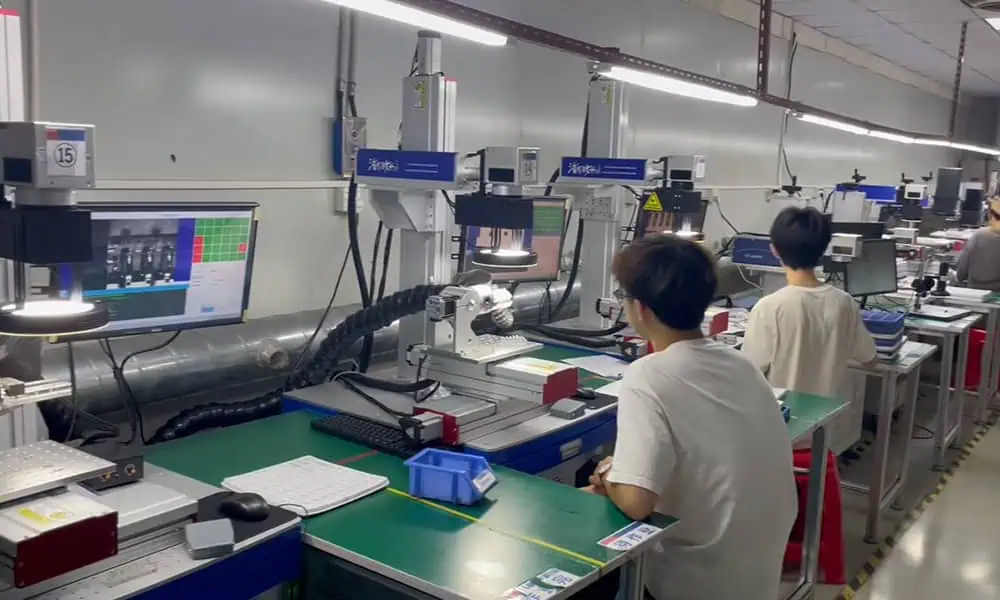
For shortlisted suppliers, do not stop at verbal answers. Ask to review the quality and inspection documentation relevant to the quoted machine and, when practical, verify the claimed assembly and testing operations through an onsite supplier visit. Factory size or appearance is not the point; the visit should confirm that the responsibilities described in the proposal are supported by operating processes and records you can inspect.
Evaluate the Engineering Recommendation, Not Just the Specification Sheet
Once responsibility is clear, evaluate how the supplier arrived at its proposed machine. A useful recommendation should have an engineering explanation that connects the workpiece and production requirement to the configuration being quoted.
Ask why this configuration was recommended
For example, a supplier recommending a particular laser source should be able to explain why its wavelength and operating characteristics are appropriate for the material, surface, and desired mark. If a particular marking field or lens is proposed, the supplier should be able to relate that choice to working area, part geometry, focusing conditions, or process requirements.
The same principle applies to fixtures, rotary devices, vision systems, enclosures, motion axes, software, and automation. These features should solve a defined project requirement. More features do not automatically mean a better machine.
Headline wattage alone is a poor basis for comparing suppliers. Two machines with the same nominal laser power may differ in wavelength, source behavior, optics, marking field, focusing arrangement, controls, fixtures, software, safety configuration, or other elements that affect how the complete system performs in the intended application.
Look for limitations, not only capability claims
A technically useful supplier should also be able to identify what it cannot confirm from the information available. If the marking result depends on a specific coating, additive, finish, curved surface, visual requirement, or production speed, the appropriate response may be to request a sample rather than promise a result from a photograph or material name alone.
Clear separation between confirmed facts and points that still require validation gives the buyer a more reliable basis for an engineering decision than an unsupported sales claim.
Require Evidence That the Proposed System Can Do the Job
A good technical explanation still needs evidence. Product brochures and datasheets can describe what a machine is designed to do, but they cannot reproduce every combination of material, finish, geometry, marking requirement, and production condition.
When the application is sensitive to those variables, sample marking is one of the most useful ways to reduce uncertainty.
A sample is useful only when it represents the real decision
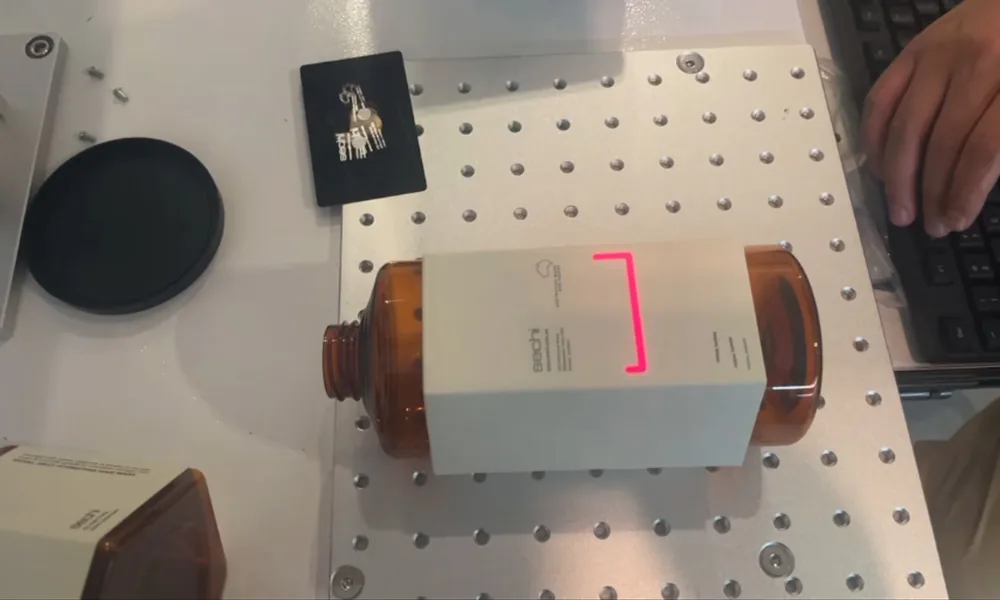
The closer the test is to the intended application, the more useful its result becomes. Whenever practical, use the actual part or representative material with the relevant surface treatment. Define the desired mark and the acceptance criteria before treating the result as proof of suitability.
A useful sample evaluation should answer more than “Can the laser make a visible mark?” Depending on the project, the important questions may include:
- Does the mark achieve the required contrast, depth, readability, or appearance?
- Is the surrounding surface affected in an unacceptable way?
- Was the sample produced with a machine configuration relevant to the quoted system?
- Were important test conditions and parameters recorded?
- Does the result satisfy the actual acceptance requirement rather than simply look attractive in a photograph?
Separate feasibility evidence from production evidence
A successful sample establishes evidence about the conditions that were actually tested. It does not automatically prove production readiness.
For a simple manual marking application, feasibility may be the main technical uncertainty. For a higher-volume or integrated process, additional questions can become important: repeatability, cycle time, part positioning, code handling, fixture variation, focus control, operator interaction, communication with other equipment, and inspection requirements.
The evidence should therefore match the decision being made. Do not ask a single sample to prove more than it actually demonstrates.
Check How the Machine Is Built, Configured, and Tested
Once the application and sample result look promising, the next question is whether the supplier can reproduce the approved configuration in the delivered machine.
Start with configuration transparency. The quotation and technical documentation should make it possible to understand what system is actually being supplied. The necessary level of detail depends on the project, but a buyer should be able to distinguish meaningful configuration differences rather than comparing two machines only by product name and wattage.
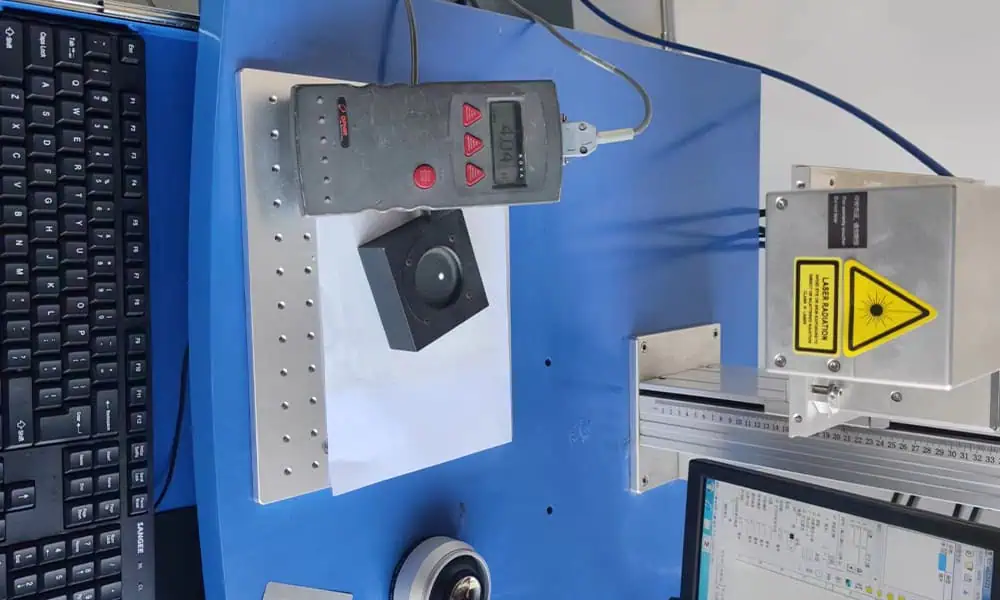
Then ask how that configuration is assembled, checked, calibrated where applicable, and tested before shipment. Relevant evidence can vary by machine, but the evaluation may include functional checks, optical or field calibration where required, safety-related checks, inspection records, test documentation, and confirmation that the shipped configuration matches what was approved.
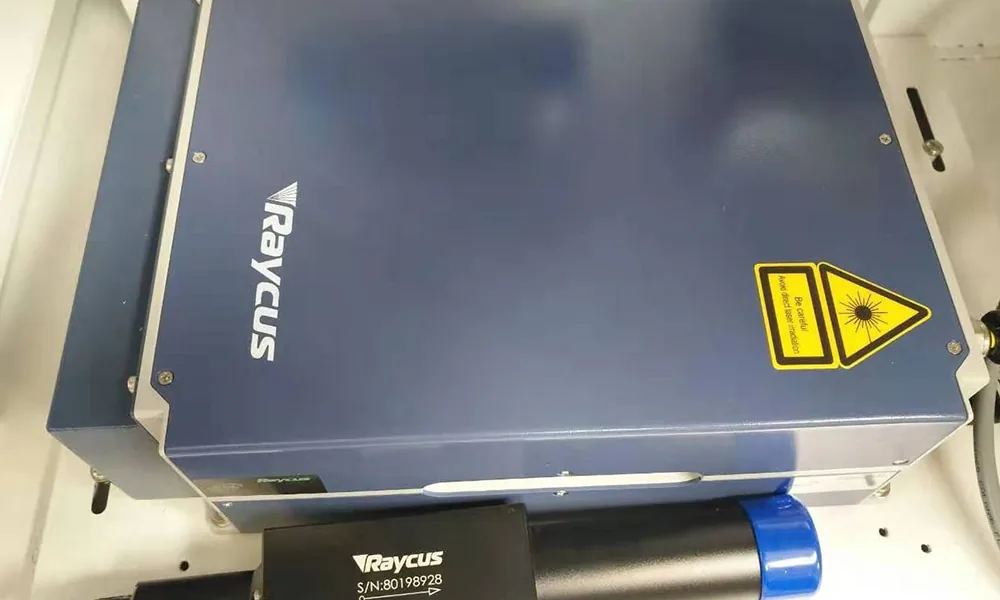
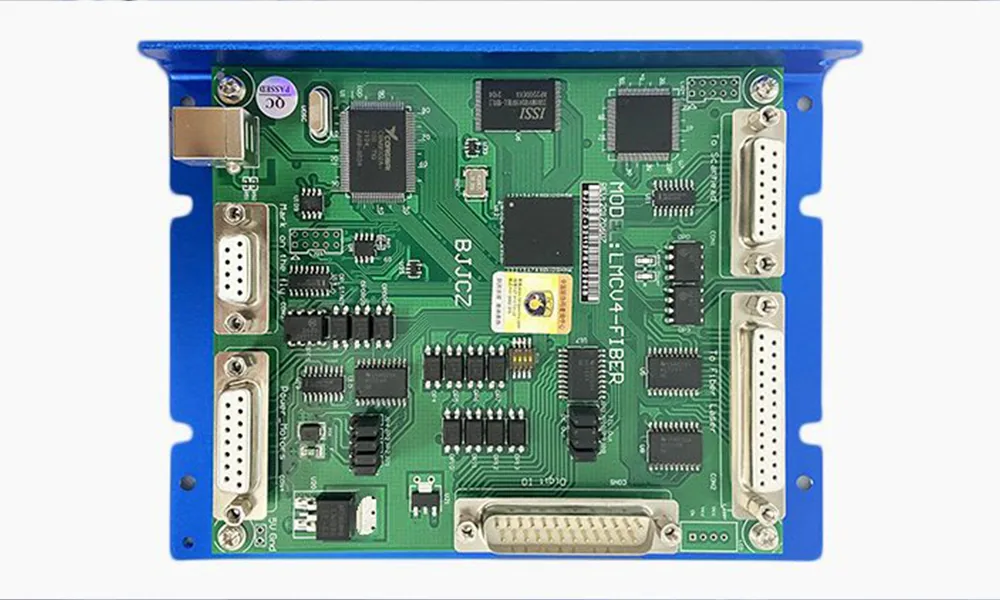
Do not replace this evaluation with component-brand shopping. A recognized laser source, scanner, lens, or controller may help identify what is inside the machine, but no individual component proves the quality of the complete system. Integration, setup, mechanical stability, optical alignment, control logic, safety design, and final testing still matter.
Ask both questions: “Which brand is installed?” and “What exactly is being delivered, and what evidence shows that this complete configuration has been checked for the intended use?”
Evaluate the Risks That Continue After the Machine Is Selected
Technical feasibility is only one part of supplier evaluation. A machine can produce an acceptable mark and still become a difficult project if integration responsibility, compliance documentation, service scope, or spare-parts support remains unclear.
Customization and integration
Evaluate customization only when the project needs it. A standard workstation may be the better solution for a straightforward manual process, while other applications may require a rotary fixture, custom tooling, vision positioning, variable-data communication, multiple motion axes, external triggering, or production-line integration.
If customization is required, ask who designs it, who writes or configures the controls, how interfaces are defined, how the complete system will be tested, and who is responsible if the laser machine works correctly on its own but fails to operate correctly with the surrounding equipment.
Judge integration capability against the project requirement, not the number of automation features offered. The supplier should be able to manage the level of integration the application actually requires.
Safety, compliance, and documentation
Safety and regulatory requirements should be checked against the destination market and the final delivered configuration rather than reduced to a single “certificate” question. Laser-product classification, protective measures, labeling, technical documentation, and conformity obligations can depend on the applicable jurisdiction and machine design.
For example, the U.S. Food and Drug Administration (FDA) regulates applicable radiation-emitting laser products sold in the United States. For equipment placed on the European Economic Area market, applicable EU legislation determines the conformity-assessment and CE-marking obligations for the delivered machine. IEC 60825-1 provides an international framework for laser-product classification and safety requirements, but IEC conformity, U.S. FDA requirements, and EU CE obligations should not be treated as three interchangeable certifications.
For purchasing purposes, ask which requirements apply to the exact machine and destination, what declaration or technical documentation will accompany the system, and whether the documents refer to the configuration you are actually buying.
Warranty, service, training, and spare parts
Statements such as “good after-sales service” are too vague to compare. Ask for the actual service scope.
Useful questions include who handles diagnosis, what the warranty includes and excludes, whether software and parameter support are covered, how replacement parts are supplied, what training is available, and how a problem is escalated when remote troubleshooting does not solve it.
Do not assume that a particular warranty period or response time is an industry standard. These are supplier-specific commercial terms and should be confirmed in the quotation, warranty document, or contract.
Compare Manufacturers on Evidence and Responsibility, Not Price Alone
Price becomes meaningful only after the scope is comparable. A lower quotation may simply exclude an enclosure, fixture, lens, software function, training, installation, spare parts, integration work, or another item included elsewhere. A higher quotation may contain unnecessary features. Neither conclusion can be reached from the total price alone.
Before making a commercial comparison, normalize the configuration and scope as far as practical. Then compare how much uncertainty remains around each supplier’s recommendation.
| Evaluation Area | What to Verify | Useful Evidence | What It Changes |
|---|---|---|---|
| Application understanding | Whether the supplier understands material, surface, mark, geometry, and production requirements | Technical questions, application review, written assumptions | Confidence that the recommendation is based on the real job |
| Responsibility ownership | Who controls engineering, assembly, testing, integration, warranty, and problem resolution | Clear responsibility statement, technical contact, project scope | Shows where technical and commercial risk actually sits |
| Machine configuration | What complete system is being quoted and why | Configuration sheet, technical proposal, component and option details where relevant | Makes supplier quotations more comparable |
| Application validation | Whether the proposed process has been tested under representative conditions | Sample parts, recorded test conditions, acceptance results | Reduces uncertainty about technical feasibility |
| Manufacturing and QC | How the approved configuration is assembled, checked, and tested | Inspection or test records appropriate to the machine | Reduces uncertainty between approved sample and delivered equipment |
| Safety and compliance | What requirements apply to the machine and destination market | Applicable declarations, labels, technical documentation, supporting records | Identifies regulatory and deployment risk before shipment |
| Service responsibility | Warranty scope, troubleshooting path, training, and spare-parts support | Written warranty and service terms | Clarifies operational risk after installation |
| Commercial scope | What is included and excluded from the quoted price | Itemized quotation and agreed project scope | Prevents price comparisons between materially different solutions |
Suppliers do not need identical organizational structures, components, or manufacturing models. They do need to make their proposals transparent enough for you to understand the engineering logic, evidence, responsibilities, and remaining risks.
Decide Whether to Reject, Verify Further, Test, or Shortlist
A supplier evaluation should end with an action, not an abstract score. The next step depends on what remains uncertain.
- Reject or pause: use this when critical responsibilities are unclear, the proposal does not address the real application, important claims cannot be substantiated, or material commercial and compliance questions remain unresolved.
- Verify further: use this when the overall direction appears reasonable but important configuration, documentation, service, or responsibility details are still missing.
- Run a sample or technical validation: use this when the main uncertainty depends on the actual material, surface, geometry, desired mark, process speed, or another condition that cannot be resolved reliably from specifications alone.
- Move to RFQ or shortlist: use this when the application assumptions, proposed configuration, validation evidence, delivery responsibilities, and commercial scope are clear enough for meaningful supplier comparison.
When several suppliers reach the RFQ stage, give them the same project inputs and acceptance requirements wherever possible. That makes differences in engineering approach, machine configuration, evidence, scope, and price easier to identify.
A useful evaluation reduces uncertainty until you can see why the proposed machine fits the application, what has actually been validated, who owns each responsibility, and what still needs to be confirmed before purchase.