Quick Answer
A cheap laser marking machine is not automatically a poor machine. The buying risk starts when a lower quotation is treated as equivalent before the supplied scope is normalized. Two machines labeled 30W fiber can still differ in laser-source behavior, scanner and lens, marking field, workstation, fixture or rotary, vision or automation, safety controls, software, and delivered support. First fix the real job—material, target mark, part geometry, marking area, throughput, loading method, safety conditions, and acceptance criteria. Then classify each quoted item as included, optional, excluded, or unclear. If a feature is not required by the job, removing it can be legitimate cost reduction. If it changes marking capability, part handling, safety, validation, or production readiness, the cheaper quote is not an equivalent system. Compare price only after the required scope is the same.
What Does “Cheap” Mean for a Laser Marking Machine?
There is no useful universal dollar threshold. A low headline price can describe anything from a simple marking core to a more complete workstation, so two advertised prices may not represent the same supplied system. Laser type, output power, marking area, machine size, and integration capability all influence price. (KEYENCE) That is why this article does not define cheap by a fixed market number. Instead, treat a low price as a comparison signal: identify what configuration, accessories, safety scope, software, and delivered support are included at that price. If the lower quote still covers the required job, it may be genuinely low-cost. If key requirements are missing or unclear, the headline price is not yet an apples-to-apples comparison.
Cheap and Low-Cost Are Not the Same Buying Decision
For purchasing purposes, it is useful to separate low-cost from simply low-priced.
A genuinely low-cost configuration removes cost that the application does not require. If you only mark small flat parts in a fixed manual fixture, for example, paying for a much larger marking field, rotary device, vision system, or automated part-handling system may add cost without solving a real production problem.
This is normal engineering optimization. KEYENCE notes, for example, that marking area and integration capabilities affect laser-marker price, and that an application limited to small items may save cost by using a smaller marking area rather than paying for unused capacity. (KEYENCE)
The problem begins when the lower quotation is treated as equivalent before its scope has been checked.
A machine may cost less because the required system is simpler. It may also describe a different optical configuration, workstation, accessory package, integration level, or delivered scope. The price alone does not tell you which explanation is correct.
Define what the application requires, identify the machine scope needed to meet it, and only then decide which costs can safely be removed.
That also prevents the opposite mistake—buying an unnecessarily expensive machine simply because more features appear safer.
What Can Be Different Behind a Lower Laser Marking Machine Quote?
A laser marking quotation is easier to compare when it is broken into layers. Instead of asking, “What did the cheap machine remove?”, ask, “Which parts of the supplied system are actually the same, and which are different?”
Core Marking System
Nominal wattage is only one specification.
Pulsed fiber laser sources can differ in pulse duration, repetition rate, pulse energy, and other operating characteristics even within the same broad technology family. IPG’s published nanosecond fiber-laser ranges, for example, show substantial variation in pulse duration and repetition rate across different source architectures. (IPG Photonics)
The scanning system is another independent variable. Published SCANLAB data lists parameters such as image field size, spot size, tracking error, marking speed, and positioning speed for a scan system. (SCANLAB)
The lens and optical field matter as well. A different focal configuration can change the usable marking field, working geometry, and optical conditions.
None of this means that the most expensive source, scanner, or lens is automatically the correct choice. It means that “30W fiber laser” is not a complete machine specification.
When two quotations differ substantially, verify the actual source configuration, scan system, lens or marking field, controller, and other relevant optical requirements before assuming that the machines are equivalent.
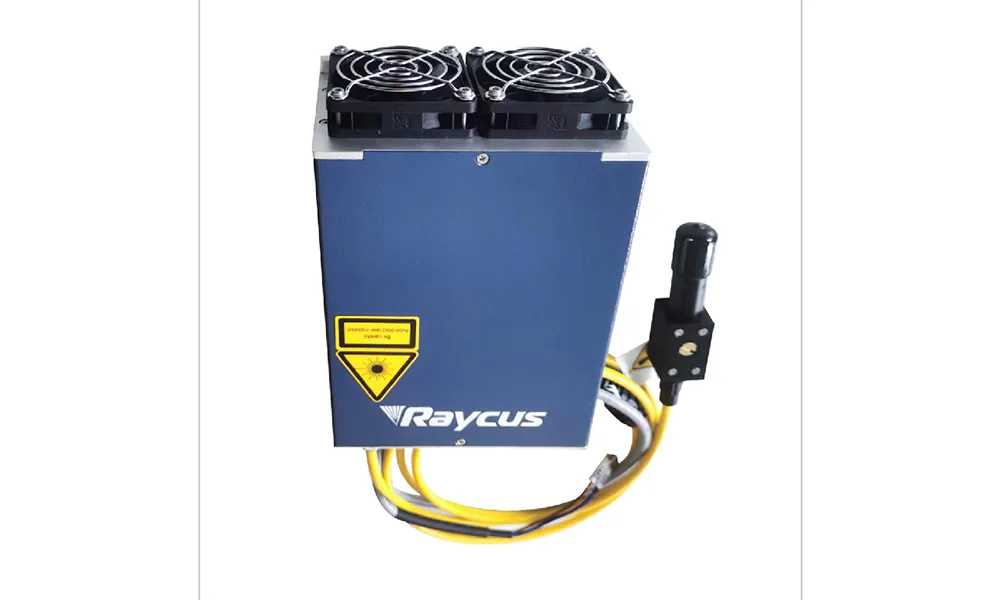
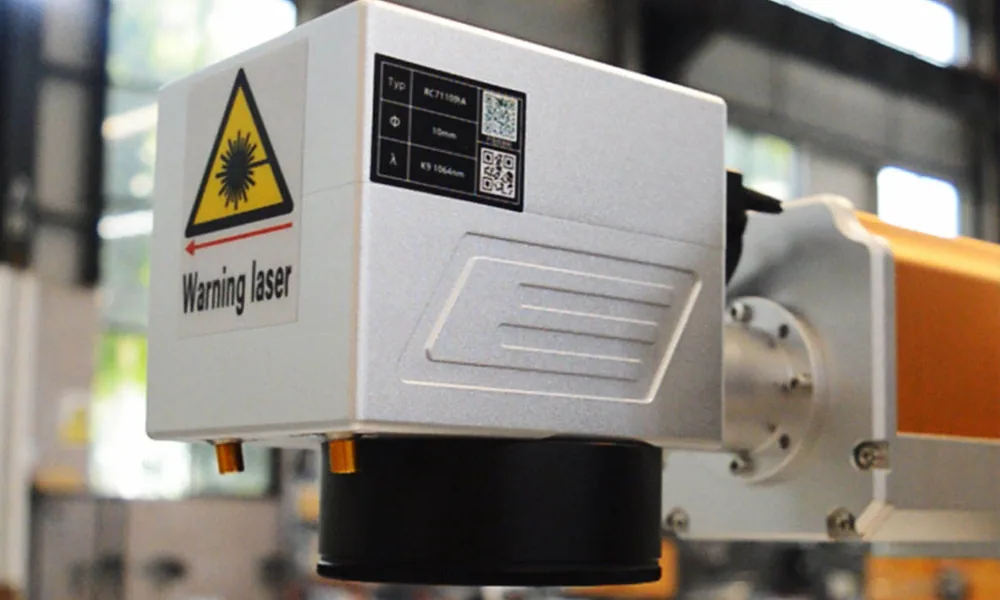

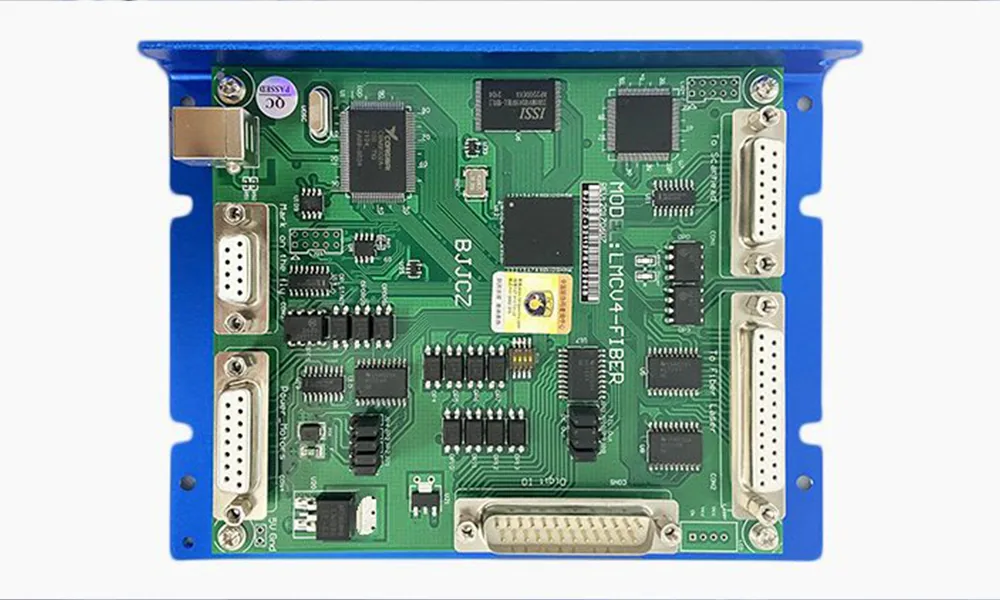
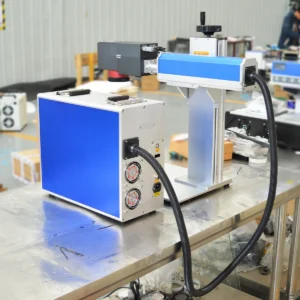
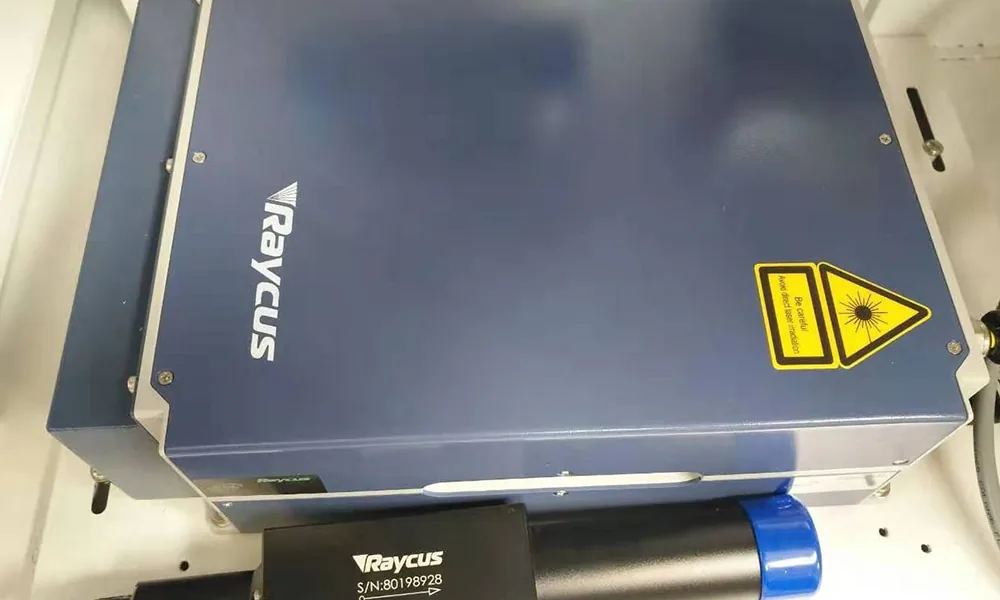
These are separate machine components that can differ even when two quotations use the same nominal laser power. The images illustrate component categories, not a brand-quality ranking.
Mechanical Platform and Workstation
The laser source may be the most visible specification on a quotation, but the machine also has to position the beam relative to the workpiece.
Depending on the application, differences can appear in the Z-axis arrangement, working height, worktable, fixture interface, enclosure design, mechanical rigidity, or the overall workstation structure.
Whether those differences matter depends on the part.
A simple flat component loaded into a repeatable fixture may require relatively little motion or adjustment. A tall, irregular, multi-surface, or frequently changing part family can place very different demands on the workstation.
The purchasing question is therefore not whether one machine has “more mechanics.” It is whether the supplied mechanical platform gives the required access, positioning, working envelope, and repeatability for the real parts.
Part Handling and Production Options
Rotary devices, fixtures, vision systems, external motion, conveyors, and automation can change the price of a laser marking system considerably because they change what the system has to do beyond producing the laser mark.
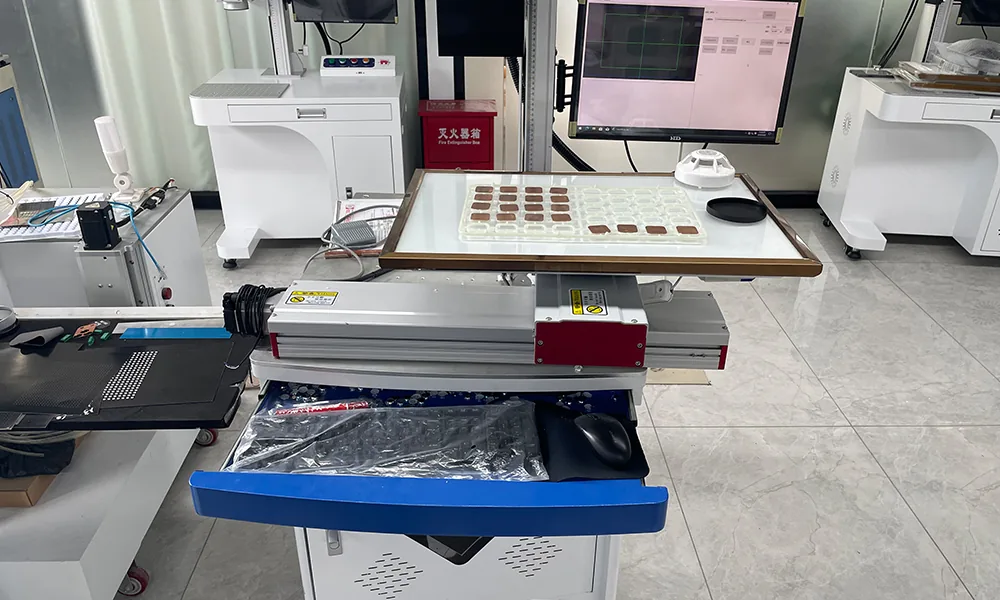
These features should not automatically be classified as either essential or unnecessary.
A rotary axis may be essential for circumferential marking but irrelevant to a flat plate. Vision may add significant value when part position varies, yet provide little benefit when every workpiece is mechanically located in a repeatable fixture. Automation may be justified by cycle-time and labor requirements, while the same automation could be unnecessary for low-volume manual loading.
The correct question for each option is:
What production requirement is this feature solving?
If there is no requirement behind it, it may be a legitimate candidate for cost reduction. If removing it changes how parts must be loaded, located, marked, inspected, or transferred through production, the lower-priced machine is no longer offering the same production solution.
Safety and Operating Environment
Safety-related scope needs different treatment from ordinary production options.
It should not be reduced to a checklist of features that can simply be removed to lower the machine price. Required protective measures depend on the laser system, accessible radiation, operating configuration, and applicable regulations or standards.
For example, U.S. federal laser-product requirements address protective housings and safety interlocks in relation to human access to laser radiation, and include additional requirements for certain higher-class laser systems. Those requirements should not be generalized into a worldwide rule that every marking machine must use the same enclosure design, but they demonstrate why safety scope must be evaluated independently from price preference. (21 CFR §1040.10)
Fume control is similarly application-dependent. OSHA notes that adequate ventilation is needed where laser target interactions produce noxious or potentially hazardous fumes or vapors. (OSHA) A NIOSH evaluation of laser marking also documented airborne contaminants from marking different materials and assessed local exhaust ventilation as a control. (NIOSH/CDC)
So neither “extraction is always required” nor “extraction is just an optional accessory” is a safe purchasing assumption. The material, process, emissions, workplace, and applicable safety requirements determine the need.
Delivered and Support Scope
A quotation can also look cheaper because some items sit outside the base machine price.
Depending on the supplier and project, this can include fixtures, rotary equipment, computers, software functions, integration work, installation, training, spare parts, shipping, or support arrangements.
There is no reliable universal rule that low-priced suppliers always exclude any specific one of these items. The practical lesson is simpler: make every important item visible in the comparison.
| Scope to compare | What to verify | Why it matters |
|---|---|---|
| Laser configuration | Source type, relevant pulse behavior, nominal power | Same wattage does not define the complete source |
| Scanner and optics | Galvo/scan system, lens, marking field | Changes working field and optical configuration |
| Mechanical platform | Z travel, worktable, part clearance, fixture interface | Determines whether the real part can be positioned correctly |
| Part handling | Rotary, fixture, vision, motion, automation | Changes how the part enters and moves through the process |
| Safety scope | Housing, interlocks, required controls, ventilation/extraction | Must match the actual hazard and applicable requirements |
| Controls | Controller, software, interfaces | Affects operation and integration |
| Delivered scope | Included accessories and separately quoted items | Base price may not equal production-ready cost |
| Validation | Sample configuration and acceptance basis | A good sample should be relevant to the machine being purchased |
Once the quotations are normalized this way, a price difference becomes much easier to interpret.
What Can You Remove Without Hurting the Application?
The safest way to reduce cost is to start with the requirement, not with the machine catalogue.
Suppose a higher-priced configuration offers a larger marking field. If your largest part and required mark fit comfortably within a smaller field, the extra field may not add useful value. Paying for unused capacity would not improve the process simply because the specification is higher.
The same logic applies to production options.
If all parts are flat and never require circumferential marking, a rotary device may solve no real problem. If part position is mechanically controlled by a repeatable fixture, a vision system may not be necessary for that particular positioning task. If an operator can load parts manually while still meeting the required throughput, additional automation may not be economically justified.
But every one of those conclusions changes when the requirement changes.
That is why “remove the rotary,” “remove vision,” or “remove automation” cannot be universal buying advice. The useful decision sequence is:
Required result → required production condition → required capability → required configuration → removable cost
Before removing an item, ask whether the same material, mark, part geometry, working area, positioning method, throughput, safety condition, and acceptance requirement can still be met.
If the answer is yes, you may have found genuine cost optimization.
If the answer is unknown, the configuration needs clarification rather than automatic deletion.
Why the Same “30W Fiber Laser” Can Still Be a Different Machine
Imagine two quotations:
Supplier A: 30W Fiber Laser Marking Machine
Supplier B: 30W Fiber Laser Marking Machine
At first glance, the lower price appears easy to compare. Both say 30W. Both say fiber. Why pay more?
Because those two labels establish only a small part of the complete system.
Average power does not tell you the full pulse behavior of the source. Published industrial fiber-laser specifications distinguish sources by pulse duration, repetition rate, pulse energy, and other characteristics in addition to power. (IPG Photonics)
The 30W label also does not tell you which scanner is installed, what lens and marking field are supplied, how the machine handles focus and part height, what fixture is included, whether a rotary or vision function is present, what workstation and safety configuration is supplied, or what other items are outside the base quotation.
Those differences do not automatically prove that one system is superior. They prove that headline power is not sufficient for an apples-to-apples comparison.
The material and desired marking effect matter as well. TRUMPF notes that the way a material changes during laser marking depends strongly on factors including wavelength, pulse duration, and irradiance. (TRUMPF)
So when the required result matters—contrast, discoloration, engraving, surface removal, readability, or another acceptance criterion—the quotation needs to describe enough of the relevant system to connect the price to the intended process.
How to Compare Two Laser Marking Machine Quotes Like for Like
Step 1: Freeze the Application
Before comparing machines, define the job both suppliers are expected to perform.
Record the actual material and surface condition, required mark, marking area, part geometry, expected loading method, production volume or cycle requirement, operating environment, safety constraints, and acceptance criteria.
Without that baseline, removing a feature cannot be judged as either smart simplification or harmful omission.
Step 2: Freeze the Required Machine Scope
Translate the application into required capabilities.
Does the part require rotary motion? Is a large marking field actually necessary? Must position be detected automatically, or will a fixture control it? Is manual loading acceptable? Does the process require integration with another machine or production line? What safety controls are required for the intended operating arrangement?
Only after those questions are answered should the machine configuration be reduced.
Step 3: Normalize Inclusions and Exclusions
Create one comparison sheet and make each supplier classify relevant items as included, optional, excluded, or requiring clarification.
This is where many apparent price differences become understandable. One quotation may bundle an accessory that another prices separately. One may include a workstation while another effectively quotes the marking core. Another may include integration functions that your project never requested.
The goal is not to force every supplier into the highest specification. It is to make sure the compared scope is visible.
Step 4: Separate Base Price From Production-Ready Cost
The lowest base-machine price is not always the lowest cost of putting the process into operation.
If the actual application still requires another fixture, motion axis, workstation modification, safety control, extraction solution, software function, or integration task, that requirement does not disappear because it was excluded from the first quotation.
Add the missing required scope back into the comparison before deciding which proposal is lower cost.
Step 5: Validate the Mark Against the Relevant Configuration
A sample mark can be extremely useful, but “the supplier made a good sample” is not enough information by itself.
Manufacturers use application and sample labs specifically to evaluate real workpieces before equipment purchase; Telesis, for example, describes evaluating sample tools to demonstrate marking results before customers commit to equipment. (Telesis)
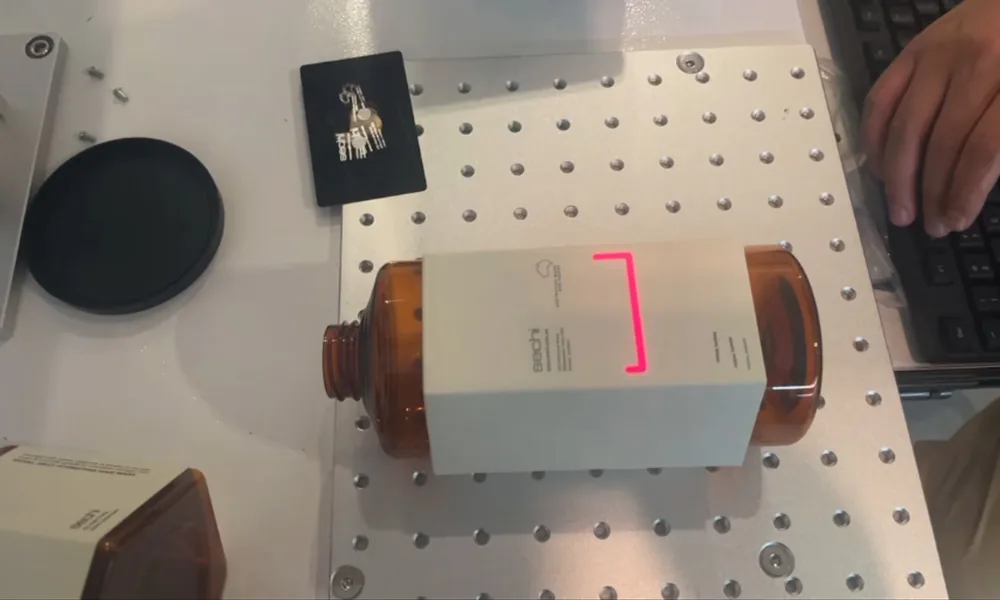
For purchasing purposes, record the relevant setup used to produce the sample: material and surface, laser/source configuration, lens or marking field, fixture or positioning method, important process conditions, and the acceptance criterion.
Because marking behavior depends on process variables such as wavelength, pulse duration, and irradiance, a result produced on a materially different setup should not automatically be assumed to transfer to the quoted production configuration. (TRUMPF)
Was the accepted sample produced under a configuration relevant to the machine I am actually buying?
Step 6: Compare Price Last
Once both proposals are being evaluated against the same job and the required scope has been normalized, the price finally becomes meaningful.
At that point, the lower quotation may genuinely be the better purchase.
The key difference is that you now know why it is lower.
Questions to Ask Before Accepting the Lowest Quote
Before approving the lowest quotation, ask the supplier to answer these points clearly:
- What exact laser type, source configuration, and nominal power are included?
- What scanner, lens, and marking field are supplied?
- What working height, Z-axis range, table, or fixture interface is included?
- Which fixtures, rotary devices, vision functions, motion axes, or automation features are included, optional, or excluded?
- What safety-related equipment is included for the proposed operating configuration, and what must be provided by the buyer?
- Is ventilation or extraction required for the actual material and process, and if so, is it included?
- What controller, software, interfaces, computer hardware, or licenses are part of the quote?
- Which installation, training, spare-parts, warranty, shipping, or other commercial items are included versus quoted separately?
- What configuration was used to produce the sample mark, and does it correspond to the proposed production system?
- What measurable or visual acceptance criteria will be used to confirm that the delivered configuration meets the requirement?
A supplier does not need to provide the most elaborate answer to every question. The objective is to remove ambiguity before price becomes the deciding factor.
Buy the Required Machine, Not the Cheapest Specification Sheet
A low-cost laser marking machine can be exactly the right decision.
You do not need the largest marking field if the part is small. You do not need rotary motion for a job that never rotates. You do not need automation simply because a more expensive machine offers it.
But cost reduction only works when the requirements stay intact.
The mistake is not buying the cheaper machine. The mistake is comparing two quotations as if they describe the same system when important differences have never been identified.
Define the marking requirement first. Confirm the optical, mechanical, handling, safety, control, and delivered scope needed to meet it. Remove what the process genuinely does not need. Validate the required result on a relevant configuration.
Then compare the price.