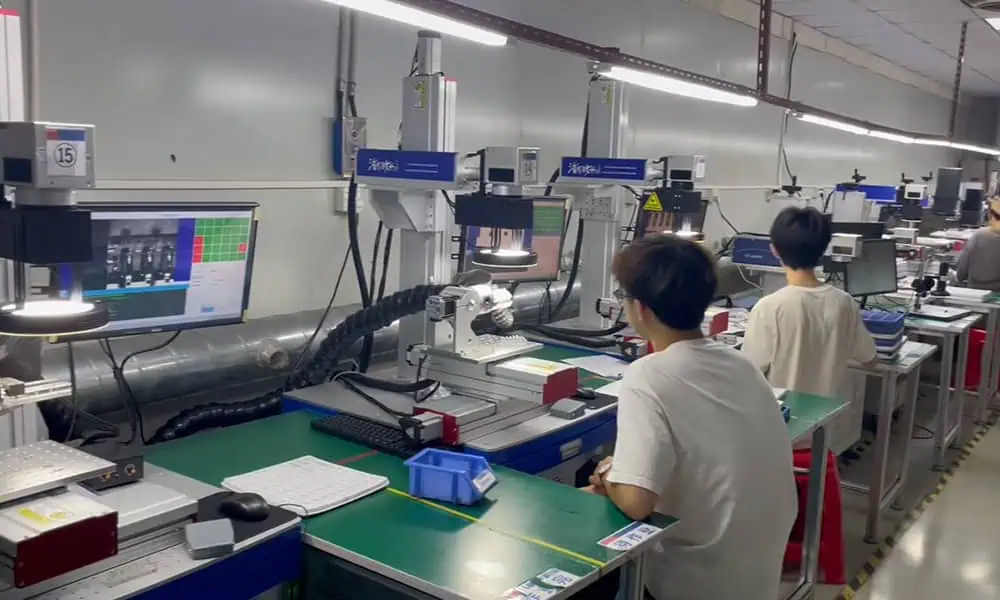
Laser marking machine cost is often compared by looking at the quoted purchase price. For a production buyer, that is only the starting point.
This guide starts after machine selection. The candidate configurations should already be able to meet the required marking and production task. If you are still deciding between laser source, optics, workstation structure, rotary, vision, motion, or other machine functions, start with our laser marking machine selection guide. This page focuses on the next question: what will each suitable option cost to own over the same period?
A useful laser marking machine total cost of ownership (TCO) calculation has to do more than add purchase price, electricity, and maintenance. It needs a common ownership period, comparable cost scope, traceable supplier and buyer inputs, a consistent way to handle future costs, and realistic production assumptions.
The objective is not to predict every future expense perfectly. It is to make the economic comparison transparent enough that you can see which shortlisted option has the lower modeled ownership cost under the assumptions you actually have—and which unknowns could still change that conclusion.
What Does Laser Marking Machine Total Cost of Ownership Actually Measure?
A laser marking machine’s total cost of ownership, or TCO, is the cost of owning and using the selected system over a defined comparison period. The purchase price is one part of that number, but it is not the whole number.
That distinction matters when quotations have different upfront prices. A lower purchase price can lead to a lower TCO, but it does not guarantee one. A higher-priced system can also end up with either a higher or lower TCO depending on what happens after the purchase. The useful approach is therefore to calculate ownership costs under the same assumptions rather than trying to infer long-term economics from the quotation alone.
Purchase Price, Project Cost, and TCO Answer Different Questions
| Metric | What It Answers | Important Boundary |
|---|---|---|
| Machine purchase price | What does the quoted machine initially cost? | It may not include everything required to put the system into production. |
| Delivered or project cost | What does it cost to obtain and deploy the required system? | It still does not represent all costs over the ownership period. |
| Total cost of ownership | What does owning and using the system cost over a defined period? | The comparison period and included cost categories must be clear. |
| Average annual ownership cost | What does the period-level TCO average to per year? | It is a way of expressing the cost, not another cost category. |
| Laser-marking ownership cost per good part | How much of the defined laser-machine ownership cost is allocated to each accepted part? | It requires a valid production-output basis and is not the product’s complete manufacturing cost. |
| ROI | What return is generated relative to the investment? | ROI is a return metric, not an ownership-cost metric. |
| Payback period | How long does it take for savings or returns to recover the investment? | It does not represent all costs over the ownership period. |
A machine quotation may therefore be a valid purchase-price figure without being a complete production-ready project cost, and neither of those numbers automatically represents multi-year ownership cost.
TCO extends the comparison beyond the transaction itself. Depending on the project, it can include acquisition and deployment, operating costs, maintenance and replacement, other defined ownership expenses, and residual value when there is a defensible basis for including one.
The Comparison Period Is Part of the Definition
A TCO figure is incomplete without a time horizon. A three-year ownership cost and a five-year ownership cost answer different questions, so competing machines should not be compared using different periods.
NIST’s life-cycle cost guidance likewise treats the study period as part of the economic analysis and states that mutually exclusive alternatives should use the same study period. It also distinguishes the study period from equipment service life.
Choosing a five-year investment horizon therefore does not mean the laser marking machine has a five-year service life. Machine life, replacement events, and remaining value at the end of the period are separate inputs.
This is also why TCO differs from payback. TCO asks:
What will this system cost us over the period being evaluated?
Payback asks how long it takes for economic benefits to recover an investment. ROI asks what return is generated relative to the investment. Both can be useful in a broader financial analysis, but neither should be substituted for TCO when the task is to compare ownership cost.
Before comparing any two economic figures, identify what the number represents and what period it covers.
Normalize the Quotations Before You Compare Total Cost
Once the candidate machines have been technically shortlisted, TCO should compare them on the same required cost scope. The purpose here is not to repeat machine selection or make different designs look identical. It is to prevent one quotation from appearing cheaper simply because a cost required by the project is missing from that offer.
For TCO, each quotation item only needs a clear economic treatment: a required item that is already included stays in the quoted base; a required item that is missing needs a confirmed cost or remains unknown; an optional item that the project does not require stays outside the common base.
| Quotation Status | TCO Treatment |
|---|---|
| Required and included | Keep the confirmed quoted cost in the comparison. |
| Required but missing | Add a confirmed cost when available; otherwise mark it as unknown rather than zero. |
| Optional or not required | Keep it outside the common TCO base unless the buyer intentionally includes it in both alternatives. |
Technical differences such as laser source, optics, fixtures, vision, motion, or workstation architecture belong to the machine-selection decision. In this TCO model, they matter only when they change the required purchase, deployment, operating, maintenance, or replacement cost. If a required cost is not yet known, keep that gap visible instead of forcing a false comparison.
Separate Supplier Inputs From Buyer Inputs
Once the quotation scope is comparable, the next question is where the TCO data should come from.
A useful model has three layers:
Supplier-confirmed facts + buyer/site facts = derived TCO values
The supplier knows what machine and commercial scope are being proposed. The buyer knows how the machine will actually be operated and what electricity, labor, production interruptions, and other site-specific factors cost in that factory.
Neither side independently owns the complete TCO.
What the Supplier Should Confirm
Machine-specific information should come from the proposed configuration and its documentation rather than buyer assumptions.
That can include:
- quoted machine configuration and included functions;
- electrical requirements;
- maintenance guidance;
- replacement-part information;
- installation and training scope;
- software or licensing terms where applicable;
- warranty and service scope;
- shipping or delivery scope.
The source should be traceable wherever possible: quotation, configuration sheet, datasheet, manual, service document, or another written commercial record.
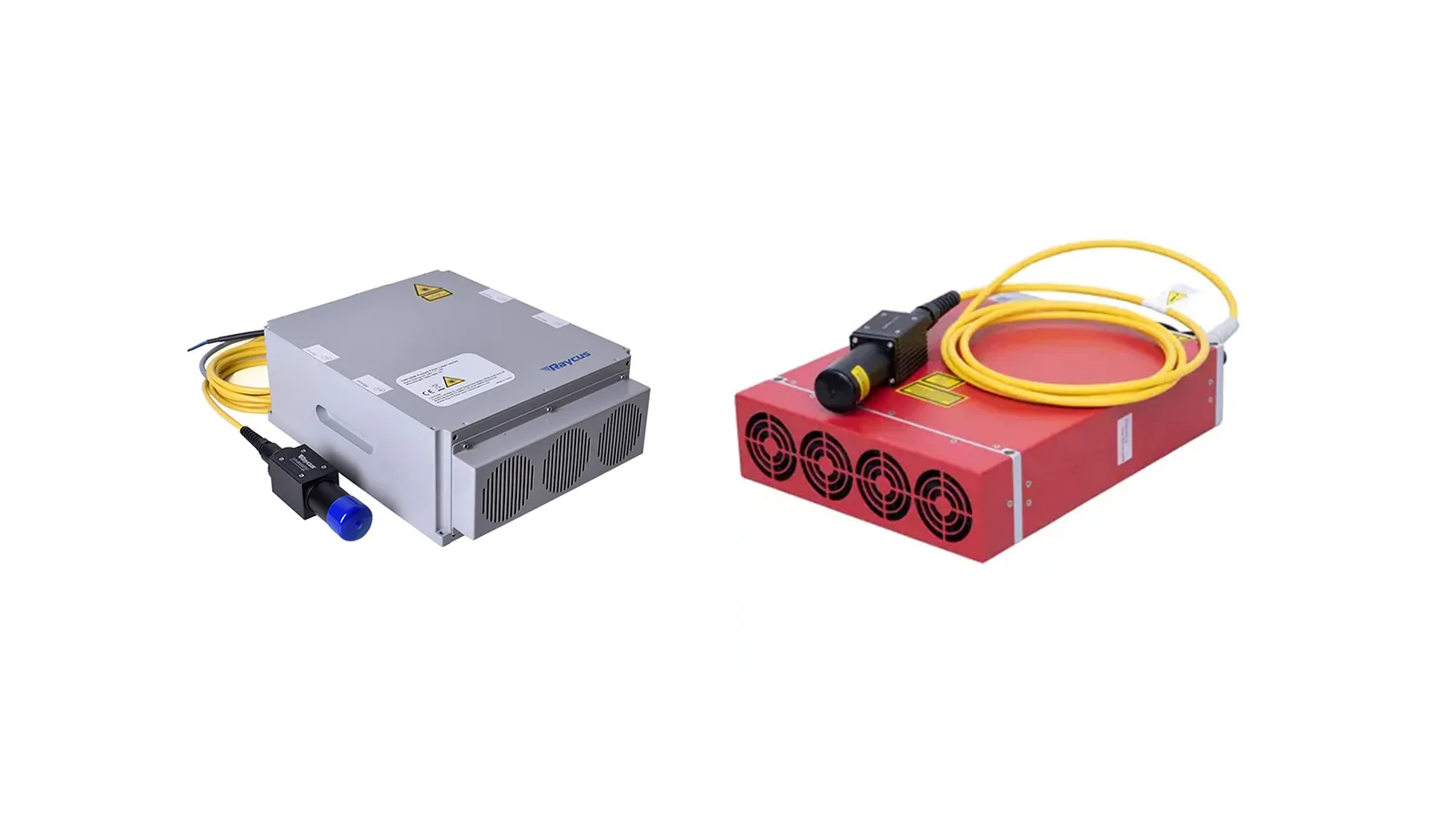
Electrical specifications are a good example. A machine described as a 30 W fiber laser is referring to the laser source’s optical output class. That does not mean the complete machine consumes 30 W of electricity.
Published industrial laser equipment specifications can list laser output power and complete-system electrical consumption as separate parameters; one current OEM datasheet, for example, specifies a 20–500 W laser range separately from a 1.5–5.8 kW machine power-consumption range. The specific figures apply only to that product, but the distinction between optical output and system electrical input is the important point.
A complete system can also power controls, the galvo, computer, motion axes, vision, extraction, cooling, and other installed functions. The TCO model therefore needs electrical information for the actual system configuration.
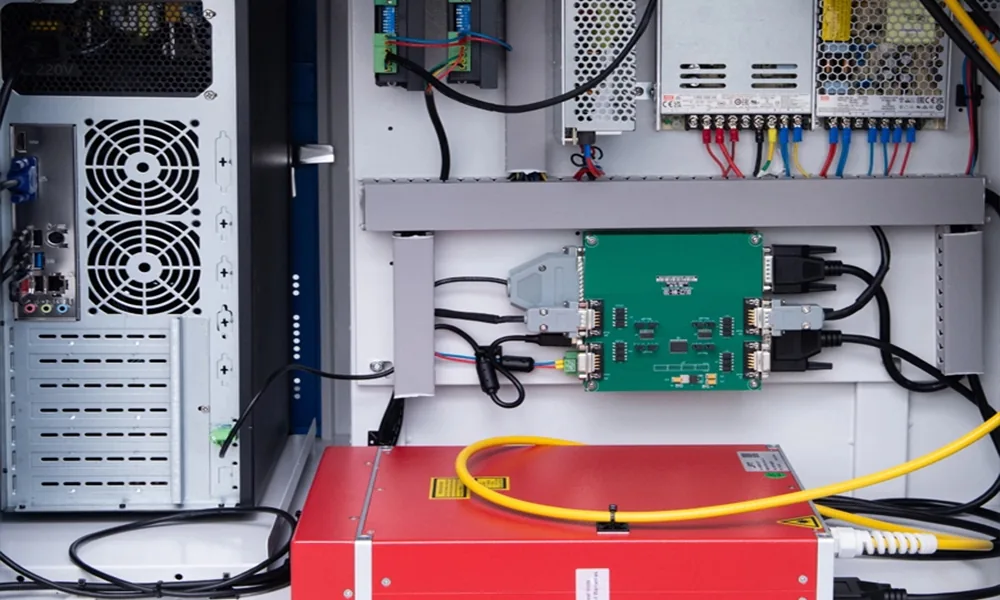
Even then, data type matters. A rated or maximum electrical requirement is not automatically the same as measured average production consumption.
Maintenance follows the same logic. Supplier or OEM documentation can tell the buyer what should be inspected, cleaned, serviced, or replaced, but a maintenance requirement is not yet an annual maintenance cost.
What the Buyer Must Provide
Site-specific and business-specific inputs belong to the buyer.
These can include:
- applicable electricity tariff;
- expected operating hours;
- shifts and production days;
- labor rates;
- expected production volume;
- internal downtime economics;
- chosen TCO comparison period;
- company-specific financial treatment where applicable.
The supplier can provide an electrical specification, but it cannot determine the buyer’s electricity price. It can describe the machine process, but it cannot determine the buyer’s labor rate or annual production plan.
Downtime has the same split. A supplier may provide maintenance procedures or service information. The buyer determines what interrupted production actually costs in that factory.
Some TCO Values Are Derived From Both
Many of the numbers used in the final calculation belong to neither side alone.
| TCO Input | Primary Source | Used To Calculate |
|---|---|---|
| Quoted configuration | Supplier | Acquisition scope |
| Included functions and accessories | Supplier | Quote normalization |
| Machine electrical requirement | Supplier / OEM documentation | Energy model |
| Electricity tariff | Buyer | Electricity cost |
| Operating hours | Buyer | Energy and operating cost |
| Maintenance requirements | Supplier / OEM | Maintenance model |
| Maintenance frequency | Supplier guidance + buyer conditions | Maintenance cost |
| Replacement-part price | Supplier / actual quotation | Event or recurring cost |
| Labor rate | Buyer | Operating and downtime cost |
| Production volume | Buyer | Cost per part |
| Warranty / service scope | Supplier commercial documents | Cost and risk boundary |
| Comparison period | Buyer | TCO horizon |
| Downtime value | Buyer production / finance data | Downtime model |
| Annual electricity cost | Derived | TCO |
| Annual maintenance cost | Derived | TCO |
Every important value should retain its source and data type.
For example, 2.0 kW — supplier-published rated input is materially different from 2.0 kW — measured average during representative production.
A spreadsheet that stores only the number and discards that distinction can create false precision before the TCO calculation has even begun.
Build the TCO Calculation Over One Common Ownership Period
Once quotation scope and input ownership are clear, the TCO model can be built.
A practical procurement model is:
The difficult part is not the addition. It is making sure each cost belongs in the model, occurs at the right time, has not already been counted elsewhere, and is based on data appropriate to that machine and buyer.
Use the Same Period and Record When Costs Occur
If Option A is evaluated over three years and Option B over five, the resulting TCO figures are not comparable.
Choose one period appropriate to the purchasing decision and use it consistently.
Then classify costs by timing:
| Cost Timing | Typical Role | Examples |
|---|---|---|
| Initial / Year 0 | Acquire and deploy the usable system | Normalized machine cost, confirmed deployment costs |
| Recurring | Repeats regularly during ownership | Electricity, routine maintenance, applicable recurring software/service |
| Event-based | Occurs at a specific or irregular point | Major service, repair, component replacement |
| End-of-period | Value or cost recognized at the end | Supported residual value or disposal cost where relevant |
This helps prevent both omission and double counting.
If installation is already included in the normalized quotation, it should not be added again as a deployment cost. If a service contract already covers a particular replacement, the worksheet should not charge for it twice.
Calculate Electricity From the Complete Machine, Not the Laser Wattage
For a simple flat-rate tariff, use these two relationships:
DOE/FEMP acquisition guidance treats energy use, energy price, operating hours, and product lifetime as separate inputs to lifecycle energy cost; the U.S. Energy Information Administration likewise distinguishes power from electrical energy measured in kilowatt-hours.
The critical input is the correct machine electrical value.
A 20 W, 30 W, or 50 W laser rating is not the complete machine’s electrical consumption. Use the actual candidate system’s technical data instead.
Also preserve the data type. A maximum electrical requirement may be suitable for facility planning, but it should not be presented as measured average production consumption.
Actual operation can include marking, loading, positioning, inspection, waiting, and idle periods. If only a rated or maximum value is available, using it throughout the entire production schedule should be labeled as an estimate.
Industrial tariffs may also include time-of-use pricing, demand charges, or other structures. When those materially affect the result, use the buyer’s actual applicable tariff rather than a generic national electricity rate.
Build Maintenance From Actual Requirements
Avoid a generic rule such as:
Annual maintenance = X% of purchase price.
A practical maintenance model is closer to:
The actual entries depend on the system and operating conditions.
Routine maintenance should also remain separate from irregular repair or replacement events. If credible evidence indicates that a major replacement is expected in a particular year, record it at that point rather than hiding it inside an arbitrary annual percentage.
If the timing is unknown, keep it uncertain instead of inventing an interval.
Use Residual Value Only When It Has a Basis
Residual value can reduce TCO, but an arbitrary resale percentage can distort the comparison as easily as an arbitrary maintenance percentage.
Include it when there is a reasonable basis such as:
- relevant resale evidence;
- an internal asset-valuation method;
- a defensible remaining-life approach;
- another project-specific basis.
If no reasonable basis exists, leave it unknown or exclude it consistently from both alternatives.
Keep Practical TCO Separate From Formal Financial Analysis
The model above is a procurement-oriented TCO worksheet.
Formal life-cycle cost analysis can go further by discounting future cash flows to account for the time value of money. NIST’s formal LCC framework uses a common study period and present-value treatment of future costs; that is a different level of analysis from the simple undiscounted worksheet used here.
If the buyer’s capital-budgeting policy requires discounted cash flow, NPV, inflation treatment, or another formal financial method, apply that policy consistently to every alternative.
A simple undiscounted ownership-cost worksheet can still be useful. It simply should not be described as a formal discounted life-cycle cost analysis.
Handle Downtime and Unknown Costs Without False Precision
Some future costs will remain uncertain even after the basic TCO model is built. Downtime, repair frequency, major replacement, and residual value may not have reliable project-specific data before the purchase.
The wrong response is to hide that uncertainty.
Unknown does not mean zero.
NIST’s uncertainty guidance makes essentially the same point: ignoring uncertain long-run costs implies that they are expected to be zero, which may be a poor assumption.
The better approach is to keep uncertain values visible, use estimates only when they have a defensible basis, and determine whether the uncertainty is large enough to change the purchasing decision.
Downtime Cost Is Not the Repair Bill
An unexpected stop can create two different kinds of cost.
The repair or maintenance cost can include parts, technician labor, service charges, and other expenses required to restore the machine.
The economic effect of the interruption may involve idle labor, delayed output, recovery overtime, schedule disruption, or unrecovered production.
NIST’s manufacturing-maintenance research treats direct maintenance/repair costs and downtime-related losses as distinct issues, and notes that downtime effects can include labor/capital losses, overtime, delayed output, and lost sales depending on the manufacturing context.
Do not count the same expense in both categories.
Four hours of machine downtime also does not automatically equal four hours of permanently lost production. A plant may have work-in-process buffer, spare capacity, another machine, or an opportunity to recover production later.
A bottleneck station with little buffer or alternative capacity can have a very different consequence.
The useful question is therefore:
What happened to production because the machine was unavailable?
Was output permanently lost, delayed, recovered later, or absorbed by available capacity?
That is why a universal laser-marking “downtime cost per hour” is not a defensible project input. Much of the economic impact belongs to the buyer’s production system.
Keep Confirmed, Estimated, and Unknown Inputs Separate
| Status | Meaning | Treatment |
|---|---|---|
| Confirmed | Supported by a quotation, contract, machine record, tariff, maintenance history, or other traceable data | Use within its stated conditions |
| Estimated | Based on a documented assumption, comparable internal history, supplier information, or another reasonable basis | Keep the assumption visible |
| Unknown | No defensible value or range is currently available | Obtain more evidence or test whether the variable is decision-critical |
An unknown downtime figure does not justify choosing a convenient number from the internet. It also does not justify entering zero.
If the buyer operates comparable equipment, internal history may provide an estimate. Relevant supplier evidence can also help. If neither exists, uncertainty should remain visible.
Use Sensitivity and Break-Even Analysis
When an input is uncertain, the first question does not always need to be:
What is its exact value?
A more useful question may be:
Would a reasonable change in this input alter which machine has the lower TCO?
NIST describes sensitivity analysis as varying uncertain inputs and recalculating the economic measure to see which inputs materially affect the result. Its break-even method then asks what input value would make the alternatives economically indifferent.
If the economic conclusion remains unchanged across a defensible range, the exact value may not be decision-critical.
If a small change reverses the result, obtaining better evidence becomes much more important.
Low/base/high scenarios still need a documented basis, and they do not represent probabilities unless real probability evidence exists.
If Option B costs more under the currently known inputs but is expected to reduce downtime, ask:
How much downtime would Option B need to avoid before its additional cost is recovered?
For a simple undiscounted comparison:
This does not predict how reliable Option B will be. It identifies the threshold at which the uncertainty becomes economically important.
That distinction protects the TCO model from quietly turning a hypothetical scenario into an unsupported machine or supplier performance claim.
Compare Laser Marking Machine Options on the Same Economic Basis
After the model is complete, compare only machine options that satisfy the same required marking and production task.
A lower TCO is an economic conclusion. It does not prove better mark quality, higher reliability, shorter cycle time, or technical superiority.
The comparison is meaningful when both alternatives use the same:
- required application and acceptance criteria;
- ownership period;
- normalized quotation scope;
- cost categories;
- production assumptions;
- treatment of uncertainty.
Start With Total TCO
For two candidate systems, compare total TCO and then calculate the difference:
If Option B has the lower result, the supported conclusion is:
Option B has the lower calculated ownership cost under the assumptions used in this comparison.
This does not mean Option B is the better laser marking machine.
Keep acquisition/deployment cost visible next to total TCO so the buyer can see whether the result comes primarily from upfront price, recurring costs, replacement events, or other assumptions.
Use Annual Cost and Cost per Part Carefully
For a practical undiscounted model:
This can help with budget communication, but it is not the same as formal equivalent annual cost in discounted financial analysis.
If production data are reliable, another useful metric is:
Manufacturing cost guidance from DFMA distinguishes completed good units from units merely started; the same denominator discipline is useful here when allocating laser-marking ownership cost.
The numerator and denominator must describe the same period and the same production plan.
This metric is also not the complete manufacturing cost of the finished product. Material, upstream processing, assembly, packaging, and other manufacturing costs may sit outside the laser-machine TCO.
Use Complete-Cycle Output in the Cost-per-Part Denominator
Cost per part should use realistic accepted output from the complete production cycle, not laser beam-on time alone. FOBA’s cycle-time guidance distinguishes marking time from the broader part-processing cycle, while the detailed technical reasons for fixtures, positioning, motion, data handling, and verification are covered in our laser marking machine selection guide.
For TCO, the economic rule is simpler: use the buyer’s realistic good output over the same ownership period as the cost numerator. Do not infer annual production from scan time or theoretical maximum throughput alone; use the production plan, utilization, changeovers, downtime, product mix, and accepted yield that actually apply to the project.
Do Not Divide TCO by Unused Theoretical Capacity
Suppose Option A can support 100,000 good parts per year and Option B can theoretically support 500,000, but the buyer expects to produce only 80,000 and both systems comfortably meet that requirement.
Using Option A TCO ÷ 80,000 but Option B TCO ÷ 500,000 would make Option B look artificially inexpensive per part.
Use expected good production relevant to the buyer’s actual plan.
Unused capacity may still have value as growth capacity, schedule flexibility, or operating margin. If future demand growth is part of the investment case, model it explicitly as a scenario instead of silently inserting theoretical capacity into the denominator.
Illustrative TCO Comparison
The following example is hypothetical only. The values are not supplier quotations, customer results, measured machine performance, or industry averages. Its purpose is to show how the calculation works.
Assume both machines:
- meet the same marking requirement;
- can produce the required good output;
- are compared over five years;
- use the same acceptance criteria;
- are expected to produce 100,000 accepted marked parts per year;
- have downtime excluded from the base case pending sensitivity analysis.
| Item | Illustrative Option A | Illustrative Option B |
|---|---|---|
| Normalized acquisition + deployment | $12,000 | $16,000 |
| Recurring ownership cost per year | $1,600 | $900 |
| Event-based costs during five years | $2,000 | $1,000 |
| Residual value in base case | Excluded (not estimated) | Excluded (not estimated) |
| 5-year TCO | $22,000 | $21,500 |
| Simple average annual ownership cost | $4,400 | $4,300 |
| Good marked parts over five years | 500,000 | 500,000 |
| Laser-marking ownership cost per good part | $0.044 | $0.043 |
Option B starts $4,000 higher, but under these hypothetical recurring and event-cost assumptions its five-year TCO is $500 lower. That does not prove that a higher-priced machine normally costs less over time. It only shows what happens when the specific assumptions in this example are calculated.
The $500 gap is also small enough that a decision-critical unknown could potentially reverse the result. That is where sensitivity analysis becomes useful.
Before purchasing, ask:
- Have the candidate configurations already passed the technical selection stage?
- Were both quotations normalized to the same required cost scope?
- Were both TCO models calculated using the same ownership period and cost rules?
- Does the cost-per-part denominator use realistic accepted production rather than theoretical capacity?
- Can any decision-critical unknown still reverse the economic result?
If the cost basis is inconsistent, repair the TCO model. If an important unknown can reverse the result, obtain better evidence or test the sensitivity before relying on the ranking.
When those conditions are satisfied, a defensible conclusion is deliberately narrow:
Among shortlisted options evaluated under the same assumptions, the option with the lower calculated TCO has the lower modeled ownership cost.
For an actual purchase, build the worksheet from the shortlisted supplier quotations and your own production data. Confirm missing commercial scope, replace assumptions with site data where possible, and focus additional research on the unknowns that can genuinely change the result. If you are preparing a comparable machine quotation, use Request a Quote to provide the real application and production requirements before finalizing the TCO model.