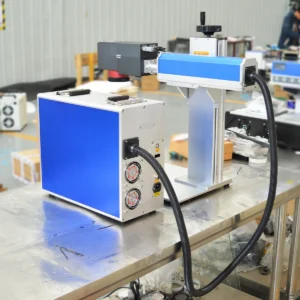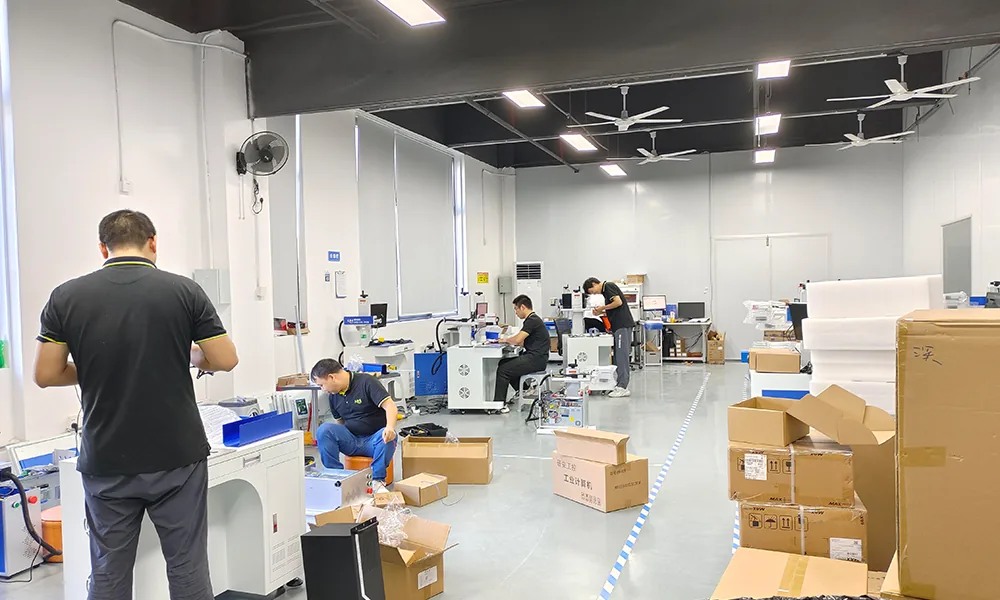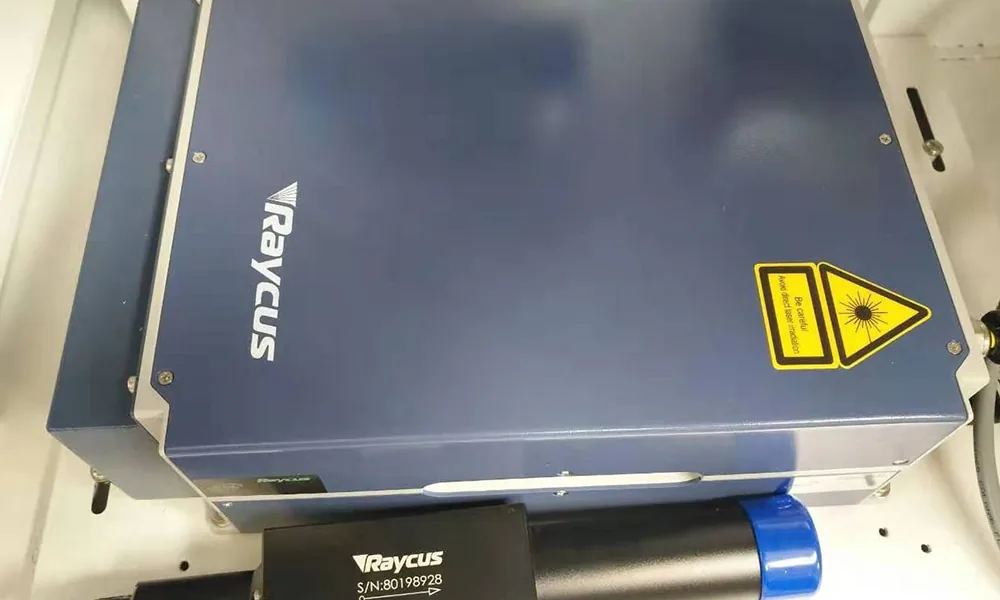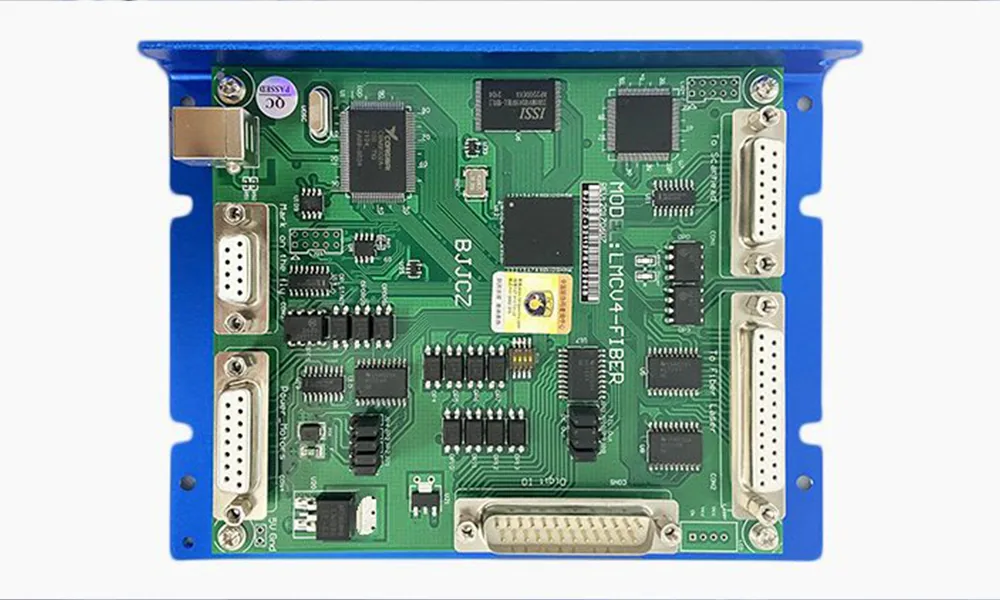
Laser marking machine price is determined by far more than the wattage printed on a specification sheet. The laser source, pulse capability, optics, marking field, workstation structure, part handling, vision, motion functions and production integration can all change the machine configuration and therefore the quoted cost.
That is why two machines both described as a “30W fiber laser marker” can have very different prices without necessarily being equivalent products. Current public listings also span an unusually wide range—from compact machines sold for a few thousand dollars to five-figure industrial workstations and six-figure integrated laser marking systems. Those figures only become useful when you know what each price actually includes.
For a buyer, the practical question is therefore not simply “How much does a laser marking machine cost?” It is “What configuration does this price represent, and am I comparing the same technical and commercial scope?”
How Much Does a Laser Marking Machine Cost?
There is no single useful market price for a laser marking machine because the term covers very different procurement scopes. A compact standalone fiber marker, a complete industrial workstation and an integrated production marking system may all appear under the same search term, but they are not interchangeable machines.
Public list prices checked in September 2026 illustrate the scale of that difference:
| Equipment scope | Representative public examples | What the number represents |
|---|---|---|
| Compact, directly sold fiber marker | Monport GM Pro configurations at roughly $1,400–$3,900 | Specific retail-style machine configurations |
| Professional standalone industrial marker | Boss FM-D at $7,997; Laguna OM series at roughly $8,999–$32,999 | Different power, source and workstation configurations |
| Turnkey industrial marking system | Laserax manually loaded systems from about $120,000; higher-throughput rotary systems from about $230,000 | A much broader production system that can include handling, controls, guarding and other integration |
The current public listings support those examples, but they do not constitute an industry-average price range.
A published product price normally refers to a particular configuration or starting configuration. A configured quotation may change when the laser source, power, lens, marking field, workstation or installed functions change. At the industrial-system level, the priced object can expand further to include part handling, controls, vision, extraction and production integration. Trotec and KEYENCE likewise identify configuration variables such as laser type, power, work area, accessories or integration as factors that change equipment price.
So the first step in using any laser marking machine price as a budget reference is simple: identify what is actually being priced before comparing the number.
What Machine Configuration Factors Change the Price?
A laser marking machine becomes more expensive when the application requires a different laser-generation capability, optical system, physical workstation or production function. Wattage is only one part of that configuration.
Laser Source, Power and Pulse Capability
Laser source technology is one of the fundamental price variables because different applications may require different process routes. Q-switched fiber, MOPA fiber, UV and CO₂ systems use different source and optical architectures, but there is no reliable universal rule that one source family is always the cheapest or most expensive once the complete machine is considered.
Power also affects price. In otherwise comparable configurations, a higher-power source will generally cost more. That does not mean a higher-power laser marking machine automatically marks every part faster or produces a better result. Material response, pulse behavior, mark depth, marking area, scan strategy and the complete production cycle determine whether the additional power provides useful production value. KEYENCE explicitly notes both the price effect of higher wattage and the risk of paying for excess power that the application does not need.
MOPA fiber adds another distinction. MOPA is still a fiber-laser route, not a separate wavelength family that should be treated as mutually exclusive with “fiber.” For example, JPT’s M7 MOPA series operates at 1064 nm and provides adjustable pulse-width and repetition-rate ranges; its value is the additional control available over pulse behavior.
That additional control can be useful when the real material and surface require a wider process window. If a conventional Q-switched fiber configuration already meets the required mark and production cycle, paying more for MOPA simply because it sounds more advanced is difficult to justify.
Optics and Marking Field
Marking field is another specification that can make apparently similar machines different. A larger marking field is not merely the same optical system enlarged through software. Field size is connected to the F-theta lens, focal length, beam diameter, spot conditions and working distance. Current F-theta lens data from Thorlabs illustrates how those optical variables change together as the scan field changes.
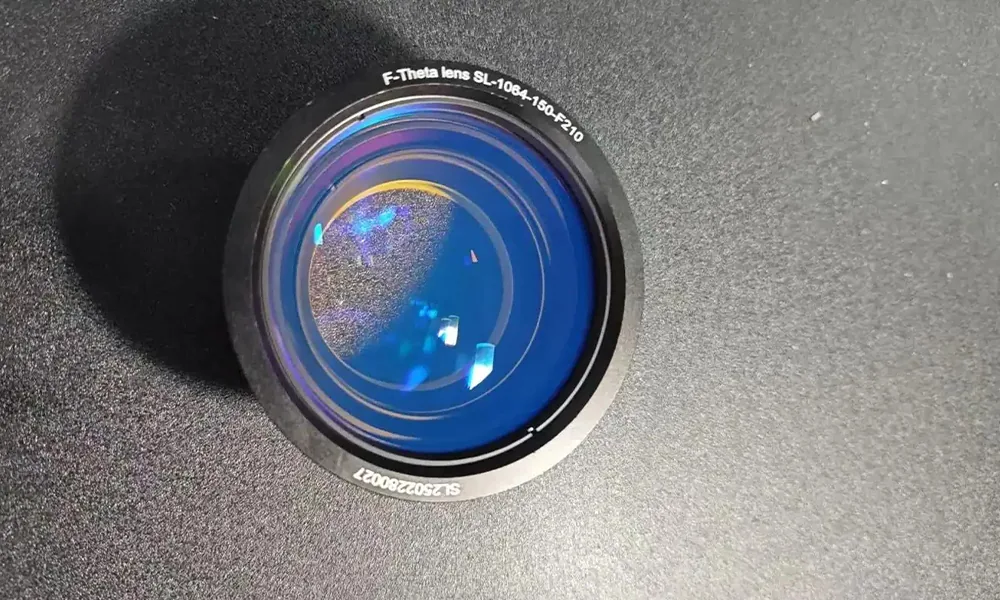
That means a 110 × 110 mm configuration and a much larger field configuration should not be compared only by laser wattage. They represent different optical systems.
A larger field can make sense when the actual workpiece or mark requires the additional area, or when multiple parts must fit within one optical setup. If every production mark is small, buying the maximum available field simply to obtain a larger specification may add cost without solving a production problem.
The field should therefore be selected around the actual part, required marking area and smallest important feature—not around the largest available specification.
Machine Structure and Workpiece Handling
The laser source is only part of the complete machine. Workstation structure, mechanical travel and part handling also affect what the buyer is purchasing.
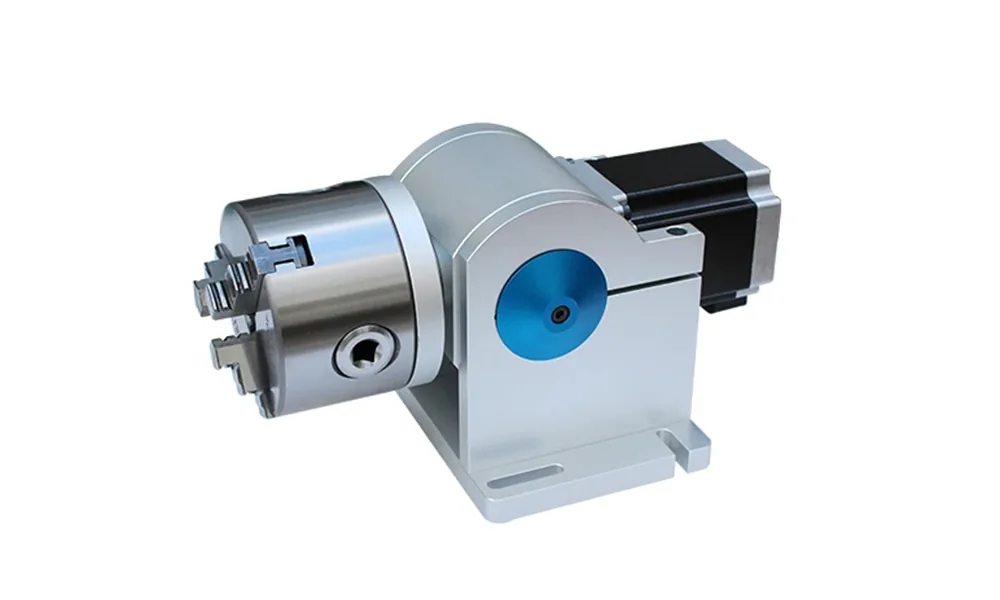
An open or desktop marker may require relatively little surrounding hardware. A larger workstation can add Z-axis travel, workholding, electrical hardware, guarding and additional mechanical structure. Cylindrical parts may require a rotary device or another validated positioning strategy. Repeated multi-position work may require XY motion. Application-specific parts may need dedicated fixtures.
An enclosure can also expand mechanical and safety-system scope, but the presence of an enclosure alone does not establish the final laser safety classification. That classification depends on the complete system design, access points, protective functions and operating conditions.
The relevant purchasing question is not whether the larger workstation looks more industrial. It is whether its mechanical structure is required to hold, access and repeatably position the real workpiece.
If the main problem is still which machine configuration is technically appropriate, rather than what that configuration should cost, the separate How to Choose a Laser Marking Machine guide covers that selection task in more depth.
Vision, 3D, Flying and Integration Functions
Production functions can create another large difference between quotations.
Vision may be used to locate a part whose X/Y position or orientation changes, or to support mark and code verification. Autofocus or Z compensation addresses a different problem: variation in surface height or focal position. A 3D marking system can extend this further for curved, stepped or multi-height surfaces.
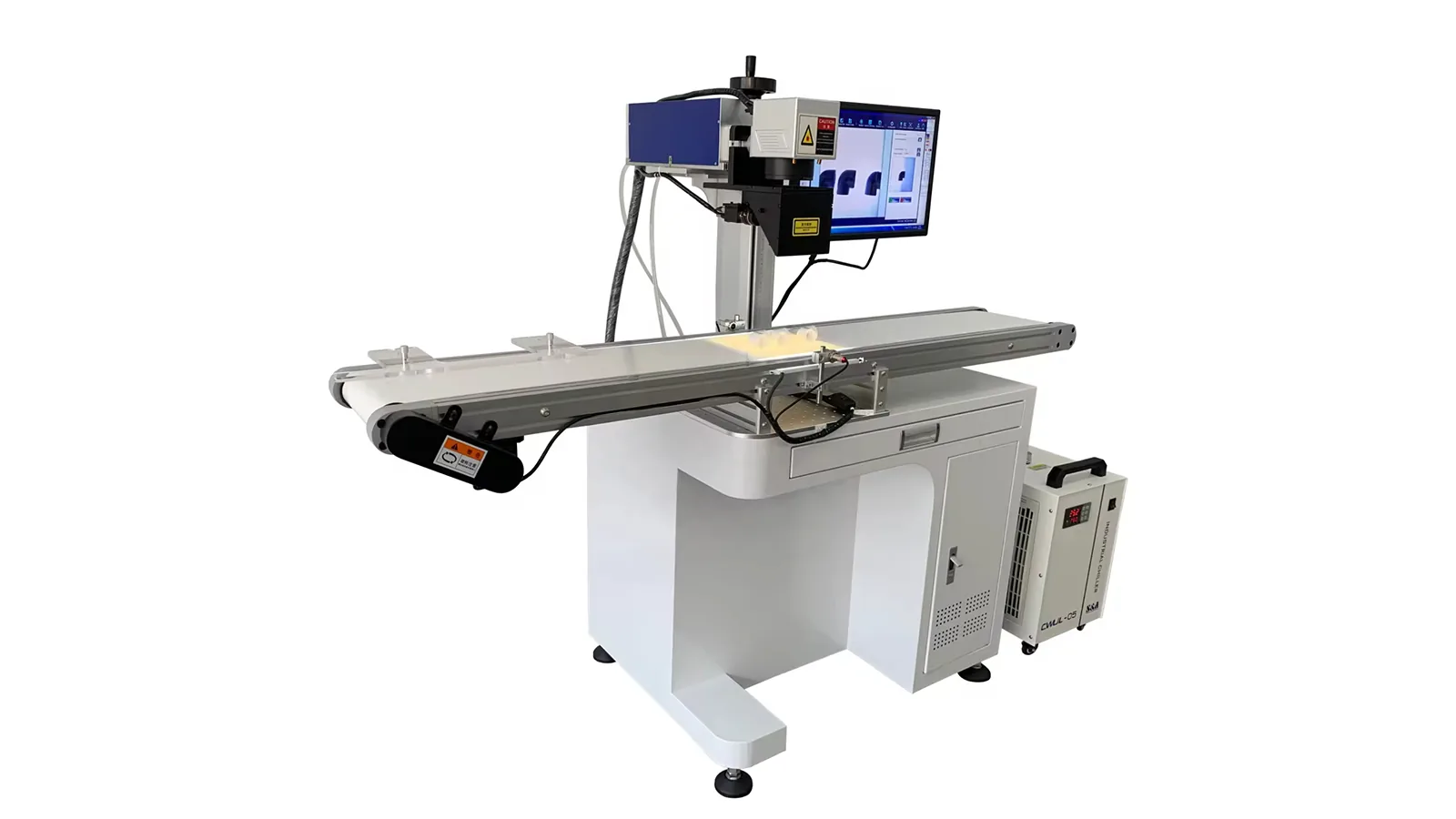
These functions should not be collapsed into a generic statement such as “the machine includes a camera.” The useful question is what the function actually does in the production process.
Flying or online marking changes the system again. A moving production process may require product detection, encoder input, trigger signals, machine-side I/O or communication with existing equipment. Videojet’s industrial fiber systems, for example, list product detection, line-encoder and I/O functions as part of production-line integration.
Scanner, controller and software-interface specifications can also differ between quotations. They are legitimate comparison fields, but a component brand name by itself does not establish complete-machine value or production performance.
What Does the Quoted Price Include—and What May Be Extra?
Even after the technical configuration is understood, two quotations can still have different totals because suppliers package the machine, accessories, service and delivery scope differently. A lower headline price is not necessarily a lower complete project cost if required items have simply been left outside the quoted number.
Machine, Options and Supporting Equipment
The product name does not tell you everything that is included. A quotation for a “fiber laser marking machine” may cover the configured machine and its installed source, optics and workstation, while other items are listed separately.
Depending on the project and supplier, rotary devices, fixtures, extraction equipment, additional lenses, positioning hardware, computers or software may be included, optional or separately priced. Current product listings provide a simple example: one Monport configuration lists the rotary axis separately from the base machine and also lists enclosure and extraction equipment as separate products. That is a vendor-specific example, not a universal pricing rule.
The same applies to supporting equipment. Extraction may be integrated into a larger workstation, supplied as an accessory or left for the buyer to provide.
Read the quotation line items and identify which parts of the required production setup are actually included.
Installation, Training and Support
A supplier may offer installation, training, technical support or warranty coverage without including all of those services in every published price.
This distinction matters because supplier capability and quotation inclusion are not the same thing. If training, onsite installation, software support, spare parts or a particular warranty arrangement matters to the purchase, confirm the exact commercial scope rather than assuming it is included—or assuming it is excluded.
The same principle applies to sample or application validation. A quotation based on a tested workpiece has a different technical basis from a generic quotation based only on a short material description, but the validation scope should still be identified explicitly.
Freight, Import Costs and Delivery Terms
International quotations also need a clear delivery basis. Incoterms® 2020 allocate delivery-related obligations, risks and costs between buyer and seller, and the named place or port is an important part of that allocation.
This makes comparisons such as an EXW price versus a delivered price potentially misleading unless the buyer first aligns the delivery scope.
Incoterms do not replace the complete sales contract. Warranty, technical acceptance, installation and payment terms still require separate clarification.
For a U.S. buyer, import duties and customs-related fees can also depend on the commodity, entry type and transportation method. U.S. Customs and Border Protection currently identifies duty plus possible fees such as the Merchandise Processing Fee and, for applicable ocean shipments, the Harbor Maintenance Fee. That does not support applying one universal import percentage to every laser marking machine.
A useful procurement distinction is therefore:
configured machine price ≠ delivered project cost ≠ lifetime cost of ownership.
This article focuses on the first two. Maintenance, downtime and long-term operating economics require a separate project-specific analysis.
How to Compare Two Laser Marking Machine Quotations
The most reliable way to compare two laser marking machine quotations is to normalize them in three stages: the requirement first, the machine second, and the commercial scope third. Only then does the price difference become meaningful.
“Equivalent” does not mean both suppliers must use the same laser-source brand, controller or complete bill of materials. It means both proposals are intended to meet the same marking and production requirement with a comparable delivered scope.
Start by confirming that both suppliers received the same application information. If one supplier is quoting for a cosmetic surface mark while the other is quoting for deep engraving, there is no useful price comparison yet.
Then compare the machine configuration and validation basis:
| Comparison dimension | What should be aligned | Why it matters |
|---|---|---|
| Application basis | Same material, surface and actual workpiece | Different materials or surfaces can require different process routes |
| Target mark | Same content, size and acceptance target | Appearance, depth and code readability are different tasks |
| Cycle basis | Same definition of production cycle | Scan time, mark time and complete machine cycle are not interchangeable |
| Laser source | Equivalent required process capability | Same wattage does not define the same pulse or source capability |
| Optics | Comparable usable field and optical result | Different field sizes can mean different lens and working conditions |
| Machine mechanics | Comparable work area, clearance and structure | The real part must physically fit and be accessible |
| Fixture and motion | Same handling requirement | Rotary, XY/Z motion and fixtures can materially change delivered scope |
| Vision / focus / 3D | Same required function | Position correction, focus compensation and 3D geometry are different tasks |
| Online integration | Same trigger, sensor, encoder, I/O or data requirement | “Flying capable” does not describe one standardized system |
| Validation | Same sample and acceptance basis | A tested configuration and an untested recommendation carry different uncertainty |
| Delivered scope | Same required accessories and supporting equipment | Excluded items can make a lower headline price misleading |
| Commercial basis | Comparable service and delivery terms | Freight, installation and Incoterm can shift buyer cost |
Throughput deserves special attention. If one quotation claims a three-second cycle, determine whether that means laser scan time, marking execution time or the complete cycle including loading, positioning and inspection. Two identical-looking speed figures can describe different process boundaries.
The same is true of vision and automation terminology. One supplier’s “vision system” may be intended for XY part location while another refers to code reading or inspection. Autofocus is not the same function as XY vision. Instead of comparing feature names, compare the production problem each function is expected to solve.
Validation should also remain visible in the comparison. A quotation based on an actual tested part, confirmed fixture and defined acceptance target is not in the same evidence state as a generic recommendation that a particular wattage “should work.” That does not automatically make the tested supplier better; it means the proposals have different levels of application confirmation.
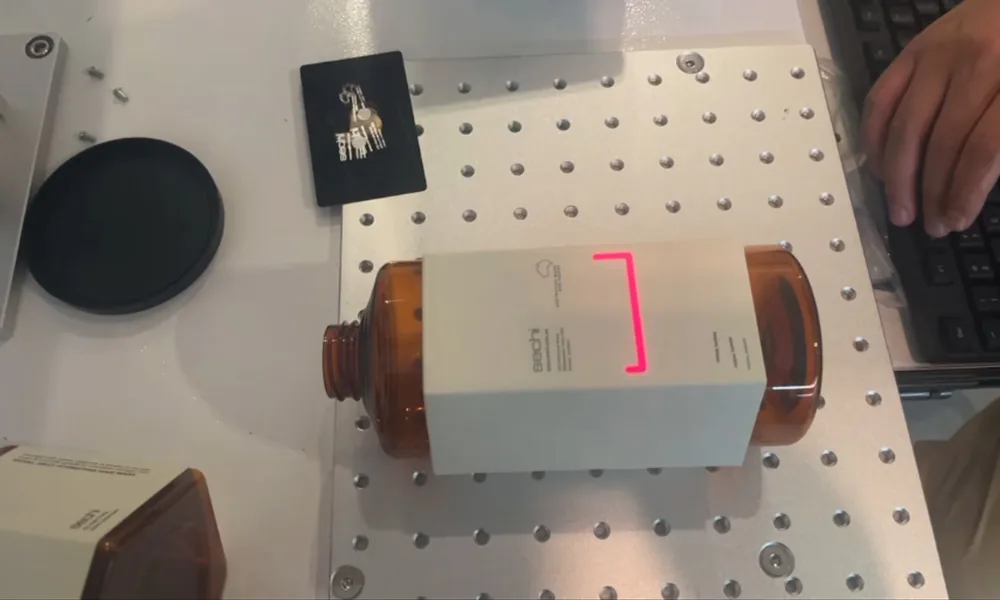
Once the requirement, machine scope, validation basis and commercial scope have been aligned, comparing total price becomes much more useful.
When Is a Higher-Priced Configuration Worth It?
A higher-priced configuration is worth considering when its additional capability solves a requirement that the lower-cost configuration cannot meet. More specification by itself is not evidence of better value.
A practical way to test an upgrade is to temporarily remove it from the proposed configuration and ask: What requirement would fail?
If a lower-power source cannot achieve the accepted process result within the available cycle, additional power may be justified. If the lower-power machine already passes both sample acceptance and production timing, more wattage has not yet demonstrated useful value.
The same logic applies to MOPA fiber. Its broader pulse-control capability can be valuable when the real material and surface require that additional process flexibility. If a conventional Q-switched fiber configuration already produces the accepted result at the required production rate, the MOPA label alone does not justify a premium.
A larger field should solve a real work-area or layout requirement. A rotary device should solve a controlled-rotation, access or cycle problem. Vision should solve position/orientation variation or a verification requirement. Autofocus or 3D capability should address real Z-height, focus or curved-surface variation. Flying marking should solve a moving-production requirement that needs line timing, detection, encoder compensation or machine-side communication.
This creates a useful purchasing test:
- What specific requirement does the added configuration solve?
- What happens if that option is removed?
- Can the lower-cost configuration still pass the same sample acceptance and production target?
- Does the upgrade improve the complete production process, or only the headline specification?
- Has the claimed benefit been verified on the actual workpiece or relevant production condition?
If the only explanation for an upgrade is that it is “more advanced,” “higher specification” or “better for the future,” the purchasing case is still incomplete.
Technical justification and financial ROI should also remain separate. An option can be technically necessary without having a universal payback period, and no responsible ROI calculation can be made without the incremental equipment cost, production volume, labor, reject cost, utilization, downtime and existing process costs.
The final configuration should therefore be validated against the actual application rather than selected from a hierarchy of increasingly expensive features.
What Information Do You Need for an Accurate Quote?
The most useful laser marking machine quotation starts with the application, not with a guessed wattage. If the required laser source, power or machine style has already been technically validated, include it as a fixed requirement. If it has not, describe the job clearly and allow the configuration to follow from the application.
Zhurui Laser’s current RFQ route follows that application-first approach: material and surface, workpiece, mark and target result are treated as the starting information, while source and power can remain preferences when the buyer has not already fixed them.
A practical RFQ should give the supplier enough information to understand the workpiece, required mark, production conditions and commercial context:
| Input | What to provide | Why it affects the quotation |
|---|---|---|
| Material and surface | Material/grade, coating, finish, color where relevant | Helps determine the viable process and source direction |
| Workpiece | Dimensions, geometry, mark location, photos or drawing | Affects field, focus, access, fixture and machine structure |
| Mark content | Artwork, text, serial number or code; physical size and smallest critical feature | Influences optics, data handling and marking requirements |
| Acceptance target | Required contrast, appearance, depth, readability or durability where relevant | Defines what the machine must actually achieve |
| Production requirement | Parts/hour or complete cycle target and loading method | Can affect power, handling and machine architecture |
| Positioning and handling | Fixture, rotation, position/orientation variation, height variation | Helps determine rotary, motion, vision or 3D requirements |
| Integration | Static/moving product, line speed, trigger, encoder, I/O or variable data when applicable | Defines online/flying and machine-interface scope |
| Site requirements | Voltage, available space, extraction or known enclosure/safety constraints | Affects the complete workstation configuration |
| Commercial context | Purchase quantity, destination and requested timing | Helps define the relevant quotation and delivery scope |
| Supporting evidence | Photos, drawings, artwork and representative samples when needed | Reduces uncertainty and supports application validation |
Material information should describe the surface the laser will actually see. “Metal” is much less useful than “polished 304 stainless steel,” just as “aluminum” omits information that may matter if the part is anodized, coated or painted.
Geometry matters for the same reason. A photograph or drawing can reveal a recessed marking area, shoulder, flange, curved surface or limited access that is impossible to understand from a material name alone.
The mark itself should also be defined physically. A supplier needs more than “QR code” or “logo.” Mark dimensions, smallest important feature and location on the part can affect optics and positioning. The acceptance target should explain what success means: visual appearance, engraving depth, machine readability, durability or another requirement relevant to the project.
Production information then connects the sample result to the actual machine. “High speed” is not a useful cycle specification. Parts per hour, available complete cycle time, loading method and whether the product is stationary or moving give the supplier a much clearer basis for reviewing power, handling and integration.
Purchase quantity is a different input from production rate. The first describes the procurement requirement; the second describes what the machine has to accomplish in operation.
Not every inquiry requires a physical sample. Photos, drawings and a clear application brief may be enough to establish a preliminary machine direction. A representative sample becomes more important when contrast, surface appearance, depth, readability or another result depends strongly on the real material and finish.
Even then, an approved material sample does not by itself define the complete production machine. Fixture, loading, cycle time, data handling, positioning and other production requirements still have to be matched to the final configuration.
The most accurate quotation therefore does not begin with “What is your 30W price?” It begins with “Here is the part, here is the mark we need, and here is how the process has to run.” Once those conditions are clear, the laser marking machine price represents a much more meaningful configuration—and competing quotations become much easier to compare.
If those requirements are already defined, the next step is to review the available laser marking machine configurations and then submit the actual part, mark and production information for a configured quotation.