
PET Laser Marking
Evaluate PET bottle, film, sheet and transparent-package marking before choosing UV, CO2 or another laser route. PET behavior depends on grade, color, crystallinity, recycled content, coating, wall thickness and whether the project needs a readable code, a frosted surface mark, coating removal or a low-heat cosmetic result.
Request a PET Sample Test Ask About UV / CO2 Options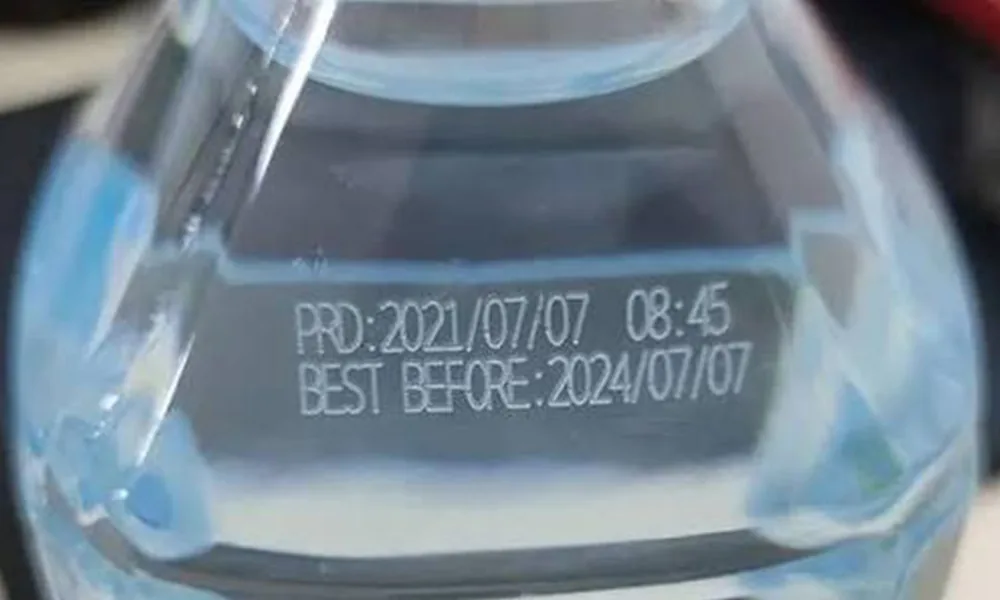
PET Can Be Laser Marked, but the Right Route Depends on the Target Effect
PET is widely used in transparent packaging, bottles, films and molded parts. The practical question is not only whether a laser can leave a mark, but whether the result remains readable and acceptable without unwanted haze, melting, shrinkage, perforation, residue or cosmetic damage.
Clear PET needs visual validation
Transparent PET may show a frosted, whitened, engraved or coated-layer result rather than a dark mark. Lighting, background, bottle fill condition and scanner setup can change perceived readability.
UV and CO2 solve different PET problems
UV is commonly screened where fine detail and lower thermal impact matter. CO2 can be practical for surface interaction, frosting, film coding or coating removal, but heat and edge quality must be controlled.
The final part matters more than a generic PET coupon
Bottle curvature, wall thickness, film construction, coatings and recycled content can change the result enough to affect the final laser route and machine configuration.
Which PET Material Are You Actually Marking?
PET is not one marking behavior. Clear bottle-grade PET, PETG sheet, APET packaging, BOPET film, colored PET and recycled PET streams can respond differently under UV, CO2, fiber or other routes.
Clear bottle-grade PET
Common in beverage and cosmetic containers. Validate haze, whitening, deformation, code visibility through liquid or background color and whether the mark changes bottle appearance.
PETG and APET sheet
Often used in clear panels, covers, displays and packaging sheet. Check edge quality, frosting, yellowing, stress whitening and any post-forming or bending requirement.
BOPET and films
Thin films can be heat-sensitive. The practical route may be coating removal or surface marking, with perforation, curl, shrinkage and web handling as key limits.
Colored or recycled PET
Pigments, carbon black, recycled content, fillers and supplier changes can shift absorption and contrast. Treat color and batch as separate test conditions.
Transparent PET needs final-part testing
A flat clear PET coupon does not fully represent a curved bottle, thin label film, molded gate area, printed package, metallized film or coated sheet. Use final parts whenever the target is cosmetic appearance, barcode readability or production approval.
Where PET Is Used and Why It Needs Laser Marking
PET marking requirements usually come from traceability, production coding, product identification or appearance control. The product form matters because a bottle, a thin film and a molded PET part create different marking and handling constraints.
PET bottle coding is a direct material-and-application example
The bottle example shows why PET marking has to be judged on the final transparent part rather than on a generic plastic coupon. Code visibility is affected by the bottle wall, curvature, background and the exact mark effect.
Use this type of final-part sample when the project involves production dates, batch information or other variable coding on transparent PET packaging.
PET Bottles and Containers
Beverage, cosmetic and household-product containers often need date codes, lot numbers, traceability data or branding. Curvature, wall thickness, fill condition and visual contrast become part of the marking decision.
Films, Labels and Flexible Packaging
BOPET films, printed layers and label constructions may need variable coding, coating removal or product identification. Heat accumulation, web handling and layer selectivity are key limits.
Transparent Sheets and Covers
PETG or APET sheets can be used in displays, covers and formed packaging. Marking may need to remain legible without excessive haze, yellowing or visible distortion.
Molded PET Parts
Industrial and consumer parts may need permanent serial numbers, logos, symbols or machine-readable codes. Surface texture, color, filler and molded geometry can change the result.
Electronics and Insulation Films
Thin PET films and covers may require precise identification with limited heat input. Positioning, code size and thermal distortion should be validated together.
Review electronics applicationsPackaging Production Lines
When PET coding is part of an automated packaging process, line speed, trigger method, encoder use, reject logic and inspection can influence the final system architecture.
Review packaging coding applicationsWhat Is Usually Marked on PET?
The content being marked changes the acceptance criteria. A visible logo, a small serial number and a machine-readable Data Matrix are different marking problems even when they use the same PET part.
Production Coding
Date codes, batch numbers, lot numbers and variable production data are common on bottles, films and packaging.
Traceability
Serial numbers, QR codes, Data Matrix codes and barcodes may require controlled contrast, module size and scanner validation.
Product Identification
Logos, symbols, model information and simple text may prioritize cosmetic quality and repeatable appearance over maximum marking depth.
Visible is not the same as machine-readable
A code can look acceptable to the eye and still fail scanning because of insufficient contrast, distorted cells, glare, transparent background effects or inconsistent edge definition.
Define the PET Mark Effect Before Comparing Machines
PET projects may need a light frosted code on transparent material, dark or light contrast on pigmented PET, coating or ink removal, surface texture, or fine low-heat marking. The target should include both the visual effect and the acceptance criteria.
- Direct marking on clear PET may look different under backlight, filled bottles or dark backgrounds.
- Coated PET should be tested as a complete surface stack, not as bare PET.
- Fine Data Matrix or QR codes need scanner validation, not only visual inspection.
- Film and thin-wall packaging must be checked for shrinkage, curling, perforation and edge residue.
- Define whether deformation, haze, residue, durability or appearance variation is acceptable before approving a process window.
| Target outcome | Where it may fit | Main PET risk | What to validate |
|---|---|---|---|
| Frosted or whitened mark | Clear PET bottles, PETG sheets, transparent packages | Haze spread, cosmetic rejection, weak contrast on bright backgrounds | Readability, appearance, background condition and durability |
| Fine code or serial number | Traceability marks on bottles, films, labels or molded parts | Rounded cells, low contrast, scanner failure or thermal distortion | Module size, scan grade, code location and production lighting |
| Coating, ink or label-layer removal | Printed PET films, coated labels, metallized or laminated packages | Uneven removal, substrate damage, smoke or edge discoloration | Layer selectivity, exposed color, residue and fume extraction |
| Surface engraving or texture | Non-cosmetic PET parts or functional identification | Rough edges, cracking, debris, dimensional change | Depth, edge quality, cleaning need and mechanical acceptance |
| Dark mark on colored PET | Black, filled or additive-assisted PET components | Batch variation, weak absorption or heat damage | Color-specific contrast, repeatability and supplier changes |
How Part Shape, Wall Thickness and Size Change PET Marking
The same PET formulation can require a different setup when the part changes from a flat sheet to a curved bottle or thin moving film. Geometry affects focus, heat accumulation, positioning, marking field and fixture design.
Curved Bottles
Check bottle diameter, marking width, focus variation, mark location and whether the part can be held consistently. Large wrap-around areas may require a different motion or focusing strategy.
Thin-Wall PET
Thin walls are more sensitive to deformation, local shrinkage, perforation and visible haze. A process that works on a thick test coupon may be too aggressive on the final bottle.
PET Film and Webs
Film marking adds web tension, curl, shrinkage, layer damage, line speed and trigger timing. These conditions should be tested under production-like handling.
Large or Height-Varying Parts
Large marking areas, uneven surfaces and changing part height can affect field choice, positioning and focus control. Fixture and motion requirements should be defined before machine selection.
Which Laser Route Should You Test First on PET?
Start from the material condition and the required mark, not from laser wattage. UV and CO2 are the main PET screening routes in many projects, while fiber/MOPA is conditional and should not be treated as a default for clear PET.
Zhuorui Laser can review PET samples and compare practical routes such as UV laser marking machines, CO2 laser marking machines, and selected fiber or MOPA fiber systems where pigmentation or additives support the response.
| PET condition / target | First route to test | What the test must prove |
|---|---|---|
| Clear PET + fine code + low heat | UV first | Readable contrast, controlled haze, low deformation and stable fine detail. |
| Transparent bottle + frosted visible mark | Compare UV and CO2 | Appearance, readability, haze spread and wall distortion on the final bottle. |
| Thin PET film or flexible packaging | Compare UV and CO2 | Shrinkage, perforation, edge quality, residue and production speed. |
| Coating, ink or label-layer removal | Test by complete layer stack | Selective removal without unacceptable damage to PET underneath. |
| Colored, black or additive-assisted PET | UV first; fiber/MOPA conditionally | Color-specific contrast, heat effect and repeatability across batches. |
| Green laser | Only as a validated alternative | Use only when available equipment and sample response justify the route. |
UV Laser Route
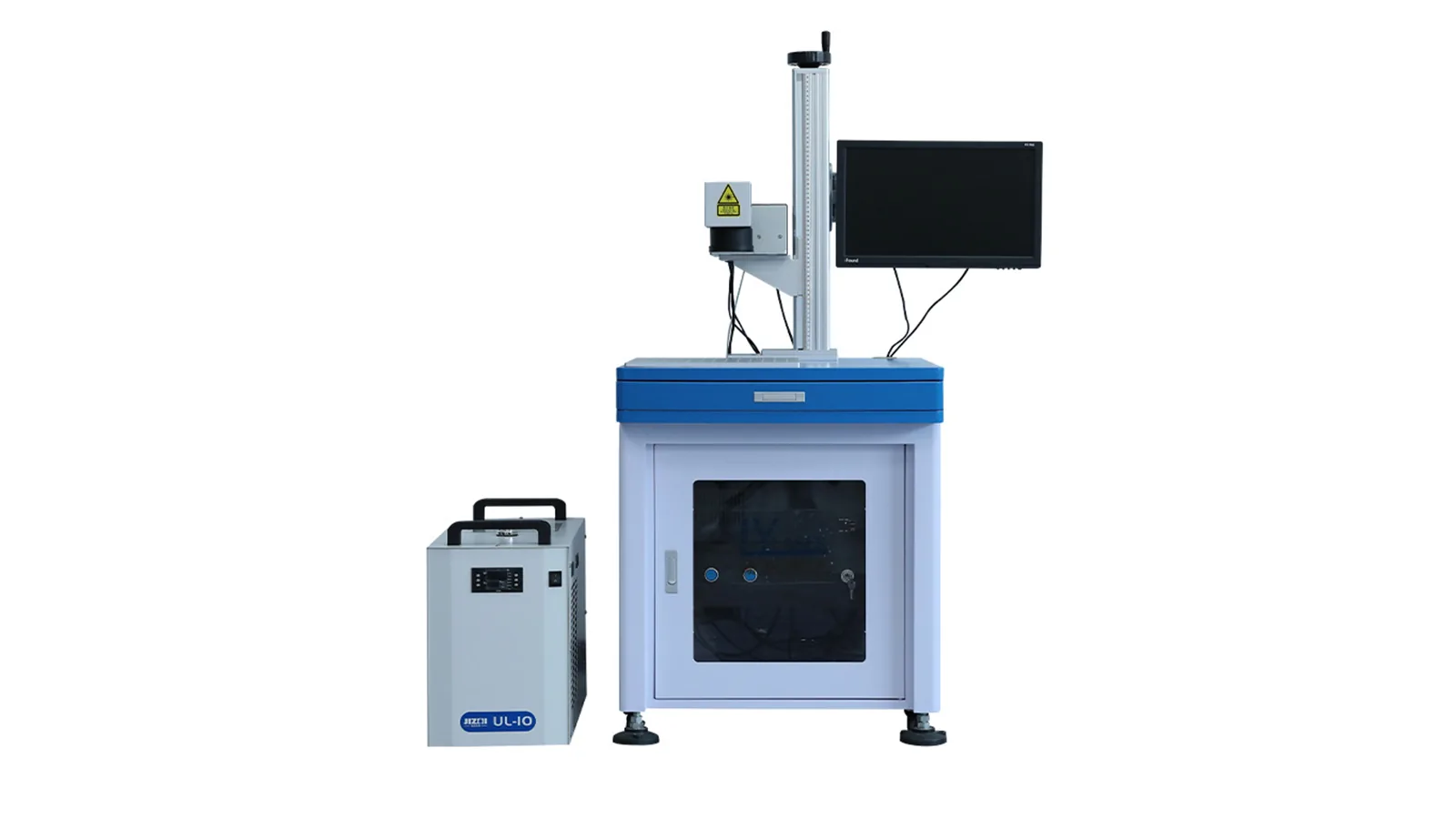
Useful to evaluate when PET needs fine detail, controlled heat input or marking on transparent and heat-sensitive parts. The sample result still determines whether the route is acceptable for the final PET grade and cycle target.
CO2 Laser Route
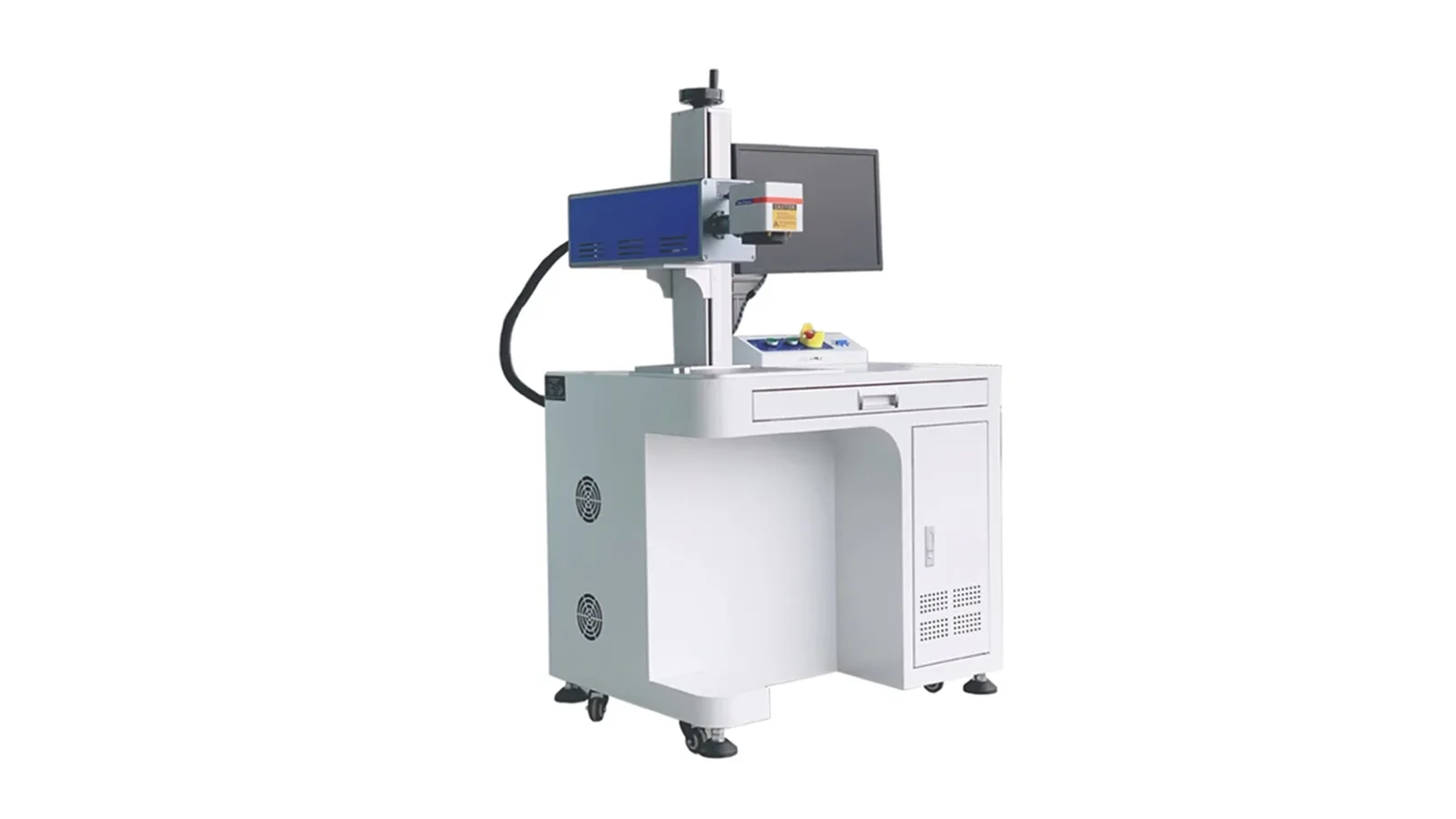
Useful to compare for frosting, surface interaction, coating removal and selected packaging or film tasks. Heat effect, haze, smoke and perforation remain part of the PET validation.
A better result may require changing the route, not adding more power
If a usable mark only appears after heat damage, severe haze, perforation or unstable contrast, stop treating power as the main variable. Reconsider wavelength, pulse behavior, surface construction, focus and process strategy.
If PET Contrast Is Still Too Weak
If acceptable contrast cannot be reached without excessive heat, haze or deformation, compare another wavelength or process route rather than only increasing power. For projects that require very high and repeatable contrast, the part designer or material supplier may also need to evaluate a laser-markable PET formulation, additive, coating or dedicated marking layer. Any material change for food-contact, medical, regulated or validated packaging must be reviewed against the applicable material and compliance requirements before approval.
Common PET Laser Marking Problems and What They Usually Mean
PET failures are often easier to diagnose when the visible symptom is separated from the likely process cause. Safety, fumes and extraction remain part of the evaluation, but they are not the only reasons a PET process can fail.
| Failure mode | Likely direction to investigate | What to verify |
|---|---|---|
| Mark is too faint | Wavelength fit, PET formulation, pigment/additive response, background and coating structure | Contrast on the final part under production lighting. |
| Too much haze or whitening outside the mark | Excessive interaction area, focus, pulse behavior or unsuitable process window | Cosmetic limit and edge containment. |
| Melting or visible deformation | Excessive thermal load or poor route fit | Part geometry, wall thickness and whether the route should change. |
| Film curls, shrinks or perforates | Heat accumulation, energy density or line-handling condition | Final film thickness, tension, line speed and production-like test setup. |
| Code looks acceptable but does not scan | Insufficient contrast, cell distortion, glare or inconsistent module edges | Actual scanner, lighting, code size and inspection criteria. |
| Coating removal is uneven | Layer absorption, coating-thickness variation or unstable focus | Surface stack and whether PET underneath remains acceptable. |
| Results change between batches | Color, recycled content, additives, filler or supplier variation | Representative samples from production lots. |
| Smoke, odor or residue is excessive | Surface layers, mark depth, process route or inadequate extraction | SDS, coating/ink information, filtration and post-mark cleanliness. |
| Curved bottle marks vary across the field | Focus variation, part positioning or fixture inconsistency | Bottle diameter, mark width, height tolerance and holding method. |
Safety checks still apply
Review PET grade, coatings, inks, adhesives and laminates before repeated testing. Confirm extraction and filtration, enclosure and interlocks, emergency stop, beam containment and wavelength-appropriate eye protection for the selected source.
Unknown laminates, metallized films, recycled PET and printed packages should not be treated as clean bare PET. Request material information, SDS and coating or ink details where available, and verify residue, odor and packaging acceptance after trials.
PET Sample-Test Checklist Before Machine Selection
A useful PET test starts with final material, final surface and final acceptance criteria. Send the actual bottle, film, sheet or molded part when transparency, thickness, coating or production speed matters.
| Sample input | What to provide | Why it matters |
|---|---|---|
| PET type | Clear PET, PETG, APET, BOPET film, colored PET, recycled PET or blended structure | Different grades and structures change heat response, haze, contrast and coating behavior. |
| Surface stack | Bare PET, coating, ink, adhesive, metallized layer, laminate or label construction | Laser may interact with the surface layer more than the PET substrate. |
| Geometry and thickness | Flat sheet, curved bottle, thin film, label web, molded part, wall thickness and fixture constraint | Controls focus, distortion risk, web handling, rotary need and line integration direction. |
| Mark content | Logo, date code, serial number, QR code, Data Matrix, text size or artwork | Defines spot size, line width, readable contrast and inspection method. |
| Production target | Manual station, stop-station conveyor process, on-the-fly marking only when speed-synchronized, encoder-triggered coding, target cycle time or parts per hour, reject criteria and inspection | Connects material feasibility to a realistic UV, CO2 or integrated machine setup. |
| Acceptance and safety | Cosmetic limit, scan-read target, durability, food/contact packaging boundary, SDS and extraction limits | Prevents approving a visible mark that fails packaging or safety requirements. |
Do not use substitute samples for final approval
If the production part is transparent, curved, coated, filled, printed, laminated, recycled or very thin, the submitted sample should match that condition. A clean PET sheet can give the wrong recommendation for a finished package or film line.
When Should You Stop and Re-Test?
Stop the current parameter path when better contrast requires unacceptable deformation, perforation, haze, residue or loss of code quality, or when the process cannot reach the required cycle time without quality loss. Re-test the wavelength, process window, surface stack, fixture or production method instead of continuing to increase energy. Re-test again after meaningful changes in PET supplier, resin grade, recycled content, color, coating, wall thickness, bottle geometry or laminate construction, because these changes can shift contrast and thermal response.
From PET Sample Result to Final Machine Configuration
A successful sample proves the marking route, but the final machine still has to match the part size, code area, handling method, inspection requirement and production target.
What to send for final configuration review
Provide the final PET part, PET grade or construction, coating or ink details, wall thickness, part dimensions, mark content and size, desired result, target cycle time or parts per hour, positioning tolerance, inspection method, extraction limits and production-line information.
Use Representative Images as Guidance, Then Approve the Actual PET Part
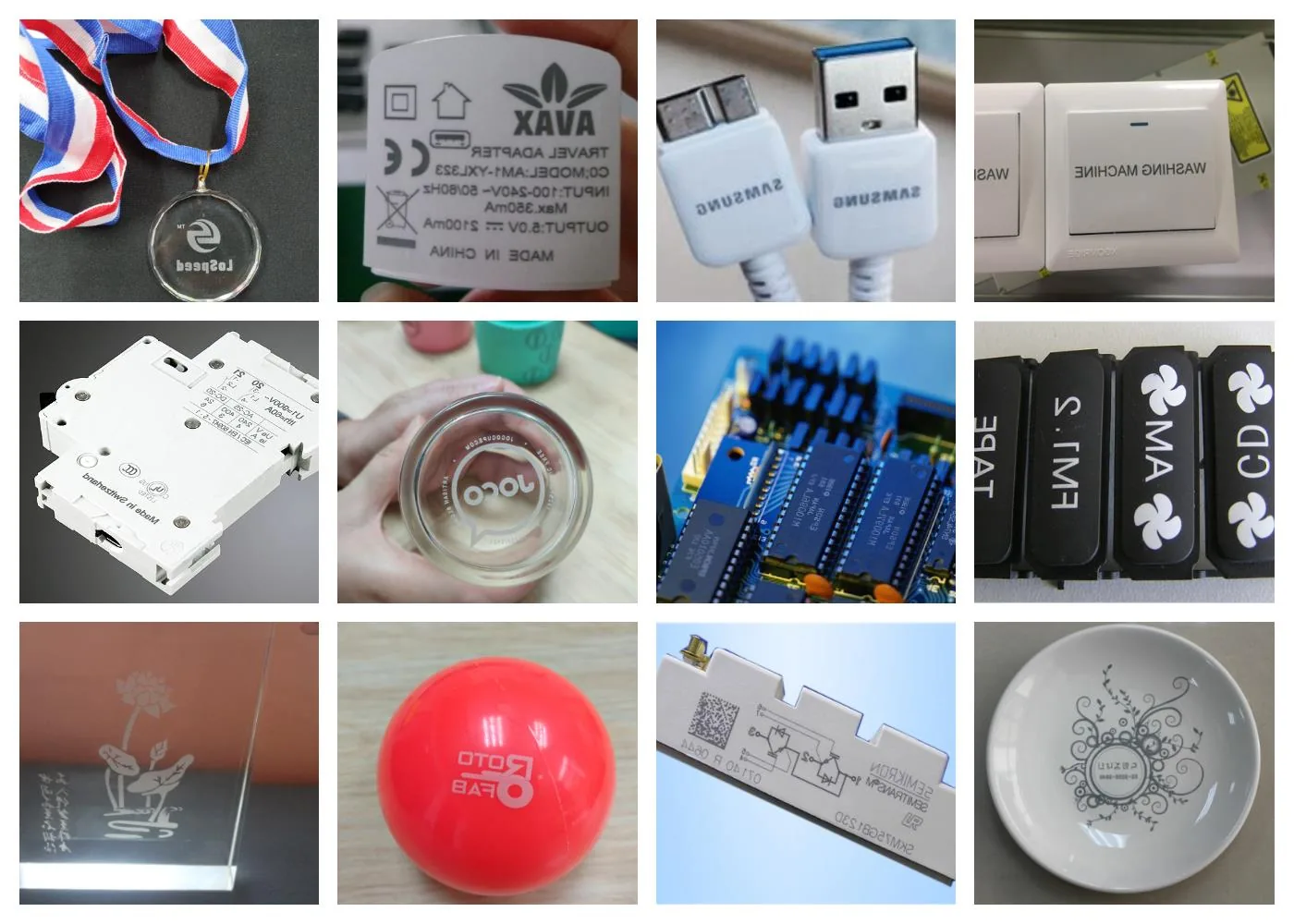
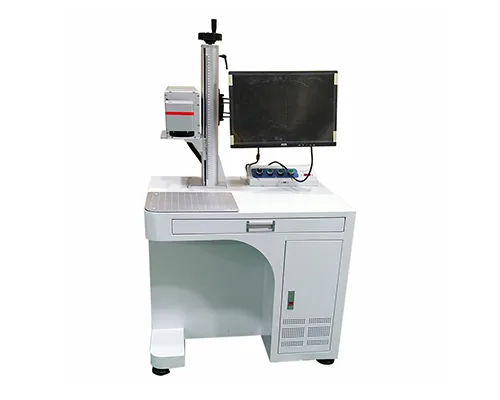
Current plastic and machine images can support route discussion, but they do not by themselves prove the PET grade, surface stack, laser parameters or final acceptance result. Final approval should rely on the actual PET material and production condition.
PET Laser Marking FAQs
Can PET be laser marked?
Yes. PET can be laser marked in many applications, but the result depends on PET grade, transparency, color, thickness, coating, mark effect and laser route. Final samples should be tested before machine selection.
Is UV laser better than CO2 for PET?
They solve different PET problems. UV is often a useful first test for fine, low-heat marking and transparent PET. CO2 may fit frosting, surface interaction, coating removal or packaging-line coding. Final selection should come from sample comparison.
Can clear PET bottles be marked without labels?
Sometimes. The result may be frosted, light or surface-textured rather than dark. Bottle curvature, wall thickness, fill condition, background, scanner setup and cosmetic limits should be validated on final bottles.
Can a fiber laser mark PET?
Fiber or MOPA fiber can be evaluated on selected colored, black, filled or additive-assisted PET. It should not be treated as a default route for clear PET without sample testing.
Why does the same PET mark differently between batches?
Color, recycled content, fillers, additives, coating thickness and supplier variation can change absorption and contrast. If repeatability matters, include representative production lots in validation.
What samples should I send for PET testing?
Send the final PET bottle, film, sheet, label or molded part, plus PET type, surface coating, color, thickness, artwork or code, target cycle time or parts per hour, scan-read target, cosmetic limit and safety information.
Send the Final PET Part, Surface Stack and Production Requirement
Include PET type, transparency or color, coating/ink/label details, wall thickness, part geometry, mark content and size, target contrast, scan-read requirement, target cycle time or parts per hour, positioning tolerance, cosmetic limit, extraction or safety notes and any packaging approval boundary. Zhuorui Laser can then review the sample result and narrow the practical laser route, marking field, fixture, handling and machine configuration.