Galvanized Steel Marking
Galvanized steel can be laser marked, but the result is controlled by the zinc layer: coating thickness, passivation, oil, paint, white rust, required contrast, corrosion exposure and whether the coating can be heated or removed under controlled extraction and safety review.
Galvanized steel marking starts with the zinc layer
A galvanized steel part is not just a steel part. The laser first interacts with zinc, passivation, oil, oxide, paint or white-rust residue before the mark reaches the steel substrate.
The first process decision is whether the protective zinc layer should remain substantially intact or whether controlled local zinc removal is acceptable. If corrosion protection must be preserved as much as practical, the first test should look for usable surface contrast with minimal coating disturbance. If local zinc removal is acceptable, a stronger or more tactile mark may be possible, but the exposed area and post-mark corrosion requirement become part of the acceptance criteria.
For many zinc-coated steel marking tasks, a fiber laser marking machine is a practical starting point. The required result may be surface contrast, controlled zinc removal, marking into the steel substrate, a readable machine code, or removal of an outer coating before the part is accepted for production.
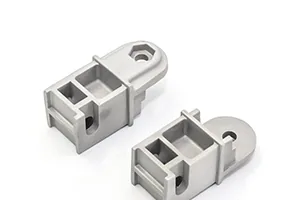
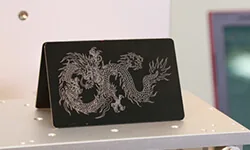
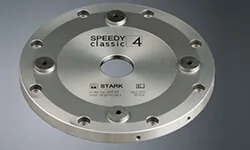
Which galvanized coating and surface condition are you marking?
Two parts that are both called galvanized steel can respond differently if the zinc layer, passivation, oil, paint, weathering or coating thickness changes. Define the coating system before choosing power or marking parameters.
Hot-Dip Galvanized
Hot-dip galvanized steel often has a more visible zinc layer, spangle and greater surface texture. Local coating variation can change mark darkness, edge definition and how quickly the process reaches the steel below.
Electrogalvanized
Electrogalvanized surfaces are often smoother and use a thinner zinc layer than hot-dip material. Fine text and codes may be easier to control, but passivation, oil and actual coating thickness still need to be confirmed.
Coating Thickness / Weight
The amount of zinc is a primary process variable. A parameter set that only changes the appearance of one coating may remove zinc on a thinner coating or fail to create enough contrast on a heavier coating.
Top Surface Treatment
Passivation, chromate treatment, anti-fingerprint layers, oil, paint, powder coating and other surface treatments can change absorption, residue, smoke behavior and the final appearance of the mark.
Weathered / White-Rust Surface
Storage stain, zinc oxidation, moisture exposure and roughness can reduce repeatability. Cleaning or controlled surface preparation may be needed before a production parameter window is approved.
Scratched or Partly Exposed Steel
Scratches, cut edges or already exposed steel create a mixed surface. The same mark can therefore cross zinc, oxide and bare substrate, producing different contrast and corrosion behavior.
Unknown Galvanizing Route
If the supplier cannot confirm the coating route or thickness, treat the final part itself as the process reference. Sample testing is more reliable than selecting parameters from the material name alone.
If the part is bare carbon or alloy steel, use the steel laser marking page. If it is stainless steel, use the stainless steel laser marking route.
Where is galvanized steel commonly marked?
Galvanized steel is used where steel strength and zinc-based corrosion protection are both useful. Marking requirements usually come from identification, traceability, assembly, installation or service needs rather than from the material alone.
Fasteners & Hardware
Bolts, brackets, clamps, mounting plates and construction hardware may need part numbers, batch identification, supplier marks or assembly references while retaining the required corrosion performance.
Electrical Enclosures & Panels
Galvanized boxes, cabinets, mounting plates and junction enclosures may use permanent identifiers for component location, panel reference, model information or production traceability.
HVAC & Sheet-Metal Parts
Duct components, formed sheet parts, brackets and housings often need fabrication IDs, installation references, batch information or readable codes that survive normal handling.
Automotive & Fabricated Parts
Stamped brackets, formed components and fabricated assemblies may require serial, part or Data Matrix identification for production tracking and downstream inspection.
Pipes, Tubes & Profiles
Galvanized tube and structural profiles may be marked with specification, batch, cut-length, serial or installation information. Curved geometry can add positioning and focus requirements.
Industrial Frames & Supports
Frames, supports and fabricated galvanized structures may need orientation marks, assembly references, inspection IDs or durable asset information during manufacture and service.
What is usually marked on galvanized steel?
The content determines how much contrast, edge definition, repeatability and verification the process needs. A simple visible part number and a machine-readable code do not have the same acceptance criteria.
Product Identification
Part number, model, specification, size, manufacturer identification or other fixed product information.
Production Traceability
Serial number, batch or lot number, date code, shift, line ID or other variable production data.
Machine-Readable Codes
QR codes, Data Matrix or barcodes. These require stable cell or bar definition, sufficient contrast and validation with the actual reader or verifier used in production.
Assembly & Branding Marks
Logos, supplier marks, orientation marks, scale marks, installation references or assembly-position identifiers.
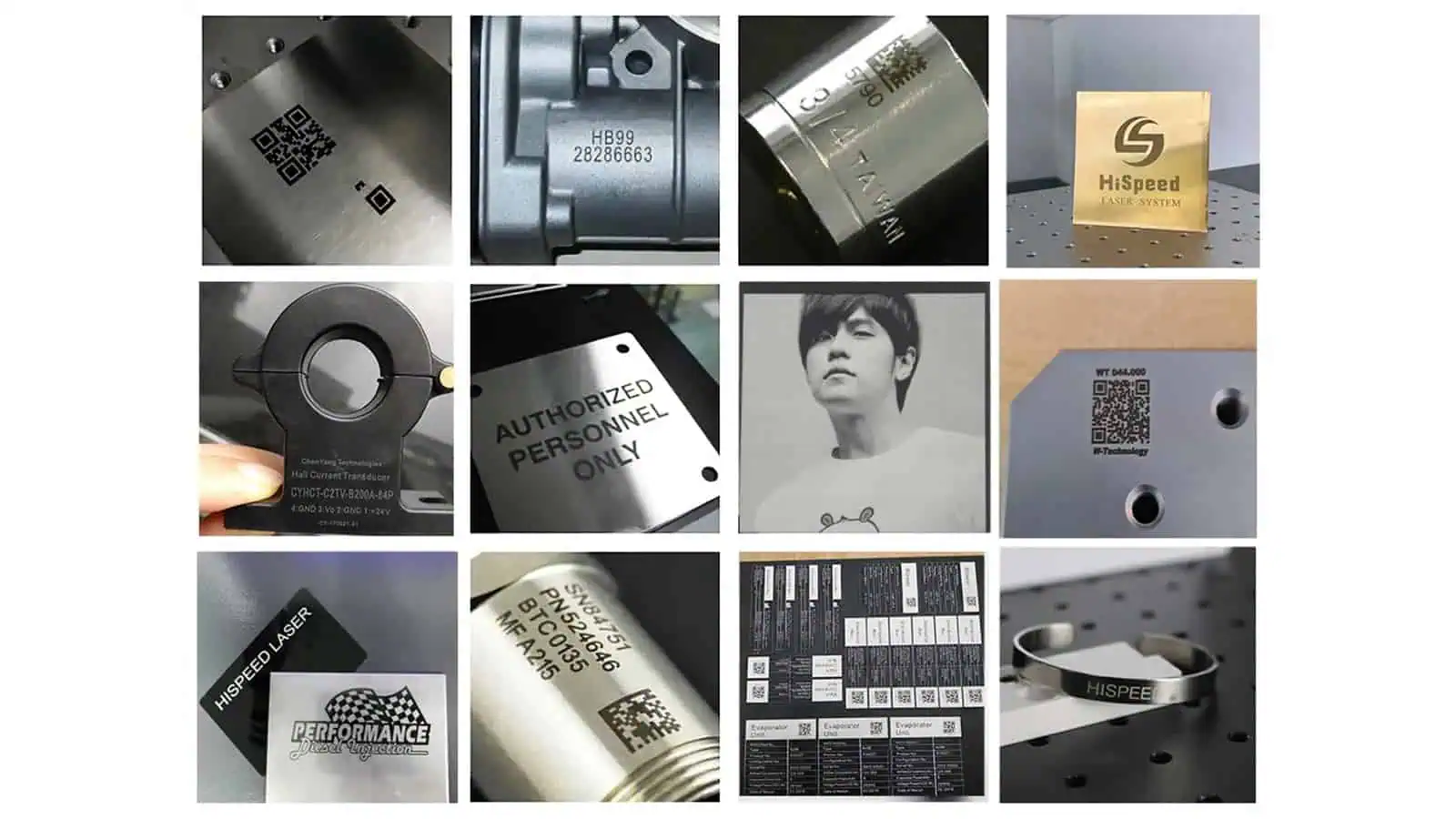
Typical galvanized steel marking outcomes
The process should be chosen around the accepted result: visible contrast while retaining the zinc layer as much as practical, controlled zinc removal, marking into the steel substrate, or removal of an outer paint or powder layer.
| Target result | How it is usually evaluated | What can change the result | Validation needed |
|---|---|---|---|
| Surface contrast on zinc | Parameters change the appearance of the zinc surface without intentionally cutting deeply into the steel. | Zinc thickness, passivation, oil, white rust, spangle and roughness. | Visual contrast, code readability, appearance after cleaning and whether the protective surface remains acceptable. |
| Controlled zinc-layer removal | The process thins or removes part of the zinc coating to create stronger contrast against the affected layer or steel below. | Coating thickness, number of passes, focus, heat input and the accepted corrosion trade-off. | Edge quality, exposed substrate area, corrosion exposure and downstream coating compatibility. |
| Marking into the steel substrate | The mark passes through the zinc and produces a tactile or deeper identifier in the steel. | Required depth, zinc thickness, pass count, substrate thickness and heat accumulation. | Depth or tactile requirement, surface integrity, corrosion protection strategy and wear exposure. |
| Barcode or Data Matrix | Mark contrast and cell definition must be readable by the user’s scanner or inspection system. | Glare, coating texture, code size, curved geometry and production repeatability. | Reader test on final parts, and verifier-grade review when a formal barcode quality grade is required. |
| Paint or powder-coat removal | The laser removes the outer coating and may also affect the zinc layer below it. | Coating chemistry, thickness, color, adhesion and smoke or fume behavior. | Clean edge, residue, extraction requirement and post-mark corrosion review. |
How do shape, thickness and part size change the marking setup?
Geometry usually changes focus control, fixturing, loading and the machine structure more than it changes the basic compatibility of galvanized steel with laser marking.
Flat Sheet or Plate
Usually the simplest geometry. Check flatness, marking-field size, surface variation and whether the fixture can return each part to the same focal position.
Bent or Formed Sheet
Formed parts can tilt the marking face or create height variation. Focus, head clearance and repeatable positioning should be checked before assuming a standard flat setup.
Pipe or Tube
Diameter, code width and wrap angle determine whether a simple fixed position is enough or whether rotary support is useful. A cylindrical part does not automatically require rotary marking.
Small Fasteners
The main challenge is often orientation and repeatable loading rather than laser-material compatibility. Small marks also place tighter demands on focus and edge definition.
Large Panels
Large workpieces can drive marking-field, stand height, open-work-area, motion or part-positioning decisions even when the actual marked area is small.
Steel Thickness vs Zinc Thickness
For normal surface identification, zinc-layer thickness and top-surface condition are often more influential than the steel plate thickness. Very thin sheet, deeper removal or heat-sensitive distortion requires separate review.
Which laser should be tested first for galvanized steel?
For most direct marking on zinc-coated steel, a 1064 nm fiber laser is the first equipment family to evaluate. The process window should then be chosen around the coating, mark result, code size, corrosion requirement and cycle-time target.
Start with standard Q-switched fiber for ordinary text, logos, serial numbers, many identification codes and controlled surface-removal tasks. If it produces the required contrast, coating condition and repeatability with a stable process window, there is no need to move to a more complex source just because MOPA is available.
Move to MOPA evaluation when the standard-fiber result is feasible but the process window is too narrow – for example, when fine Data Matrix edges, contrast tuning or tighter control of zinc-layer disturbance needs more pulse-width flexibility. MOPA provides more process-control options; it does not guarantee that the zinc coating will remain intact.
UV is usually a special-case route for fine-detail or coating-sensitive work after sample review. CO2 is not normally the first choice for direct zinc or steel marking, but it may be relevant when the main task is removing or changing an organic paint or powder layer.
Route the configuration by the actual task
- Machine family selection is the main question: Fiber Laser Marking Machines.
- The galvanized part is cylindrical: Rotary & Cylindrical Marking.
- The part is randomly placed or needs camera alignment: Vision Positioning.
- The part is on a moving line: Flying & Online Marking.
- The mark data must connect with records: Traceability Integration.
Fume extraction and corrosion behavior must be reviewed
Laser marking galvanized steel can heat, darken, thin or remove zinc coating. That makes the mark result a material decision as well as a safety and durability review.
This page gives general engineering guidance only. Final production should follow the user’s local safety rules, material safety data sheet, local exhaust or filtration design, exposure assessment and acceptance test.
Zinc-related fumes
When zinc coating is heated or ablated, the process should be evaluated for local extraction, filtration, exposure limits and operator protection. Do not rely on mark appearance alone.
Coating removal trade-off
A high-contrast mark may remove part of the protective zinc layer. The accepted removal width and corrosion exposure should be defined before production approval.
Unknown coatings
Paint, oil, passivation, chromate layers and storage treatments can change smoke behavior and mark quality. Provide coating information when available.
Exposure testing
If the marked part will face humidity, salt, outdoor service, solvent cleaning or wear, the final mark should be checked under the user’s real exposure conditions.
What does a poor galvanized steel marking result look like?
Visible failure symptoms often point back to coating variation, excessive zinc removal, residue or insufficient code definition. They should be diagnosed before production parameters are frozen.
Uneven Contrast
The same mark appears darker or lighter across the part. Common contributors include zinc-thickness variation, spangle, oxidation, oil, roughness or inconsistent focal position.
Excessive Zinc Removal
Bright or dark exposed areas, enlarged mark edges or visible substrate can indicate that the process is removing more of the protective zinc layer than the acceptance criteria allow.
Residue or Appearance Change After Wiping
A mark that looks acceptable immediately after processing may change after cleaning if loose ablation debris, oxide or residue is contributing to the initial contrast.
Poor Code Readability
A Data Matrix or barcode can look visible to the eye but still scan inconsistently because of glare, low contrast, rough coating texture, distorted cells, small code size or focus variation.
How should a galvanized steel sample be validated?
A useful sample test does more than prove that a visible mark can be made. It should confirm the coating condition, accepted mark result, readability, corrosion or wear requirement and whether the process remains repeatable on production parts.
1. Confirm the Surface
Record the galvanizing route, coating thickness or coating weight when known, passivation, oil, paint or powder layer, and whether the part is new, weathered, scratched or contaminated.
2. Define the Mark Requirement
Specify the content, size, target contrast, acceptable coating removal, depth or tactile requirement, and whether the code must be read by a scanner or formally verified.
3. Compare Process Windows
Evaluate more than one reasonable parameter window when needed so the project can compare contrast, coating disturbance, edge quality, residue and cycle-time direction rather than approving the first visible mark.
4. Inspect After Cleaning
Check the mark after the normal wipe or cleaning step. Immediate appearance can differ from the final surface after residue, oxide or loose ablation debris is removed.
5. Test the Real Exposure
When relevant, evaluate scanner readability, wear, solvent cleaning, humidity, salt, outdoor exposure or downstream coating using the customer’s actual acceptance method.
6. Confirm Repeatability
Before final machine selection, confirm the accepted result across multiple parts or representative surface conditions, then review fixture repeatability and production cycle-time requirements.
Provide the variables that can change the result
Material & Surface
- Galvanizing route: hot-dip, electrogalvanized, another confirmed metallic zinc-coating process, or unknown
- Zinc coating thickness or coating weight when available
- Top treatment or added coating: passivation/chromate, oil, anti-fingerprint layer, zinc-rich paint/coating, paint or powder coating
- Surface condition: new, weathered, white-rust, scratched, cleaned or oiled
Mark Goal
- Text, serial number, logo, QR code, barcode or Data Matrix
- Target contrast, accepted coating removal, depth or surface feel
- Minimum character or code size
- Reader model, verifier requirement or visual inspection method
Production & Acceptance
- Part size, marked area, flatness, curvature and fixture requirement
- Quantity, required cycle time, loading method and data source
- Humidity, salt, solvent, outdoor, wear or downstream coating tests
- Material safety data sheet, extraction requirement and site safety constraints
How does the accepted sample result determine the final machine configuration?
The machine should be configured after the acceptable mark window is known. Material response, geometry, field size, extraction, verification and production handling all influence the final quote.
Laser Source
The accepted surface result determines whether standard Q-switched fiber is sufficient or whether MOPA or another special route should be evaluated.
Power Class
Power is chosen together with coating removal, mark depth, process window and cycle-time target. Higher power is not automatically better for galvanized steel.
Lens & Marking Field
Mark size, code size, required detail and part dimensions determine the useful field size and lens direction. A larger field can reduce effective detail or process density.
Fixture / Rotary
Part shape, loading method, orientation and repeatability determine whether a simple fixture, custom fixture or rotary axis is needed.
Extraction & Filtration
Because zinc coating, passivation, paint or powder layers can produce process fumes and particulates, the extraction requirement should be reviewed as part of the machine configuration rather than treated as an afterthought.
Scanner, Vision & Automation
Add code verification, camera positioning, conveyor or data integration only when the production workflow requires it. These functions solve handling and data problems, not the zinc-material response itself.
Galvanized steel, bare steel and stainless steel are separate material routes
The word steel is not enough for laser marking selection. Zhuorui separates these pages because the coating or alloy system changes the mark mechanism and acceptance risk.
Galvanized Steel
Zinc-coated steel, coating removal, contrast on zinc, fume/extraction review and corrosion exposure validation.
Steel
Carbon, mild, tool and alloy steel surfaces, including rust, oil, mill scale, coating and depth validation.
Stainless Steel
Stainless grades, dark marks, annealing, passivation and corrosion-sensitive validation.
Metals Hub
Compare galvanized steel with aluminum, brass, copper, titanium and other metal routes.
Galvanized steel laser marking questions
Can galvanized steel be laser marked?
Yes, galvanized steel can often be laser marked, but the result depends on the zinc coating, passivation, oil, paint, white rust, target contrast and corrosion exposure. Final parts should be tested before production approval.
Does laser marking remove the galvanized coating?
It can. Some marking results rely on changing or removing part of the zinc layer. If corrosion protection matters, the accepted removal area and post-mark exposure test should be defined before choosing parameters.
Which laser is used for galvanized steel marking?
A standard Q-switched fiber laser is usually the first route to test for zinc-coated steel. MOPA becomes more relevant when the standard-fiber process is feasible but needs a wider pulse-control window for fine-code edges, contrast tuning or tighter control of zinc-layer disturbance. MOPA does not guarantee that the zinc layer will remain intact.
Will the mark rust after laser marking?
Rust risk depends on how much zinc coating is affected, the steel substrate, the mark depth, cleaning, humidity, salt or outdoor exposure, and whether the part receives downstream coating. It should be tested on final parts.
Is galvanized steel the same as bare steel for marking?
No. Bare steel marking focuses on the steel substrate, while galvanized steel marking must account for the zinc layer and any passivation, oil, paint or weathering on top of it.
Do I need to test final galvanized samples?
Samples are strongly recommended when the result depends on barcode readability, zinc removal, corrosion behavior, coating smoke, paint removal, fine detail or production repeatability.
Send the galvanized coating details and mark requirement
Share the galvanizing route, zinc coating thickness or coating weight when known, passivation or top treatment, mark artwork, target contrast or accepted coating removal, part geometry, exposure test, reader requirement and production target. Zhuorui can use those inputs to evaluate a sample-test direction and recommend a suitable machine configuration for quotation.